Bag of Bones
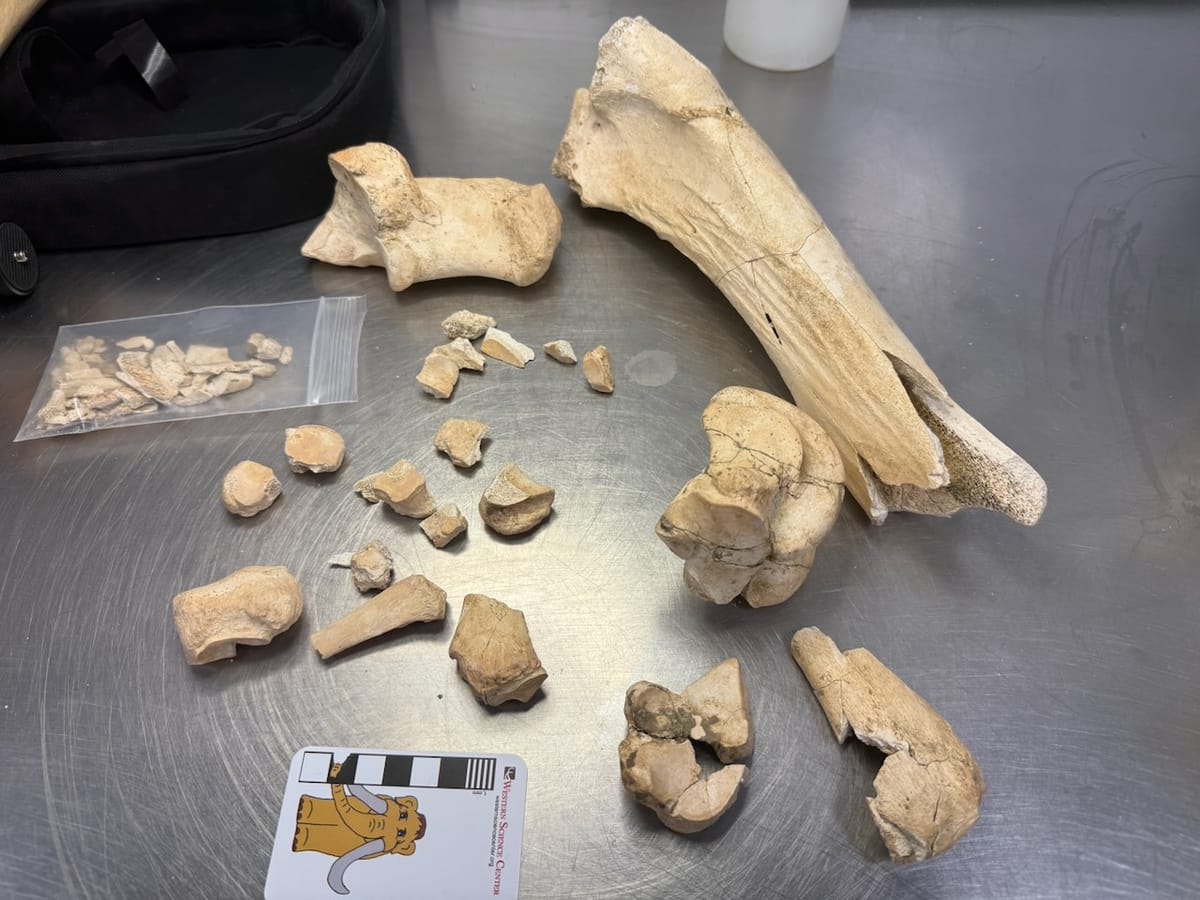
Many of the fossils housed at Western Science Center were recovered by paleontology mitigation companies from construction projects. This is a common and convenient arrangement in California that results in many more fossils being saved. (I've worked as a paleontologist in other states that do not have California's fossil protection laws, and it's common for fossils to be lost to development.) But there are downsides to mitigation paleontology. While most mitigation companies are outstanding, there are some that reduce costs by cutting corners, sometimes resulting in damage to specimens or loss of data. And sometimes the fossils were first discovered by construction equipment ploughing through them, and the mitigation company is left to collect whatever survived. Sometimes, what arrives at the museum is just a bag of bone fragments.
Over the last few weeks some of our lab volunteers have been working on just such a bag of bone fragments. These were recovered some years ago in Pleistocene sediments from a construction project in Murrieta, and as such were candidates for an upcoming exhibit. The photo at the top shows the result of weeks of work, with portions of several bones coming together. The next step was for me to try to identify what we had.
Three of the bones were easily identified for anyone familiar with mammal skeletons. One of these, the astragalus, made the identification much easier:
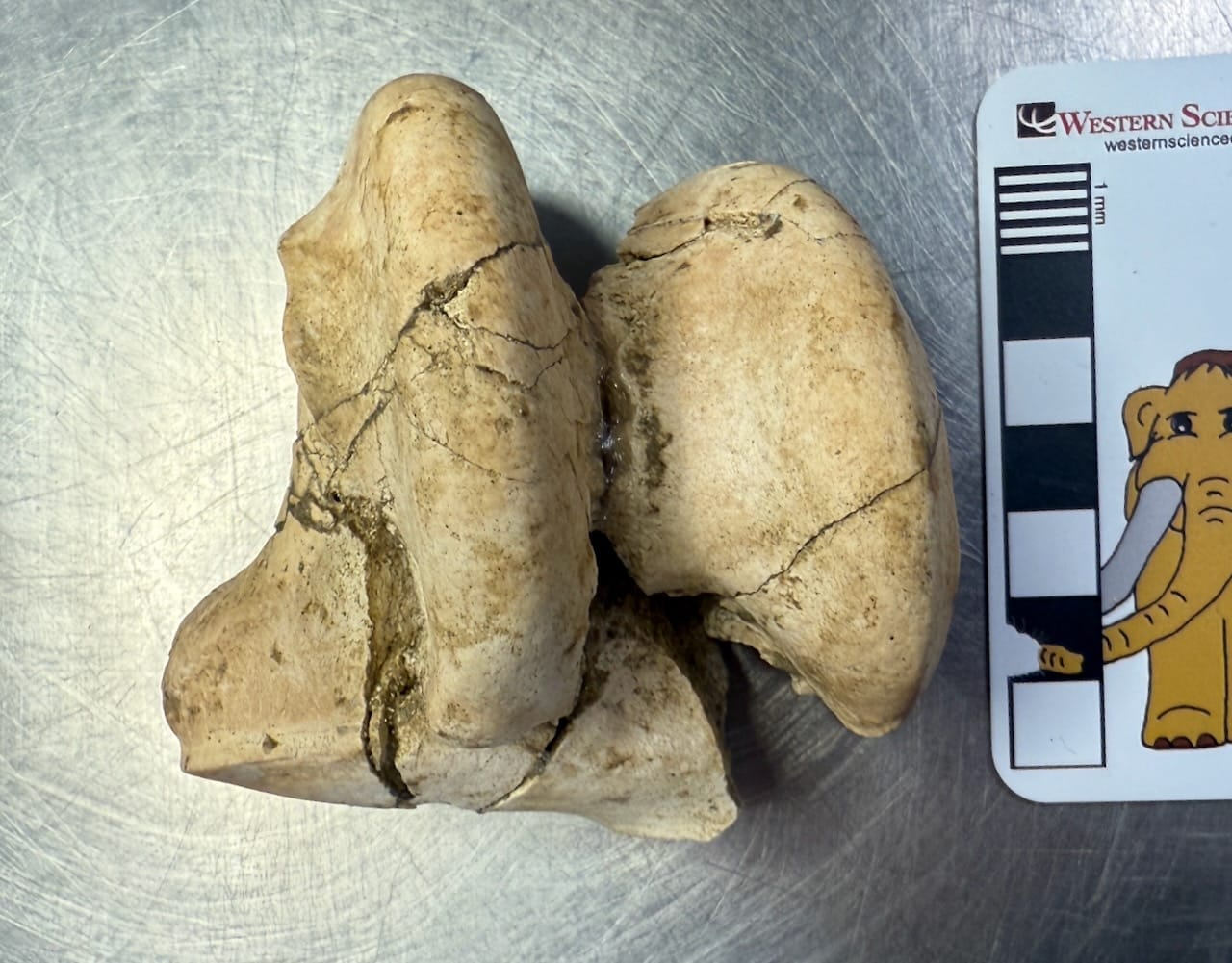
The astragalus is an ankle bone, and in most mammals has two curved ridges that fit into corresponding grooves on the tibia (shin bone). This is a pretty big astragalus, so it comes from a fairly large animal. As I mentioned in a previous post, we have a pretty good idea of what general groups of animals lived in southern California during the Ice Age, and that can help guide our initial attempts at identification. The biggest animals are mammoths and mastodons, and this bone is the wrong shape and too small for them. Its size is right for the next tier - bison, camels, horses, and ground sloths. And that's where we're lucky to have an astragalus. The ankle and foot are highly modified in sloths and are unlike anything else in North America. And bison and camels are both in the Order Artiodactyla; one of the unifying features of the artiodactyls is that they have a unique astragalus that has curved articulations on both ends instead of just one, so we can immediately rule them out. That only leaves us with a horse as a likely possibility. We have a modern horse skeleton in the WSC collection, so I was able to make a direct comparison:
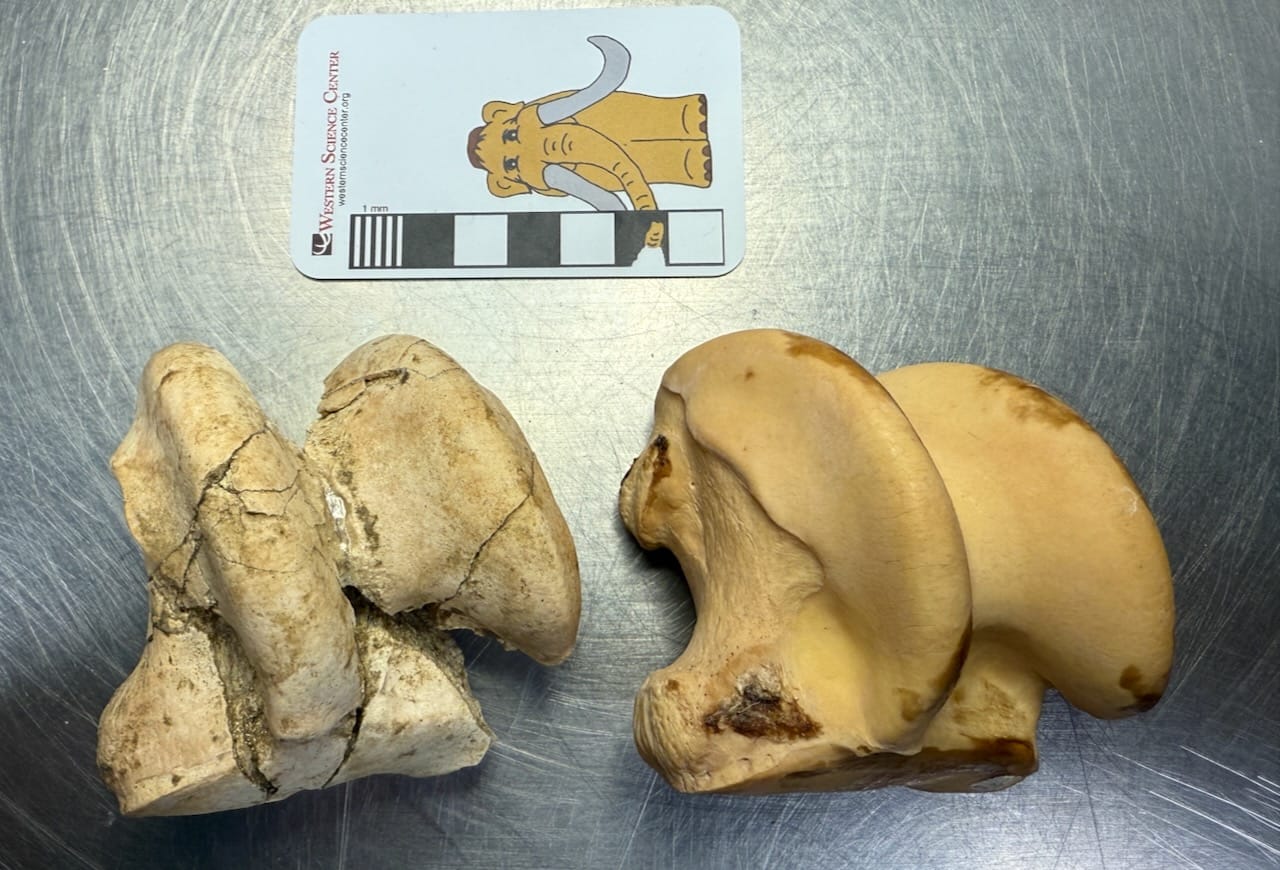
Our fossil astragalus is a good match in both size and shape with a modern horse. We have more bones from the modern skeleton, so we can also compare another distinctive element, the calcaneum or heel bone:
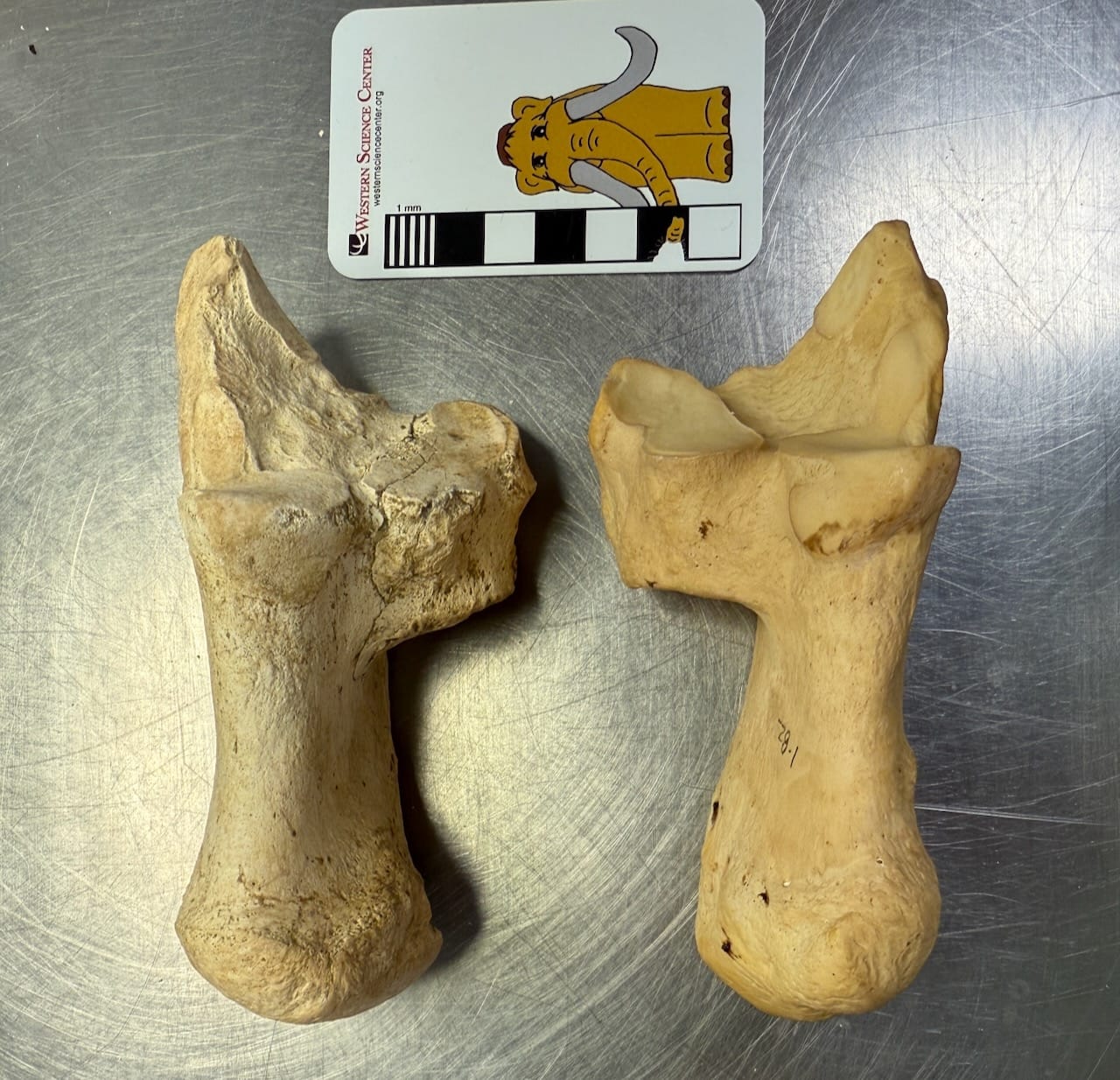
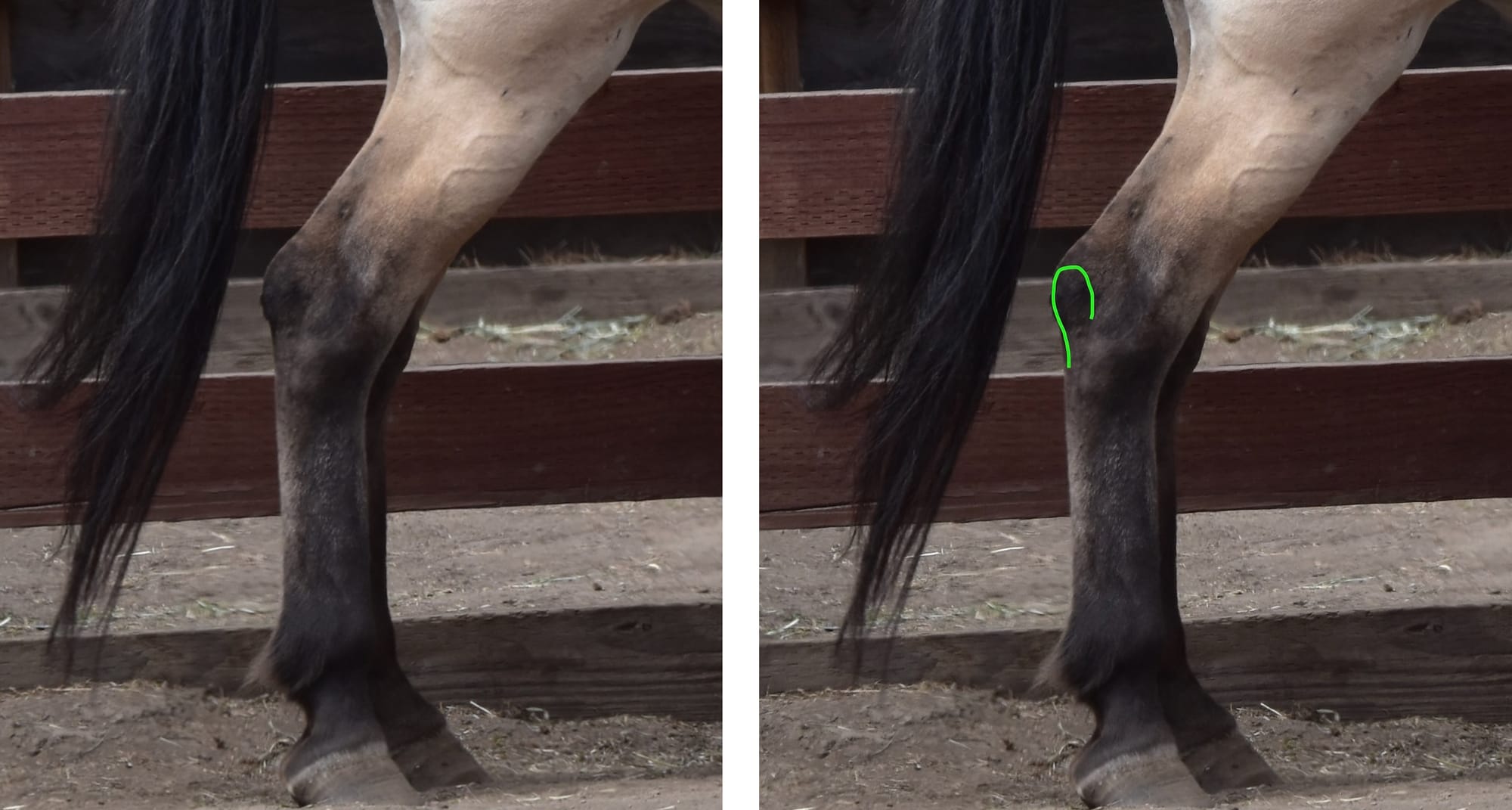
In this case our modern specimen only included the right calcaneum, so we have to look at it as a mirror image. In the image above the modern specimen is on the right, while our fossil is on the left. In most mammals the calcaneum has an "inverted L" shape in dorsal view; the large knob at the end is the calcaneal tuber, which serves as the attachment point for the Achilles' tendon. Horses are digitigrade (only their toes touch the ground), so the heel is carried well above the ground. The calcaneal tuber is visible even in a live horse, especially when the ankle is bent:
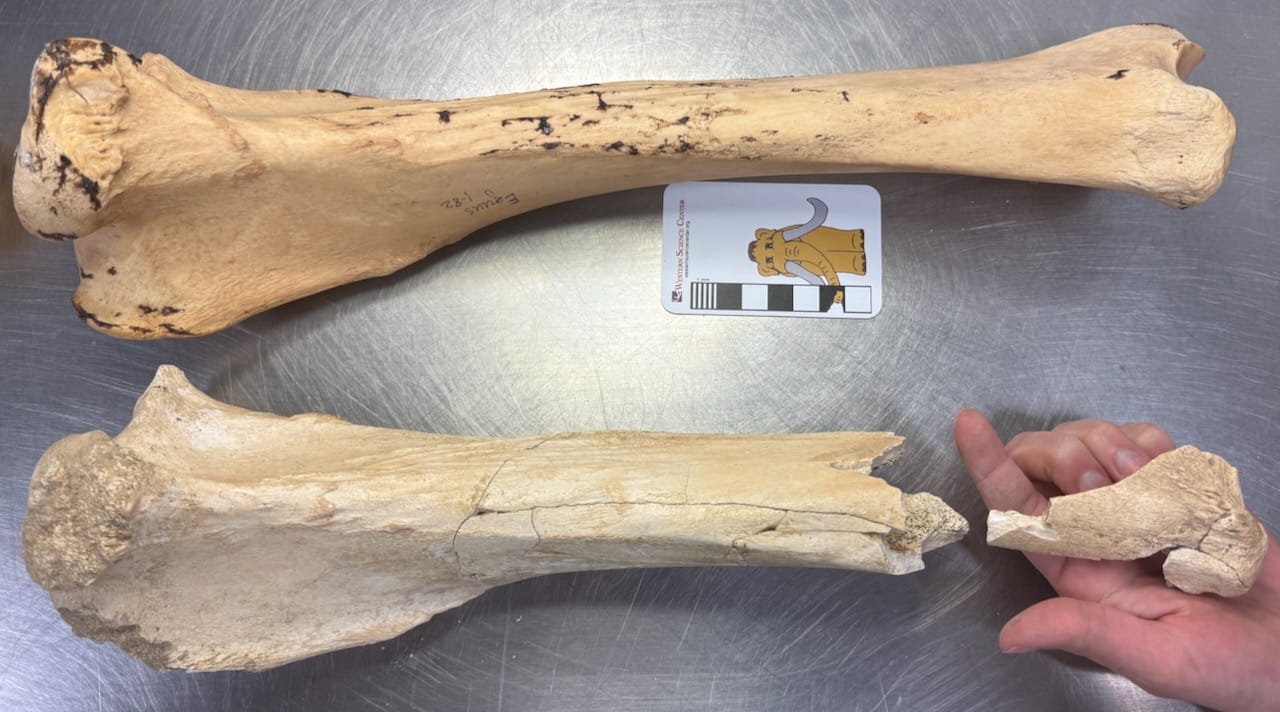
The largest preserved element is the tibia, or shin bone. Our fossil specimen is damaged on both ends, but the proximal end has a distinctive triangular shape with two articulations for the femoral condyles. While the distal end is broken, we found a fragment that includes part of the tibia's articulation with the astragalus. Again, this bone compares favorably to the left tibia of our modern horse:
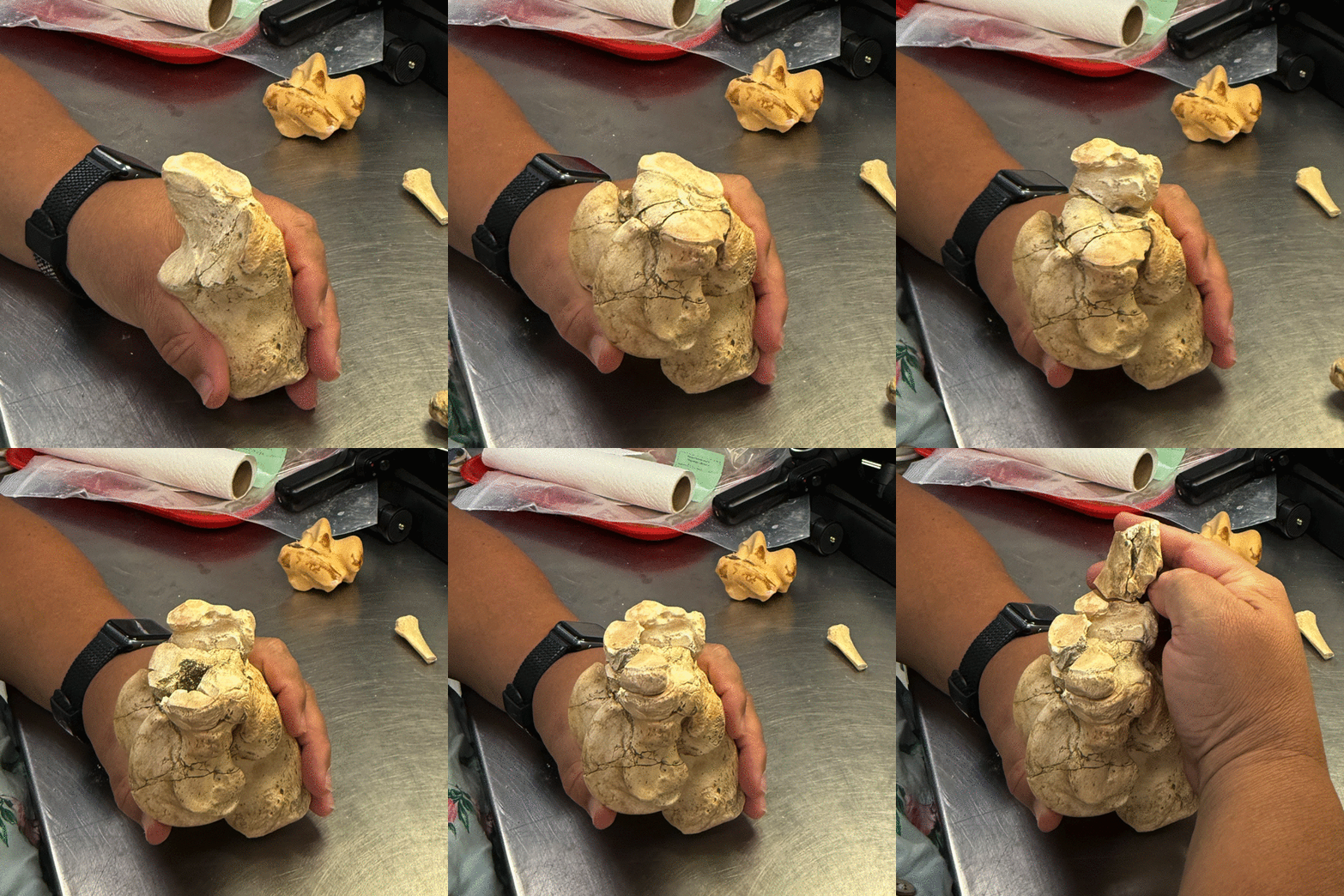
Our three large fossil bones are all from the left shin and ankle of a horse, but there were still numerous small bones and fragments to identify. The horse ankle (or tarsus) is made up of a total of six bones including the calcaneum and astragalus, which connect the tibia to the three metatarsals (foot bones). (Modern horses walk on the 3rd toe so they have a robust 3rd metatarsal, but they still retain remnants of the 2nd and fourth metatarsals.) Could these additional bones be the other tarsals? By using the reference specimen and the articular surfaces, we were able to identify the 4th and central tarsals, as well as two fragments of the 3rd tarsal. We didn't identify any of the fused 1st and 2nd tarsals, but we did find the proximal end of the 4th metatarsal. The gif below shows how they fit together:
It turns out this specimen is a fairly nice example of an Ice Age horse ankle, and so we are planning to display it in a new permanent exhibit opening later this year. Kudos to our excellent lab volunteers turning this bag of bone fragments into an attractive and informative specimen!

If you like what you're reading, please consider becoming a paid subscriber or leaving a tip. All proceeds go to cover the cost of maintaining the site and supporting research and education at the Western Science Center.