Why Museums?
"Museum collections provide the record of past research, and the baseline for future research."
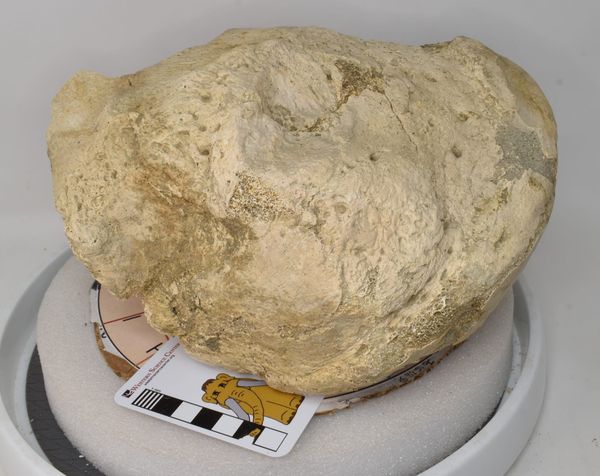
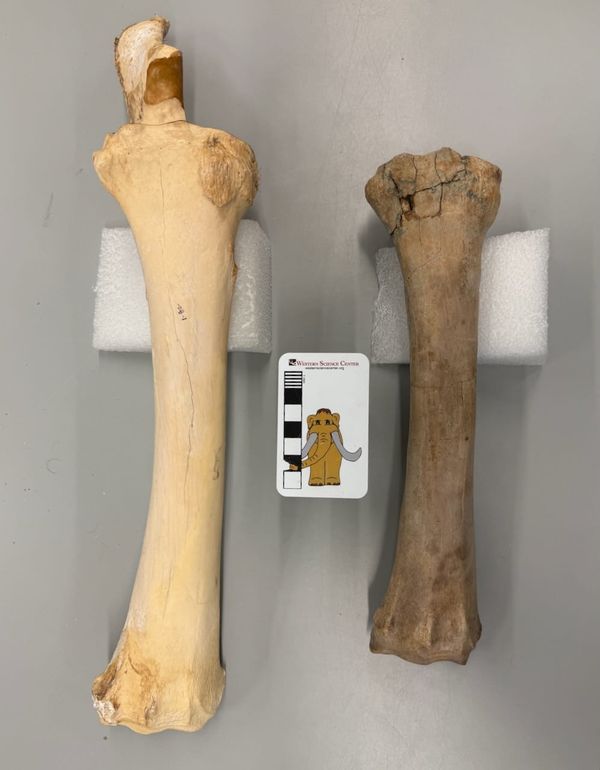
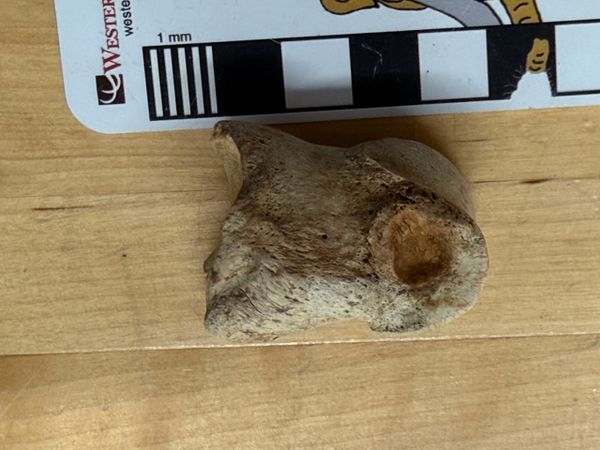
A commonly found and easily identifed part of a mammal skeleton is the head of the femur. This is visible in the Pacific mastodon femur below, as the large knob at the upper right end of the bone: The femoral head is a large hemispherical mass that generally sits on
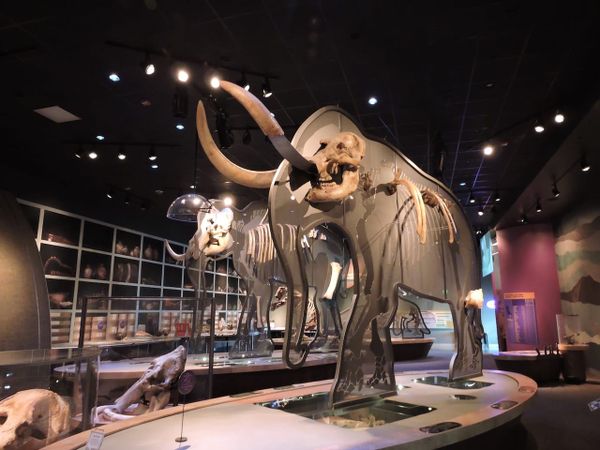
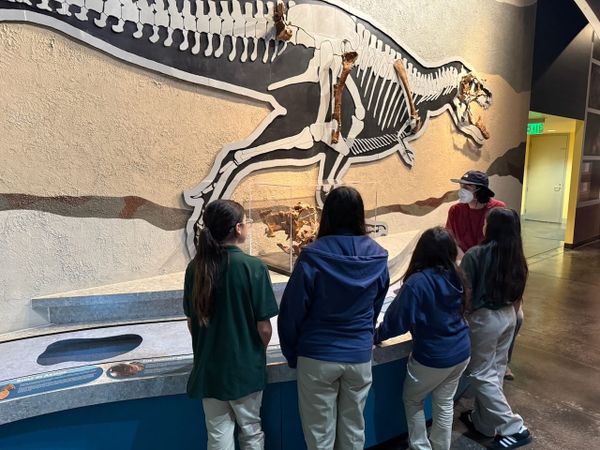
Later this year we're going to open a new permanent exhibit at Western Science Center featuring Ice Age fossils from Riverside County. While the largest single fossil collection at WSC is from Diamond Valley Lake, we are the fossil repository for the entire county and hold collections from
As I've mentioned in prior posts, many of the Western Science Center's fossils were discovered during construction projects. Often the first indication that a fossil is present is when a bulldozer or other piece of machinery cuts through a bone, at which point the mitigation paleontologists
This is the 5th in our monthly series of posts celebrating Western Science Center's 20th anniversary. The Western Science Center currently has 18 paid employees, the largest our staff has ever been. And yet, given our scope of research, our busy programming and field trip schedule, and our
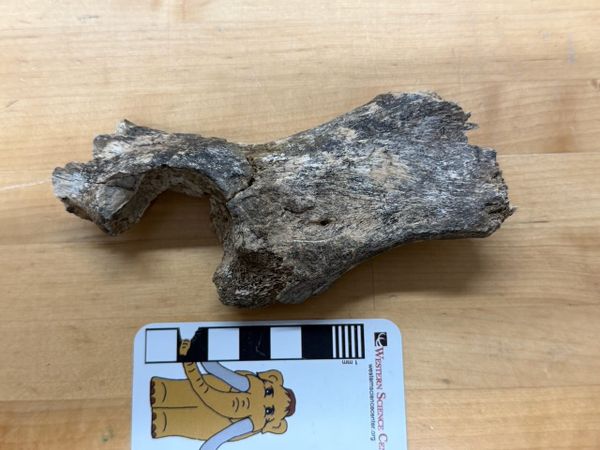
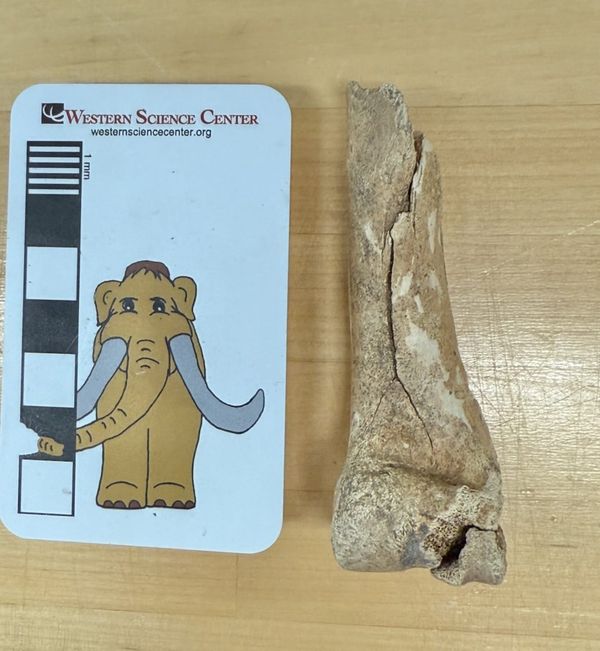
Western Science Center serves as a fossil repository for several state and federal agencies, including the National Park Service. Related to that responsibility, a couple of times a year we send a team under permit to Joshua Tree National Park to collect fossils that have naturally weathered out of the
Max’s Mobile Museum was designed from the outset to allow for rotating exhibits that could be changed out quickly. At last Saturday’s Inland Empire Science Festival we debuted our first new Mobile Museum exhibit since 2022, Life in the Ancient Seas. This exhibit was inspired by a temporary
This is the 4th in our monthly series of posts celebrating Western Science Center's 20th anniversary. Western Science Center has an interesting challenge for a small museum. We are the only natural history museum in Riverside County, which is roughly the size of New Jersey and has more
Many of the fossils housed at Western Science Center were recovered by paleontology mitigation companies from construction projects. This is a common and convenient arrangement in California that results in many more fossils being saved. (I've worked as a paleontologist in other states that do not have California&
This is the 3rd in our monthly series of posts celebrating Western Science Center's 20th anniversary. It was supposed to just be an exhibit upgrade. Last month I talked about the discovery of Max the Mastodon, and how he became the iconic specimen for the Western Science Center.
Before coming to the Western Science Center I worked at the Virginia Museum of Natural History as Curator of Paleontology. My primary field site during that time was the Carmel Church Quarry in eastern Virginia, a remarkable location with multiple fossiliferous beds spanning 60 million years of time. During my
This is the 2nd in our monthly series of posts celebrating Western Science Center's 20th anniversary. By 1995 the multiyear Diamond Valley Lake construction project was well underway. Huge amounts of sediment had to be moved to both increase the reservoir's volume and to provide the