Half a vertebra
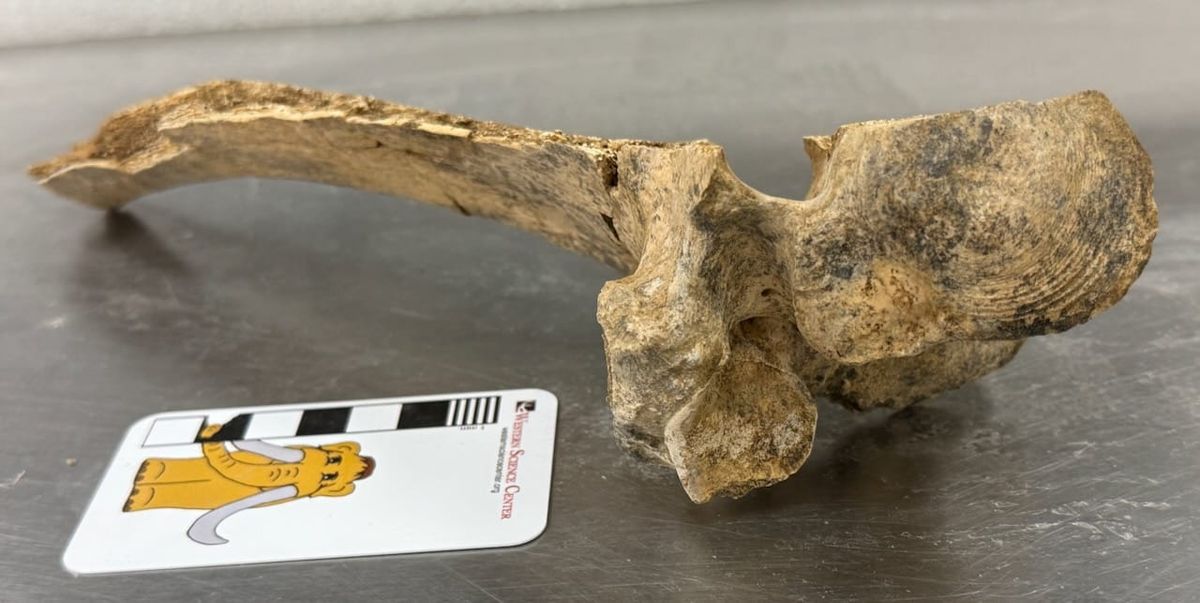
As I've mentioned in prior posts, many of the Western Science Center's fossils were discovered during construction projects. Often the first indication that a fossil is present is when a bulldozer or other piece of machinery cuts through a bone, at which point the mitigation paleontologists step in to recover the damaged bone and any other fossils in the immediate area.
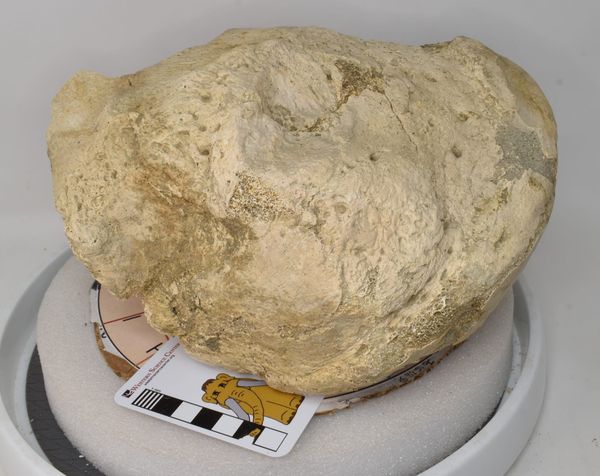
The specimen above is an example of a "bulldozer bone". This vertebra was sliced nearly in half by some piece of construction equipment (I don't know for sure that it was a bulldozer!), but an alert mitigation paleontologist saw the damaged bone and recovered what remained. Seen in side view, the recovered bone is quite nice:
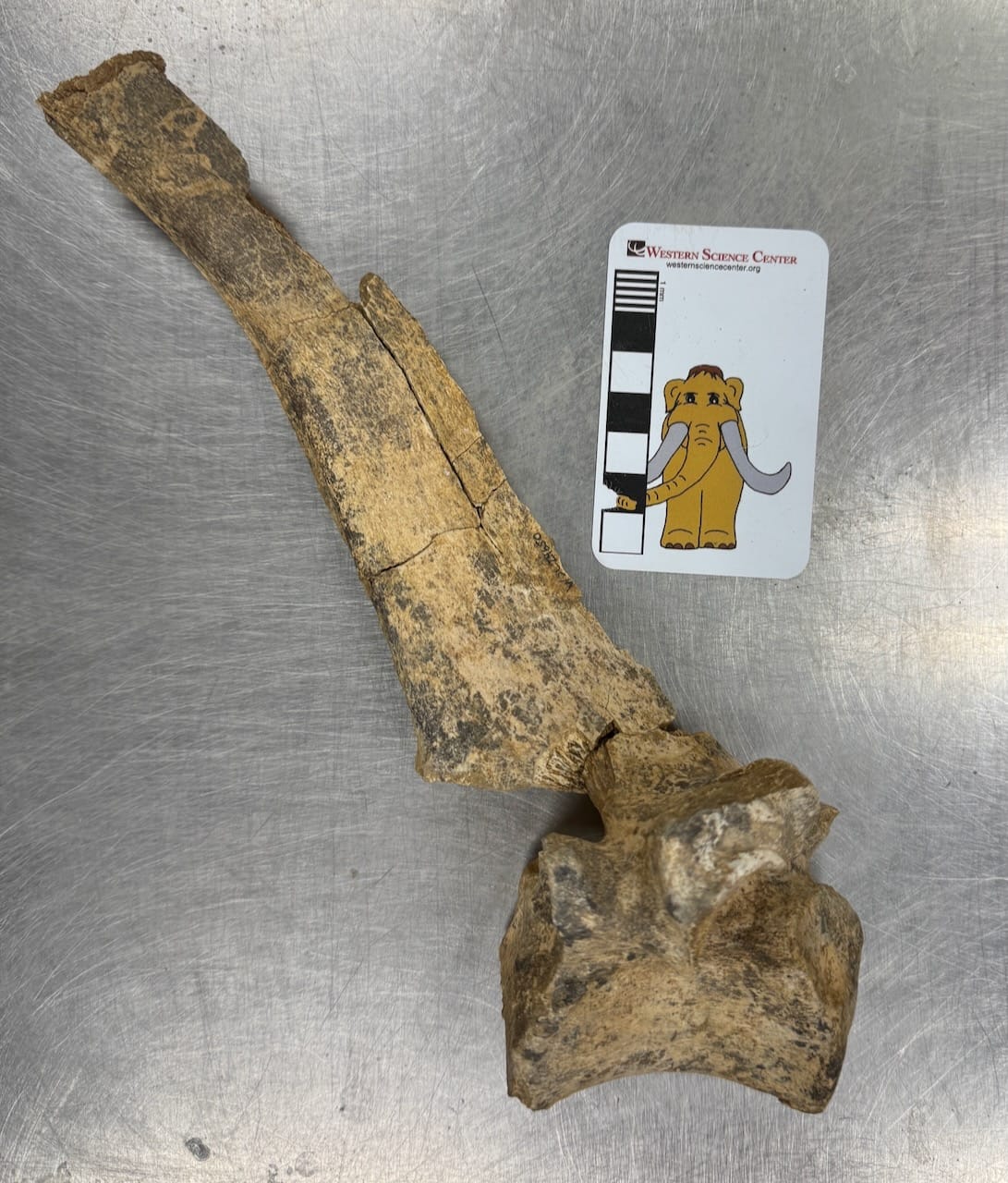
Here's an annotated version with some key features labeled:
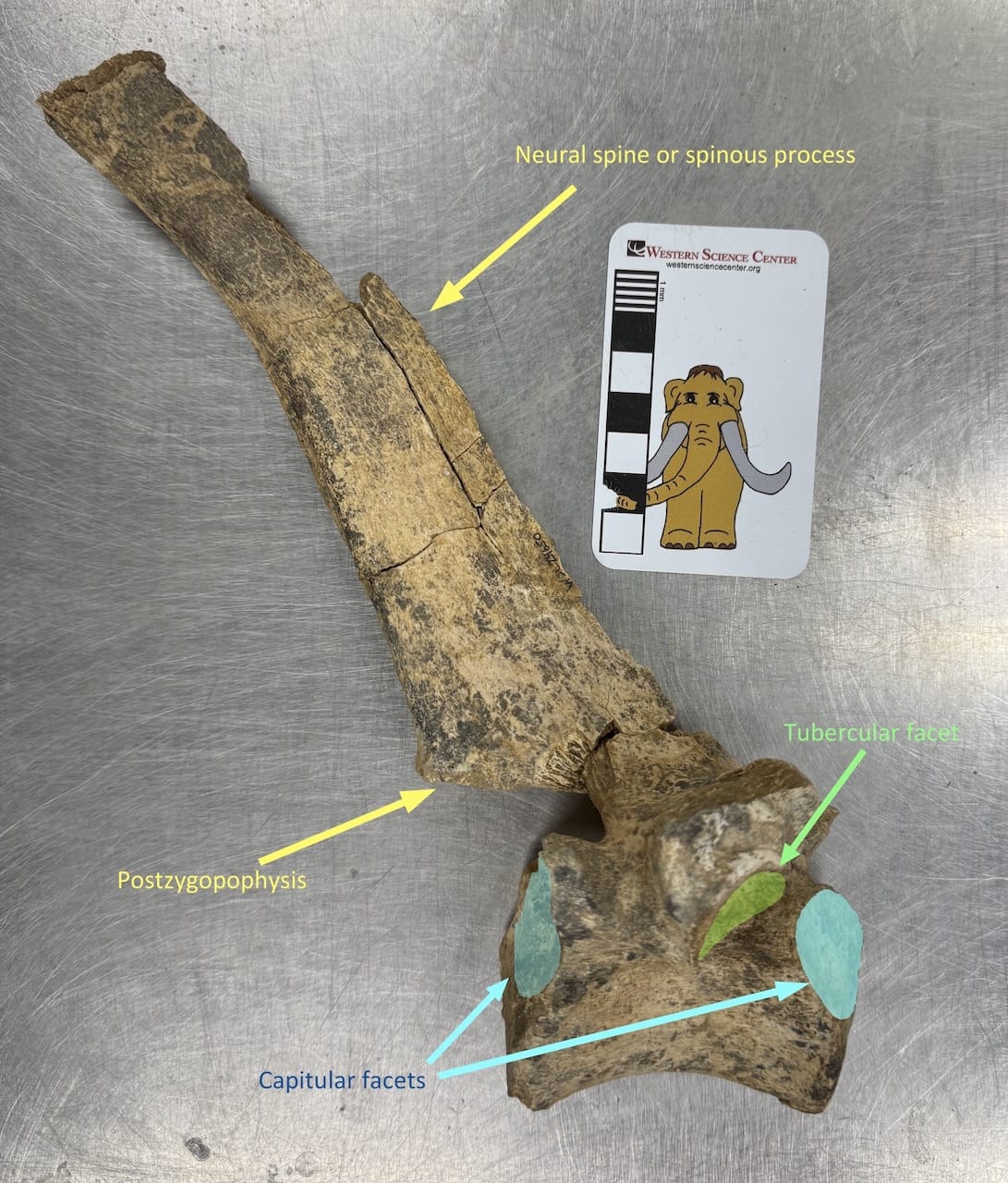
The prominent facets for rib articulations and tall neural spine immediately show that this is a thoracic vertebra from the front part of the back. Compared to other specimens in our collection, it's much larger than a horse. Camelops is a bit larger than this, has a more robust neural spine, and has postzygopophyses that are more prominently offset. The closest matches we have in both size and shape are bison.
This vertebra was recovered during construction of the Harveston housing development in Temecula, in Riverside County southwest of Hemet. As such we plan to include it in our permanent exhibit of Ice Age Riverside County fossils that is opening later this year. But besides representing Temecula, this fossil has some biogeographic significance.
Bison are not native to North America, having originated in Europe. They actually only arrived in the southern half of North America very recently (geologically speaking), roughly 200,000 years ago. Almost all the deposits in Temecula Valley are older than this, and as a result they don't contain bison. Only a couple of sites in the valley, including Harveston, have younger sediments. This vertebra is one of only a handful of bison bones known from the entire Temecula Valley.

If you like what you're reading, please consider becoming a paid subscriber or leaving a tip. All proceeds go to cover the cost of maintaining the site and supporting research and education at the Western Science Center.