Max's Mobile Museum
This is the 4th in our monthly series of posts celebrating Western Science Center's 20th anniversary.
Western Science Center has an interesting challenge for a small museum. We are the only natural history museum in Riverside County, which is roughly the size of New Jersey and has more than 2.5 million people. It takes more than 2 hours on the freeway to drive from one side of the county to the other. It's difficult to perform the science education part of our mission with such a large, dispersed population. At the same time, Riverside County is mostly served by the Los Angeles and San Diego media markets. It's hard to be noticed in those markets to let people even know you exist.
More than 10 years ago we decided that offsite programming would become a significant part of our outreach efforts. We have several different offsite programs, be we wanted the flagship to be a mobile museum that could take our message across the region while simultaneously advertising the Western Science Center.
We decided early that the mobile museum would be based primarily on replicas; transporting original fossils regularly is much more difficult, and using touchable replicas gives a more tactile experience for visitors. So we started three different initiatives to help with this. First, I had learned how to make silicone molds and resin casts earlier in my career, so I trained staff on these techniques. Second, in 2017 we raised $30,000 at our annual "Science Under the Stars" fundraiser to purchase 3D printers and bring in experts such as Dr. Bernard Means from the Virtual Curation Lab to help us establish a printing program. Casting and printing allowed us to produce most of our replicas in-house. Third, we used our existing on-site rotating exhibits to experiment with methods for displaying the replicas, looking for the most effecting and affordable techniques.
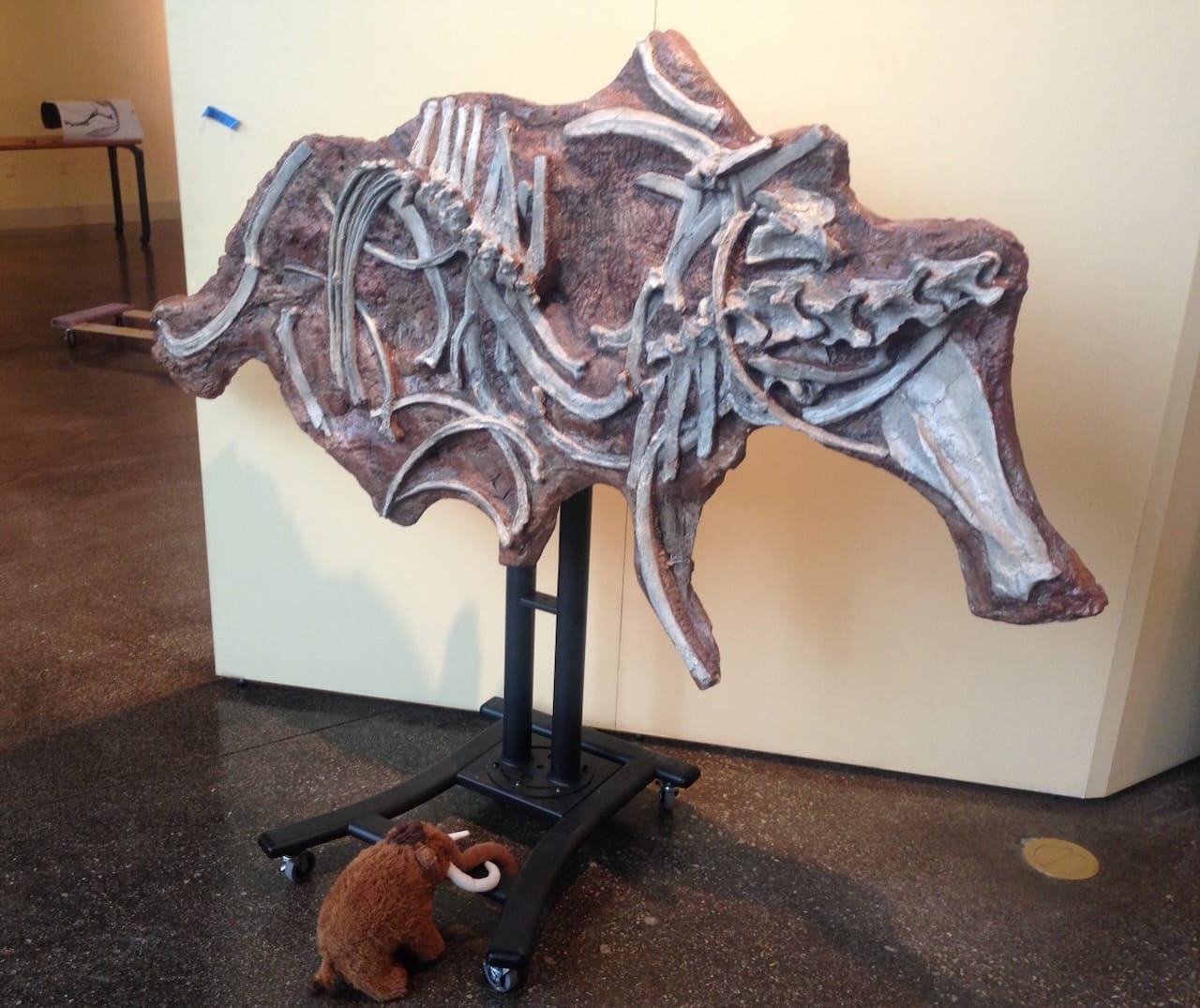
While this was ongoing we were looking at how the mobile museum would be transported. We were already doing "Show-and-tell" and activity tables (and we still do these – a lot!) but we wanted something more like a stand-alone exhibit, with the educators there to supplement rather than guide the experience. That means the specimens needed to be attached so they wouldn't "walk off". We also wanted a minimum of about 50 square feet of exhibit space. Because we're in southern California, we wanted it to be either shaded or air conditioned. And we wanted to have wheelchair access. We considered a full-size tractor trailer, but the operating costs would be very high and no one on staff was trained to drive one. After lots of research, we settled on a 16-foot marketing trailer.
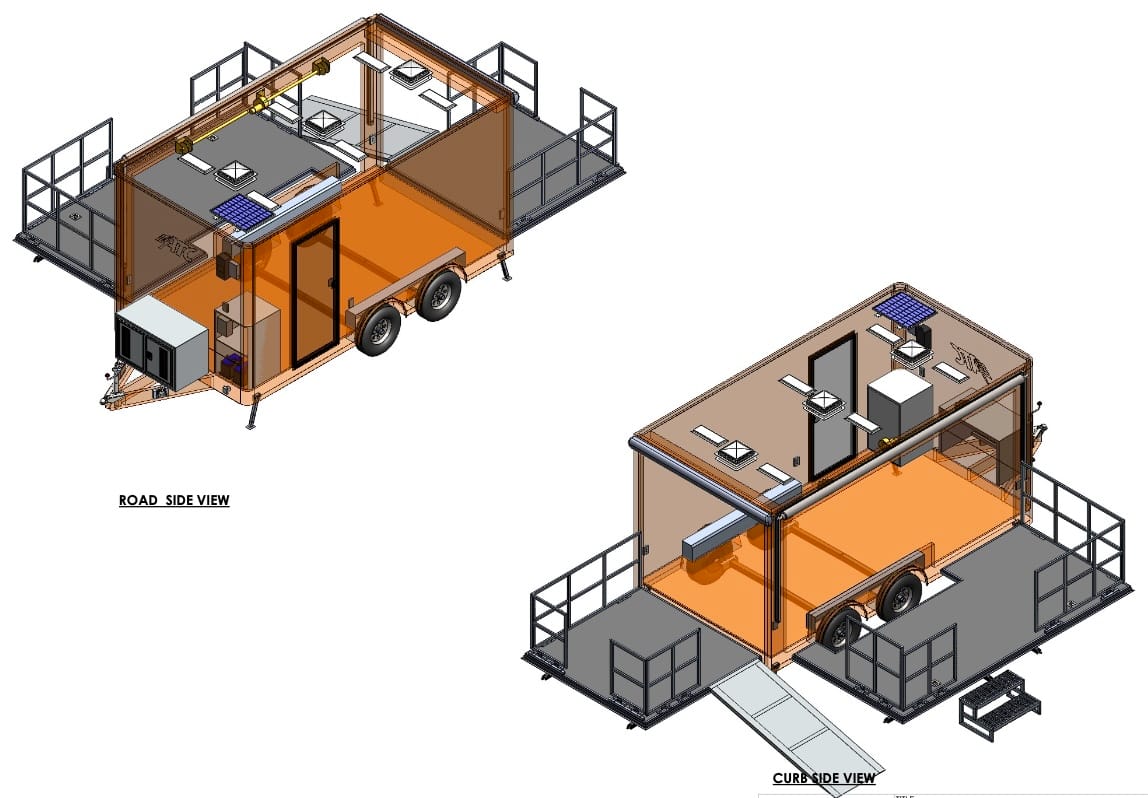
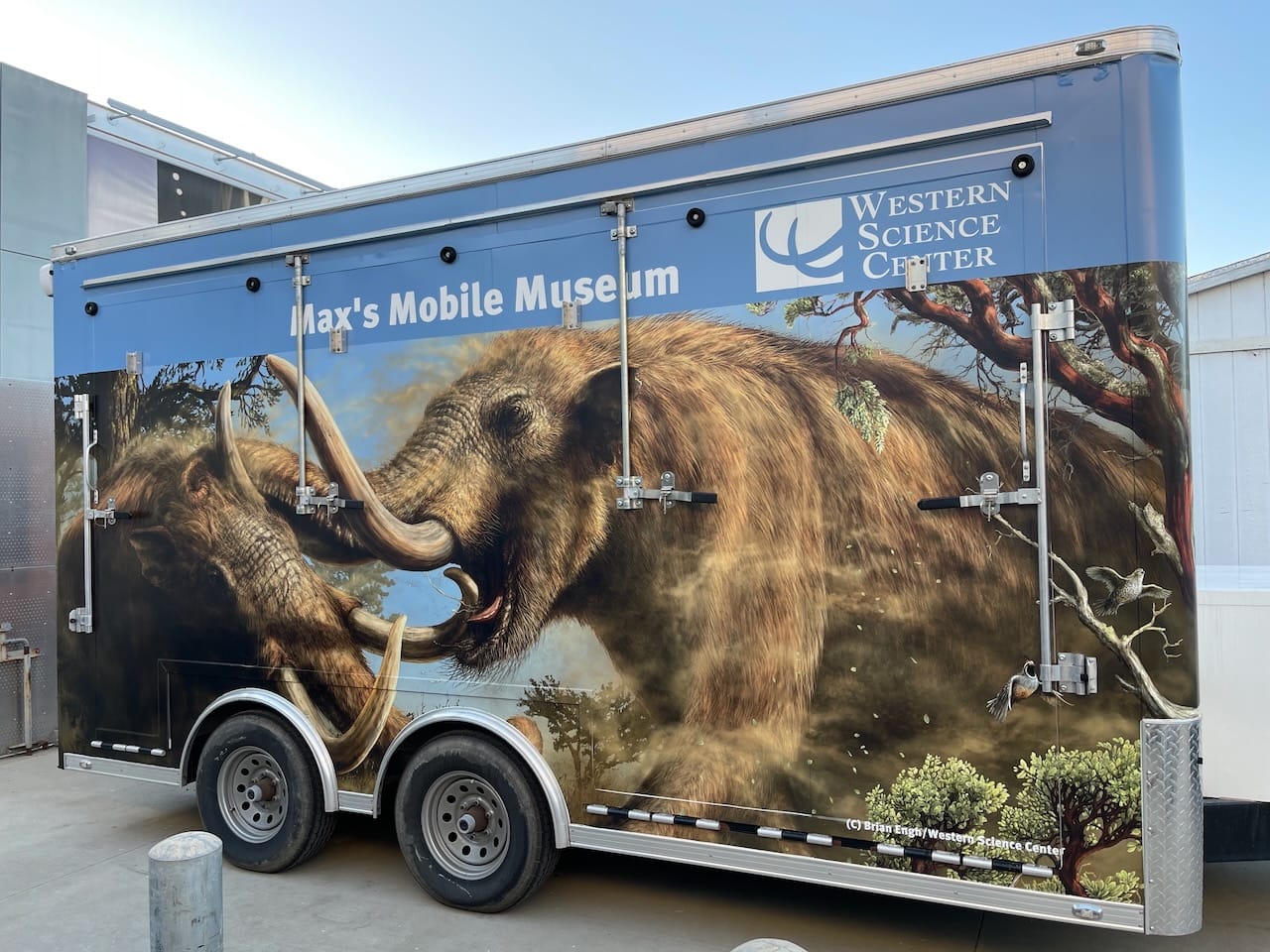
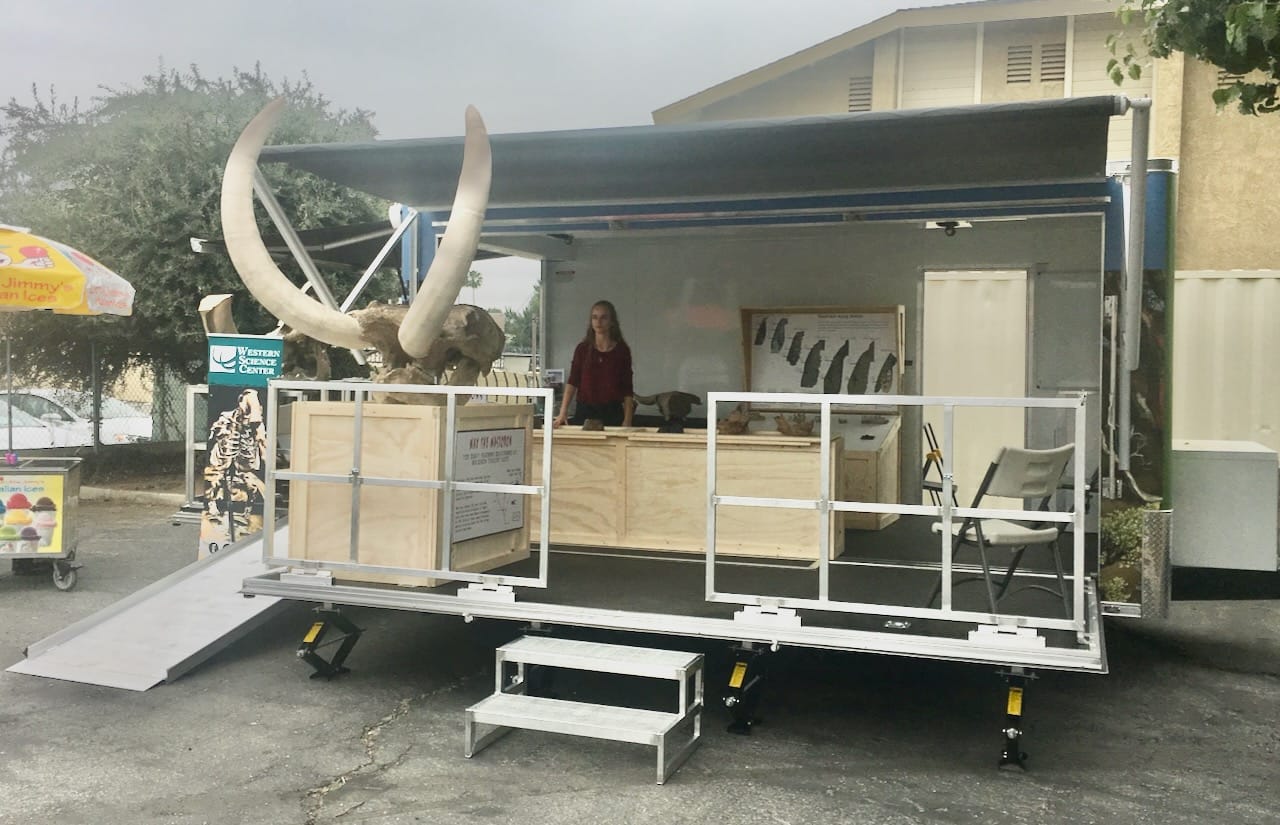
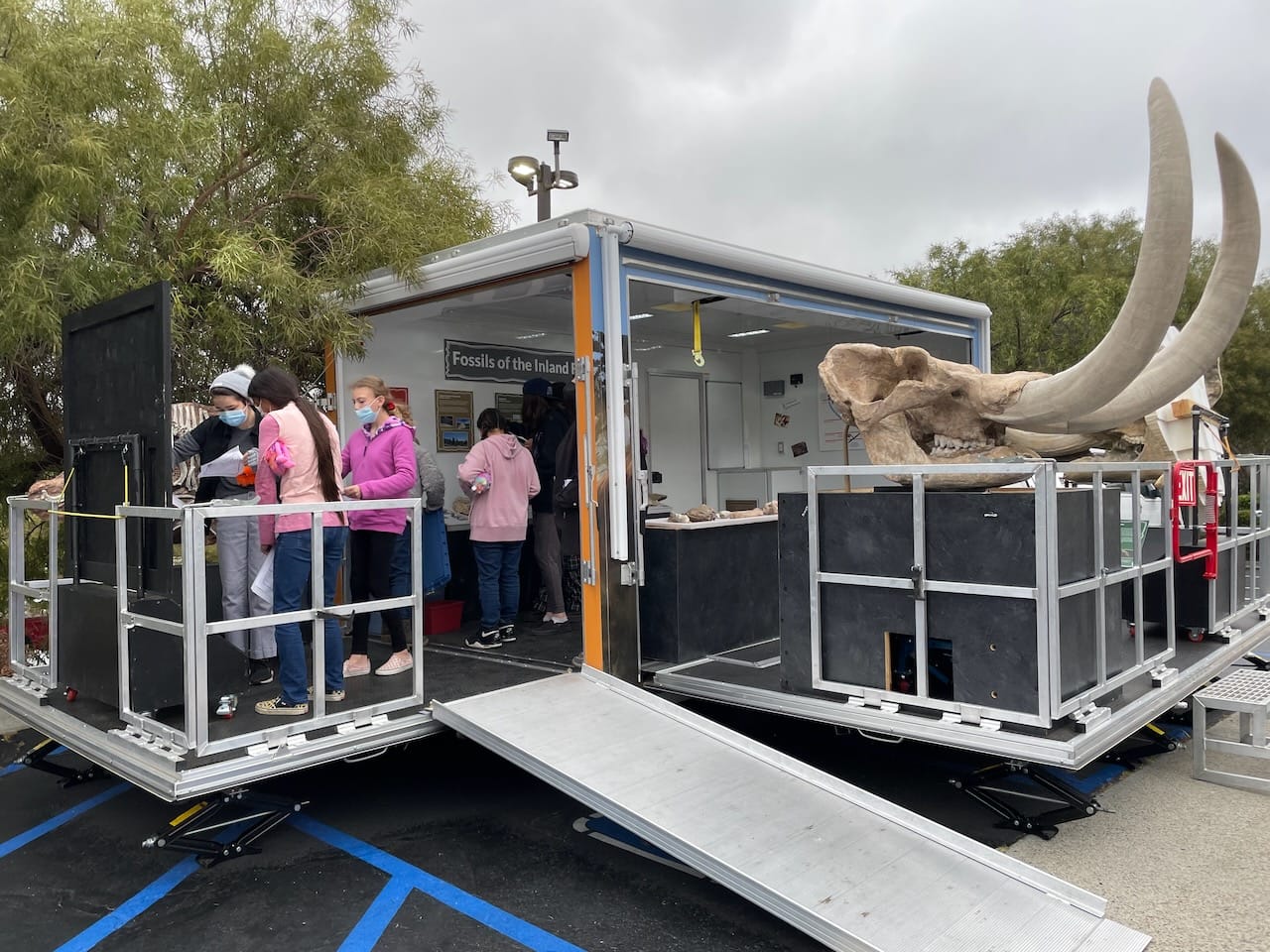
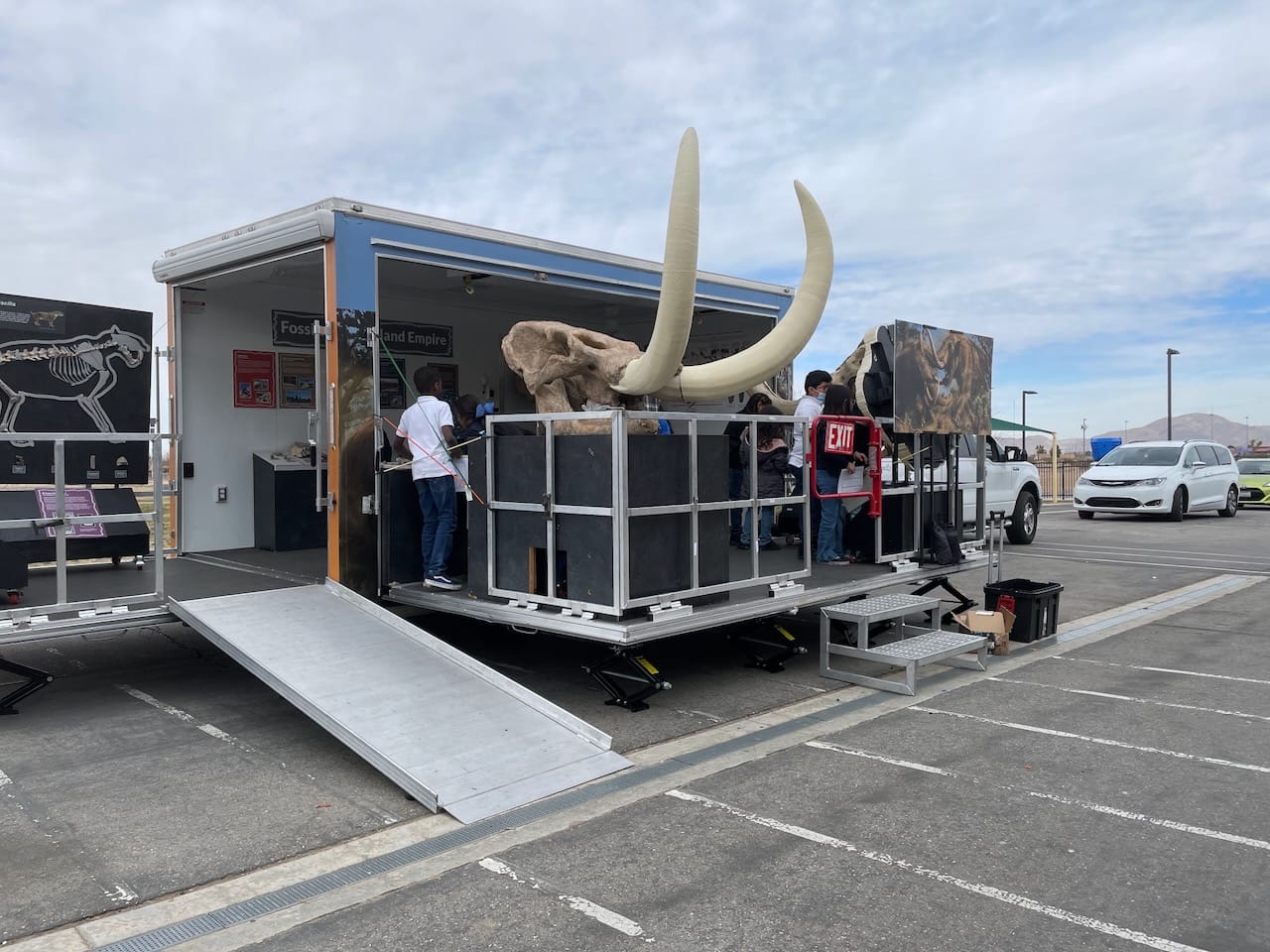
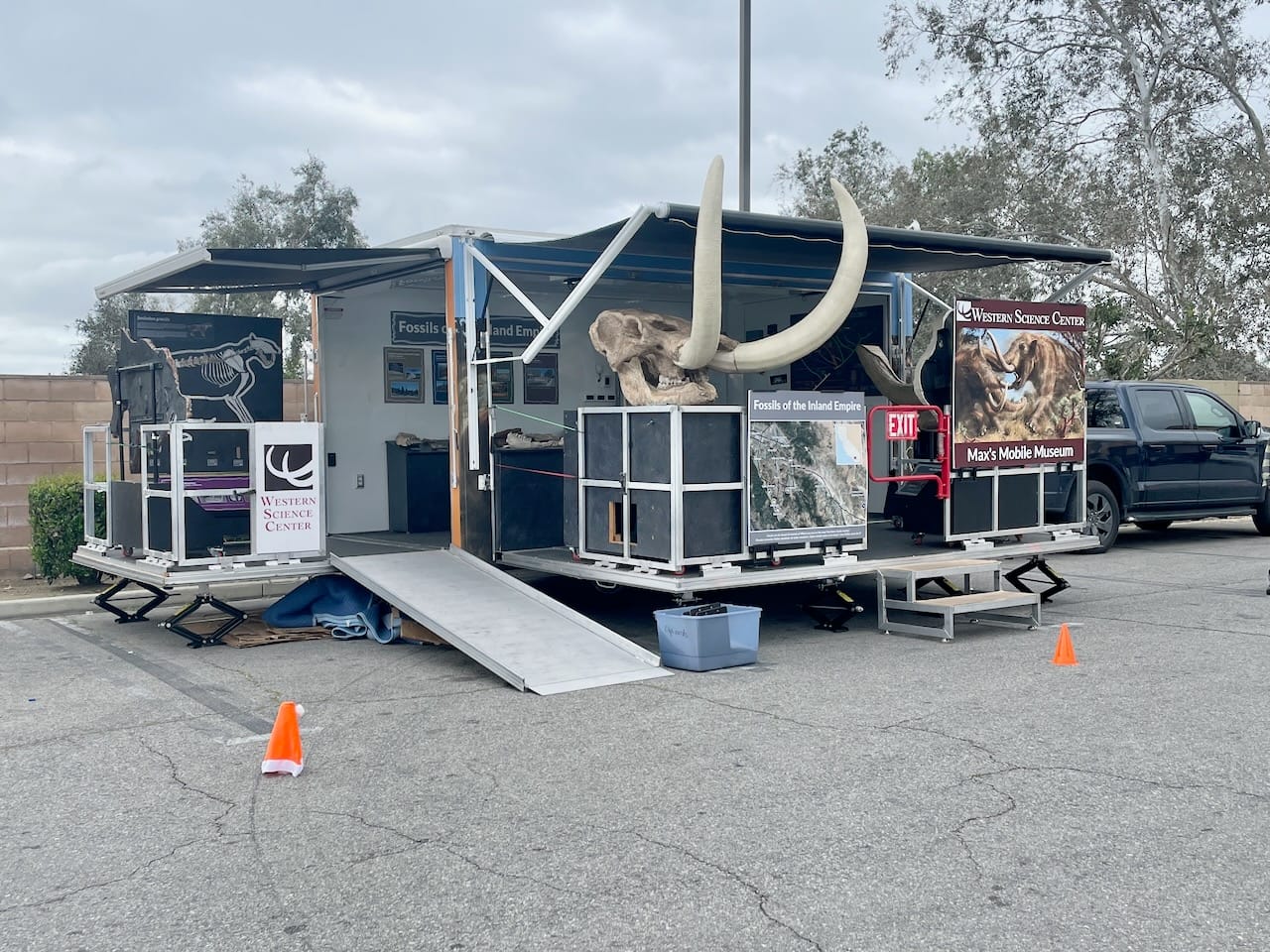
This trailer is just light enough to be towed by a Ford F-150. With the side and rear stages lowered it has about 300 square feet of exhibit space. There are circulation fans and vents in the ceiling, retractable awnings to cover the stages, and a wheelchair ramp. And it has electrical power from batteries (with solar rechargers), a generator, or external power. At the 2018 "Science Under the Stars" we raised another $35,000 to purchase the trailer, and it arrived at WSC in April 2019. We named the new trailer "Max's Mobile Museum" (or "M3") and since one of its functions was to serve as a rolling billboard for WSC we had it wrapped in spectacular art from paleoartist Brian Engh:
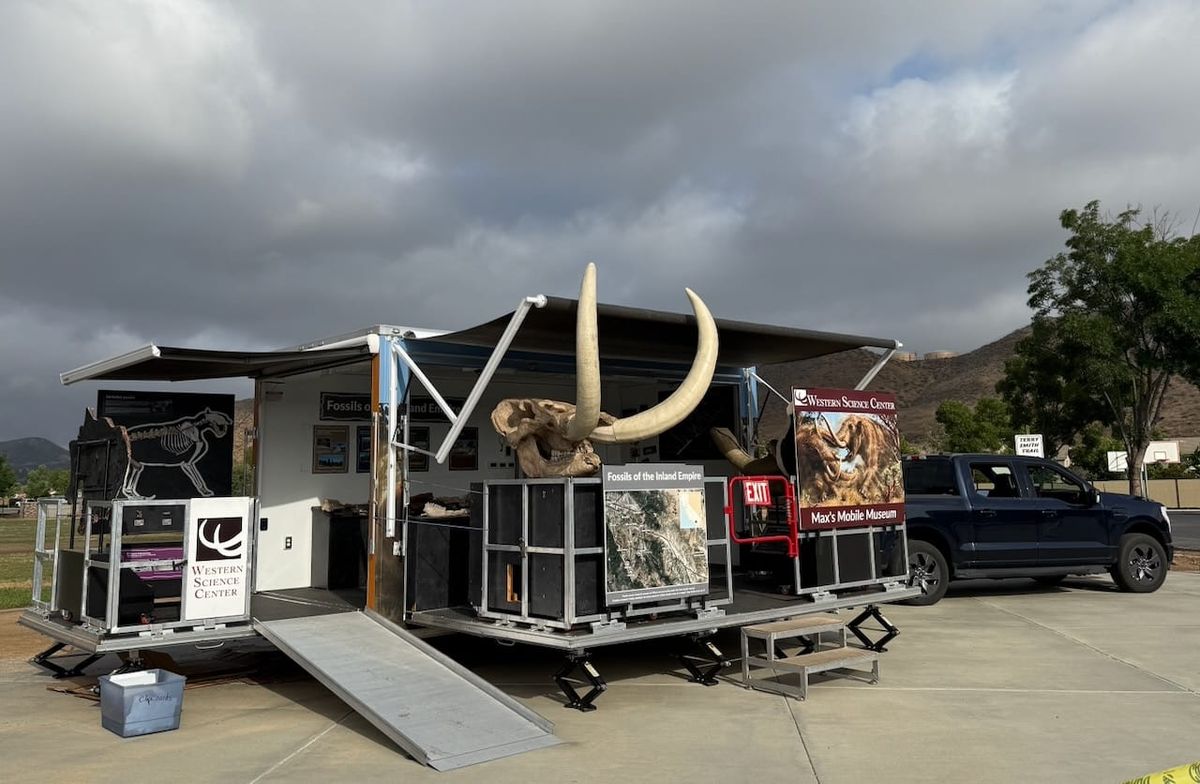
Our exhibit design for the trailer has seen a lot of evolution over time, as we've learned and refined new construction techniques and gained experience in actual operations. This has resulted in a gradual but substantial change in M3's appearance over time:
Another key feature to make M3 a success was that we had to be able to setup and breakdown the museum quickly. The goal was to have 2 people be able to setup in 45 minutes and breakdown in an hour. In practice, it usually takes us about 35 and 45 minutes respectively. Below is a time lapse of Brett, Reggie and me setting up for a school visit, actual time about 40 minutes.
M3 was also designed to have rotating exhibits; we can switch exhibits in less than a day. After several iterations, we've established two displays: Valley of the Mastodons, which focuses on Pacific mastodons and how they differ from American mastodons, and Fossils of the Inland Empire, which includes Pleistocene specimens from across Riverside County. Inland Empire has been particularly popular and is usually the exhibit we use at schools.
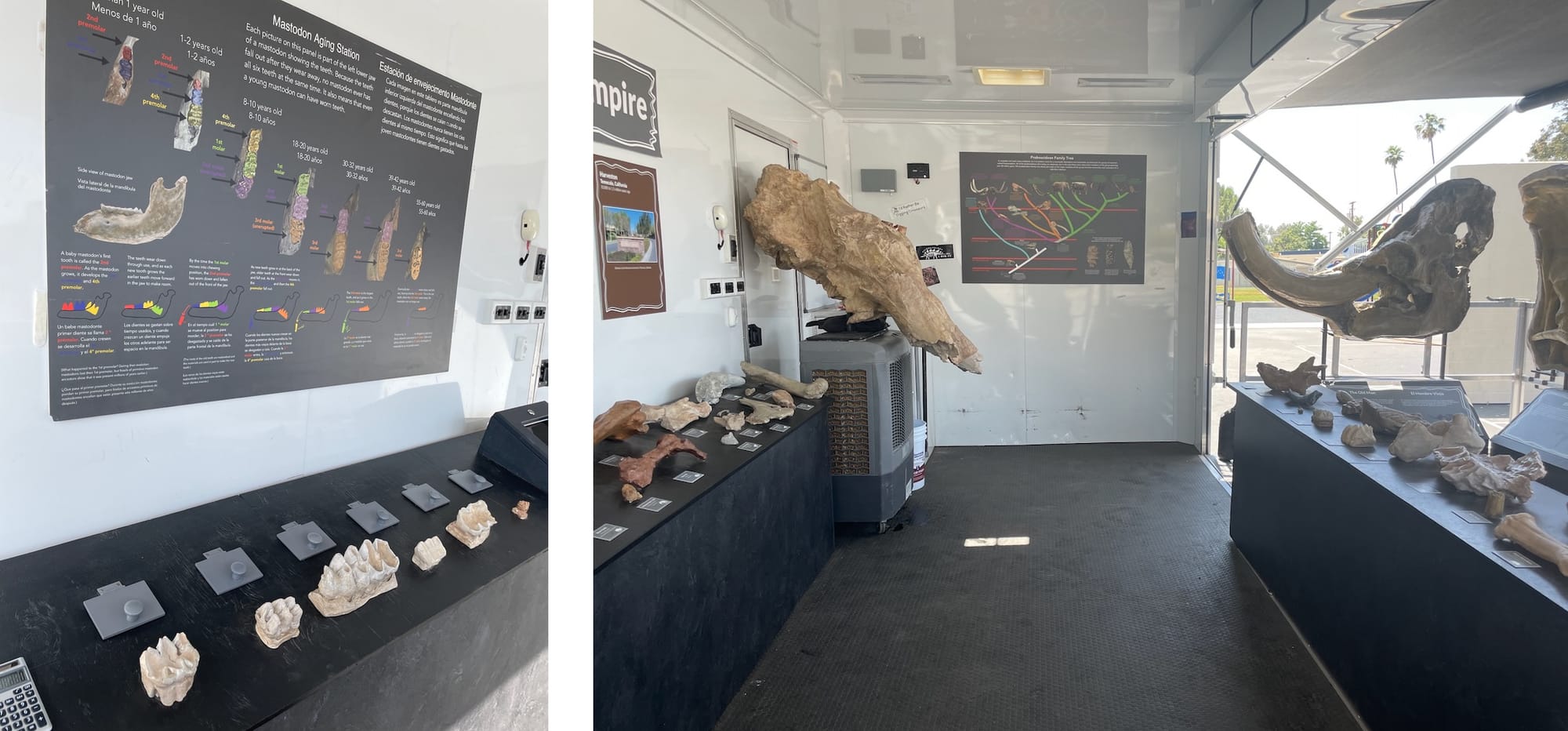
Just a few months after we acquired M3, the COVID pandemic hit and we were unable to do much in-person programming for 19 months. But once we reopened M3 started proving its value. Since April 2019 M3 has attended 148 events, mostly in the Inland Empire but with trips as far away as Los Angeles and Las Vegas. While 57% of the visits have been to schools, we've also attended company picnics, community fairs, airshows, ComiCons, and one visit to the Geological Society of America conference. Over 50,000 people have have seen M3 at offsite visits!
Last year at our fundraiser, we asked our supporters to fund the development of a brand new M3 exhibit, which will debut this Saturday at WSC's Inland Empire Science Festival. I'll have another post up soon to talk in more detail about the new display.

If you like what you're reading, please consider becoming a paid subscriber or leaving a tip. All proceeds go to cover the cost of maintaining the site and supporting research and education at the Western Science Center.