Mammoths in the Desert
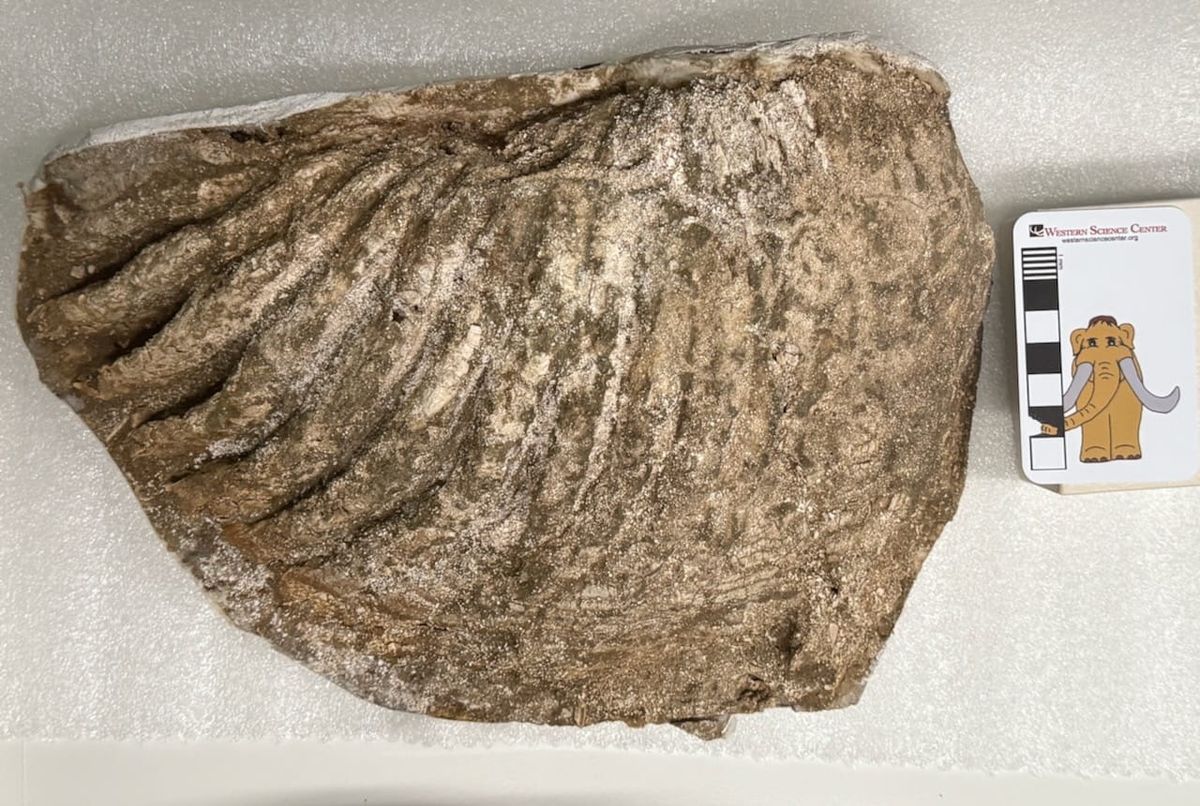
Western Science Center serves as a fossil repository for several state and federal agencies, including the National Park Service. Related to that responsibility, a couple of times a year we send a team under permit to Joshua Tree National Park to collect fossils that have naturally weathered out of the ground (because of the environmental sensitivity of the area we only conduct surface collecting).
One of the Ice Age animals we occasionally find at Joshua Tree are Columbian mammoths. The specimen above is a side view of part of a single tooth. Teeth from members of the family Elephantidae (including mammoths) consist of a series of flattened enamel loops. On the occlusal surface the loops wear into an alternating series of enamel ridges separated by dentin grooves, making an incredibly effective grinding surface. In side view these sequential enamel loops are expressed as a series of curved ridges visible in this specimen. The ridges are curved because the tooth itself is curved up into the jaw, part of the unusual tooth replacement pattern in proboscideans. You can see how this works in the Columbian mammoth jaw below, in which part of the jaw is damaged exposing the unerupted part of the tooth inside (specimen at the Florida Museum of Natural History):
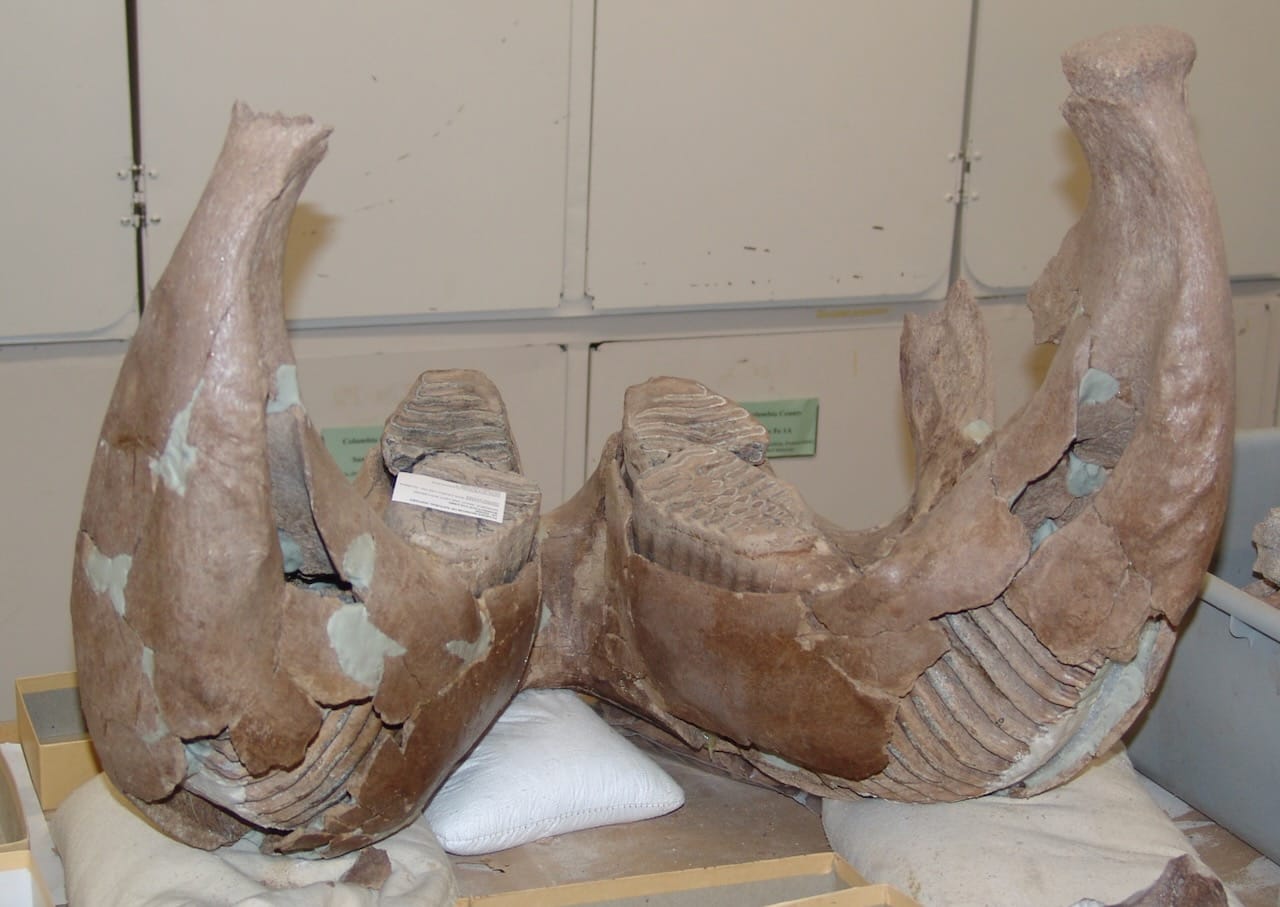
The Joshua Tree tooth is quite large, yet incomplete. Just based on its size it probably represents either a 2nd or 3rd molar, most likely from a nearly full-grown mammoth. The huge, efficient teeth of mammoths probably originally evolved in response to eating grasses, a notoriously abrasive food choice. But the thing is, if you can eat grass you can handle almost any other type of vegetation. This opened a variety of habitats to mammoths, and so we find their fossils in almost every Pleistocene habitat in southern California, from the coasts to the inland basins to the high deserts. In contrast, mastodons, with their more restrictive dietary and environmental needs, are not found in nearly as many places as mammoths.
Later this year WSC is opening a new permanent exhibit about the Pleistocene life of Riverside County. This tooth from Joshua Tree NP is one of the candidate specimens being considered for inclusion in the new exhibit.

If you like what you're reading, please consider becoming a paid subscriber or leaving a tip. All proceeds go to cover the cost of maintaining the site and supporting research and education at the Western Science Center.