Life in the Ancient Seas
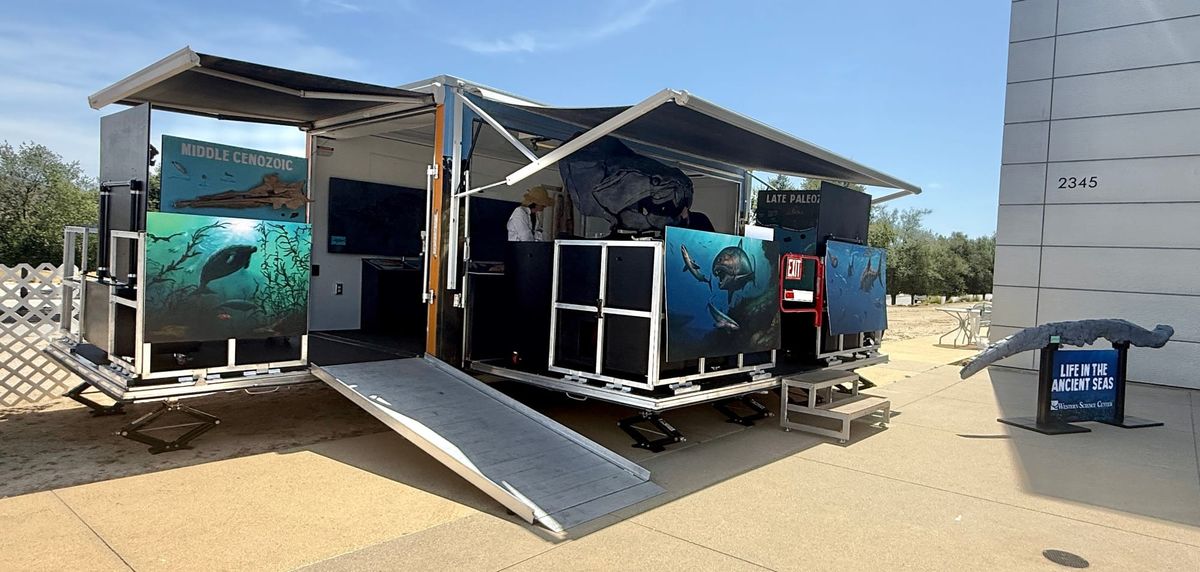
Max’s Mobile Museum was designed from the outset to allow for rotating exhibits that could be changed out quickly. At last Saturday’s Inland Empire Science Festival we debuted our first new Mobile Museum exhibit since 2022, Life in the Ancient Seas.
This exhibit was inspired by a temporary exhibit of the same name that we built for our rotating exhibit gallery back in 2019. That exhibit focused on the diversity of marine life through the last 500 million years of Earth’s history. We produced quite a few 3D replicas for it and thought it was a good candidate for adapting into a mobile display. We spent a couple of years playing around with the concept, and eventually we were confident enough in the design to feature it as our “Special Ask” at the 2025 Science Under the Stars fundraiser.
Our first design challenge for this exhibit was the initial draw. Our other M3 displays all feature Max; his huge skull and tusks are visible from a distance and pull visitors in at busy events. But of course Max wouldn’t be in a sea life exhibit; we needed some imposing replacement. We eventually settled on the Cleveland Museum of Natural History’s skull of Dunkleosteus terrelli, a huge Devonian placoderm fish from Ohio (Dunk‘s skull is actually larger than Max’s skull with the tusks removed). Casts of this skull are produced by Research Casting International:
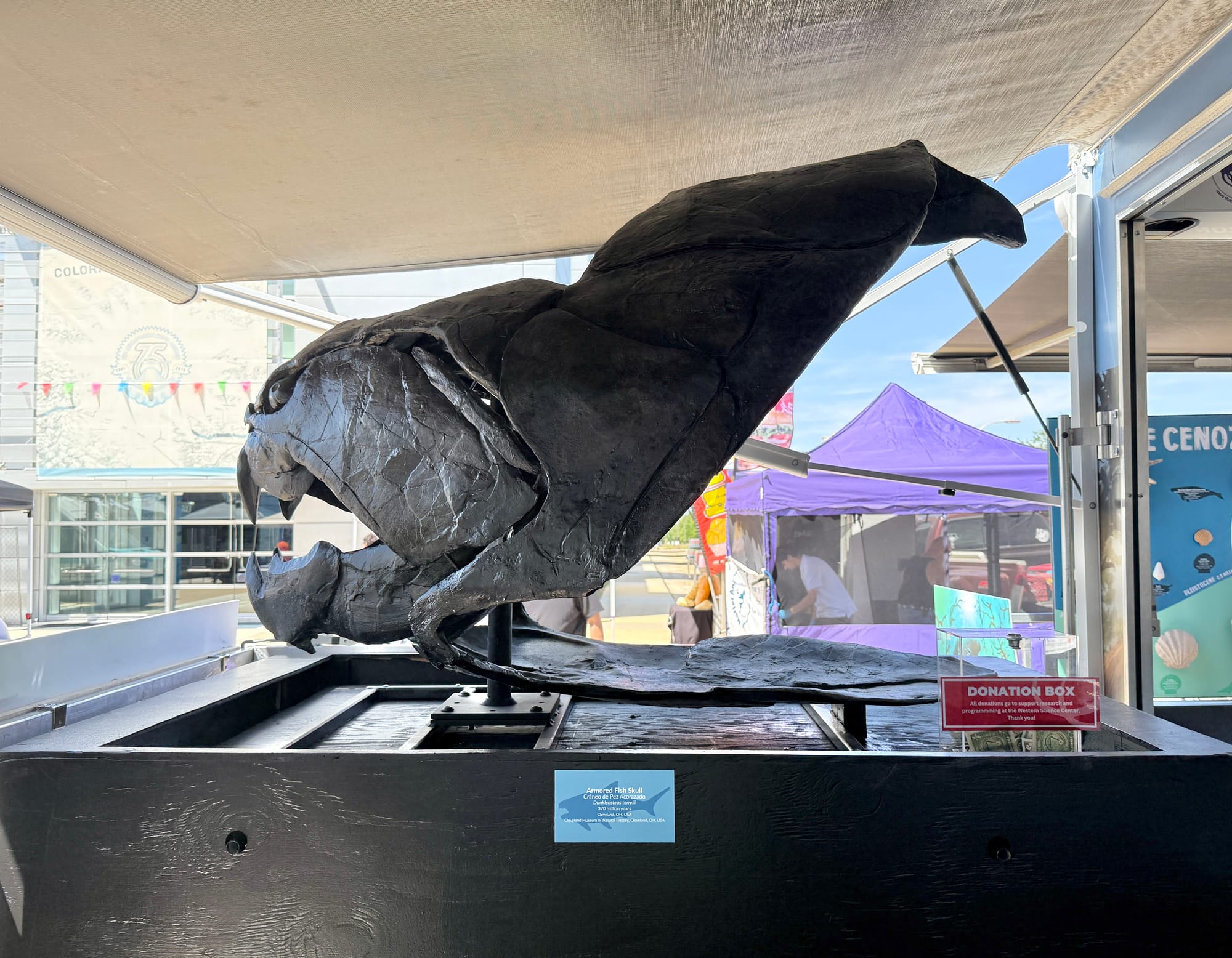
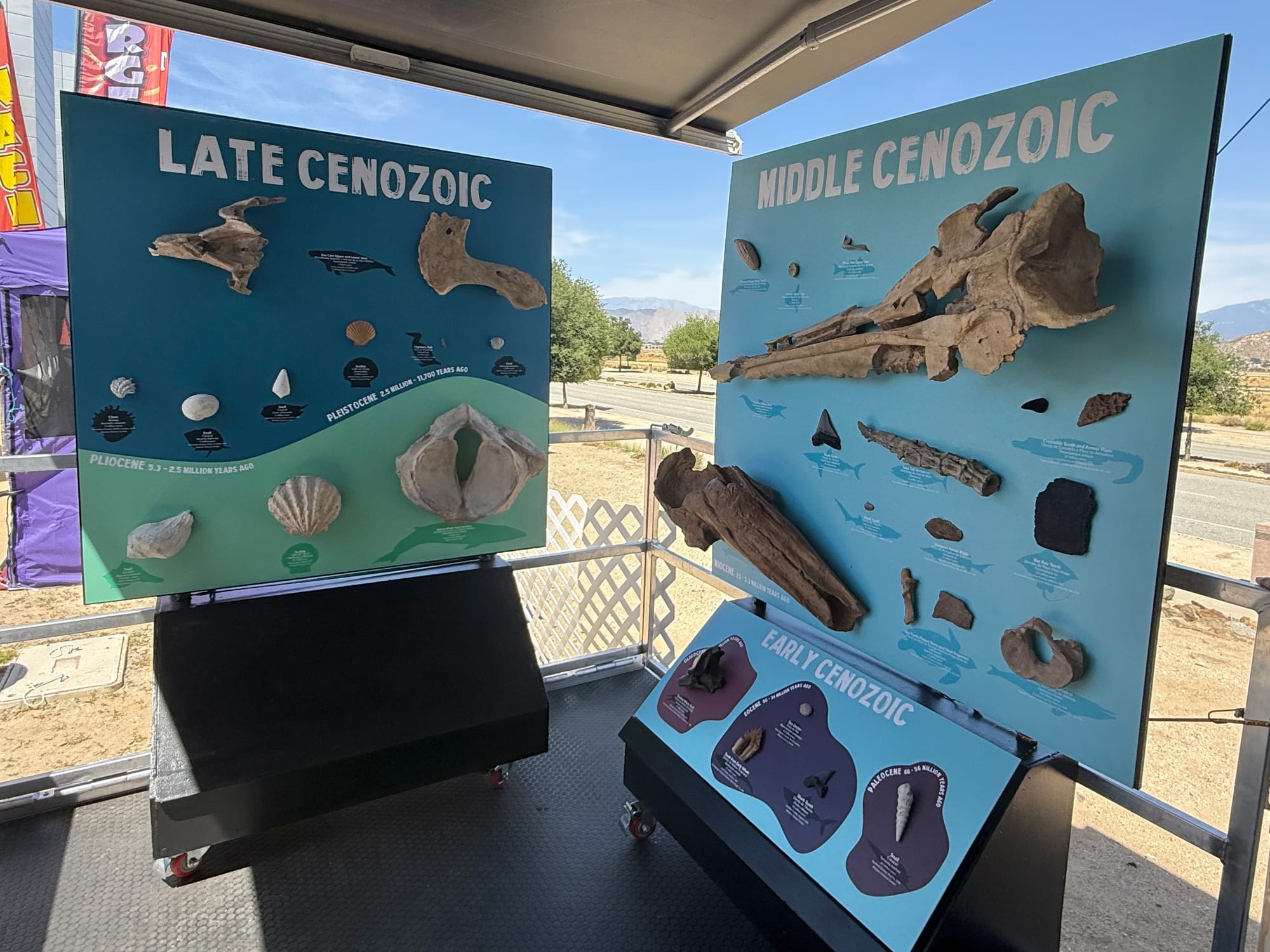
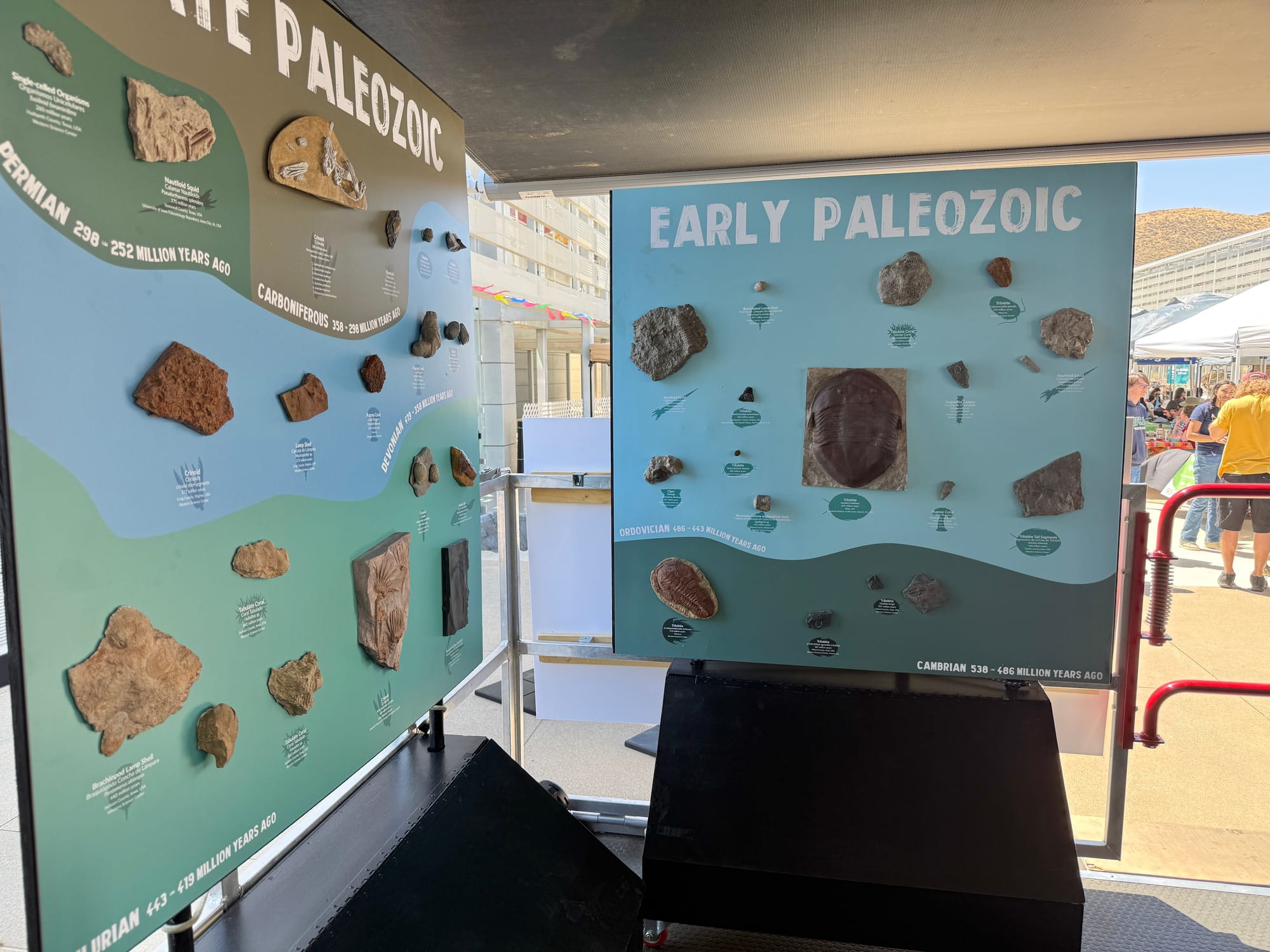
The choice of Dunkleosteus largely determined the layout of the rest of the exhibit, as its skull is so large that it would only fit in one spot. That meant that the rear stage at the entrance would feature the Cenozoic Era (o-66 million years), the inside area would be the Mesozoic Era (66-252 million years), and the side stage would be the Paleozoic Era (252-538 million years). Later we also decided to add a small panel right beside the exit that featured the Ediacaran Period (538-635 million years), the last period before the beginning of the Paleozoic Era.
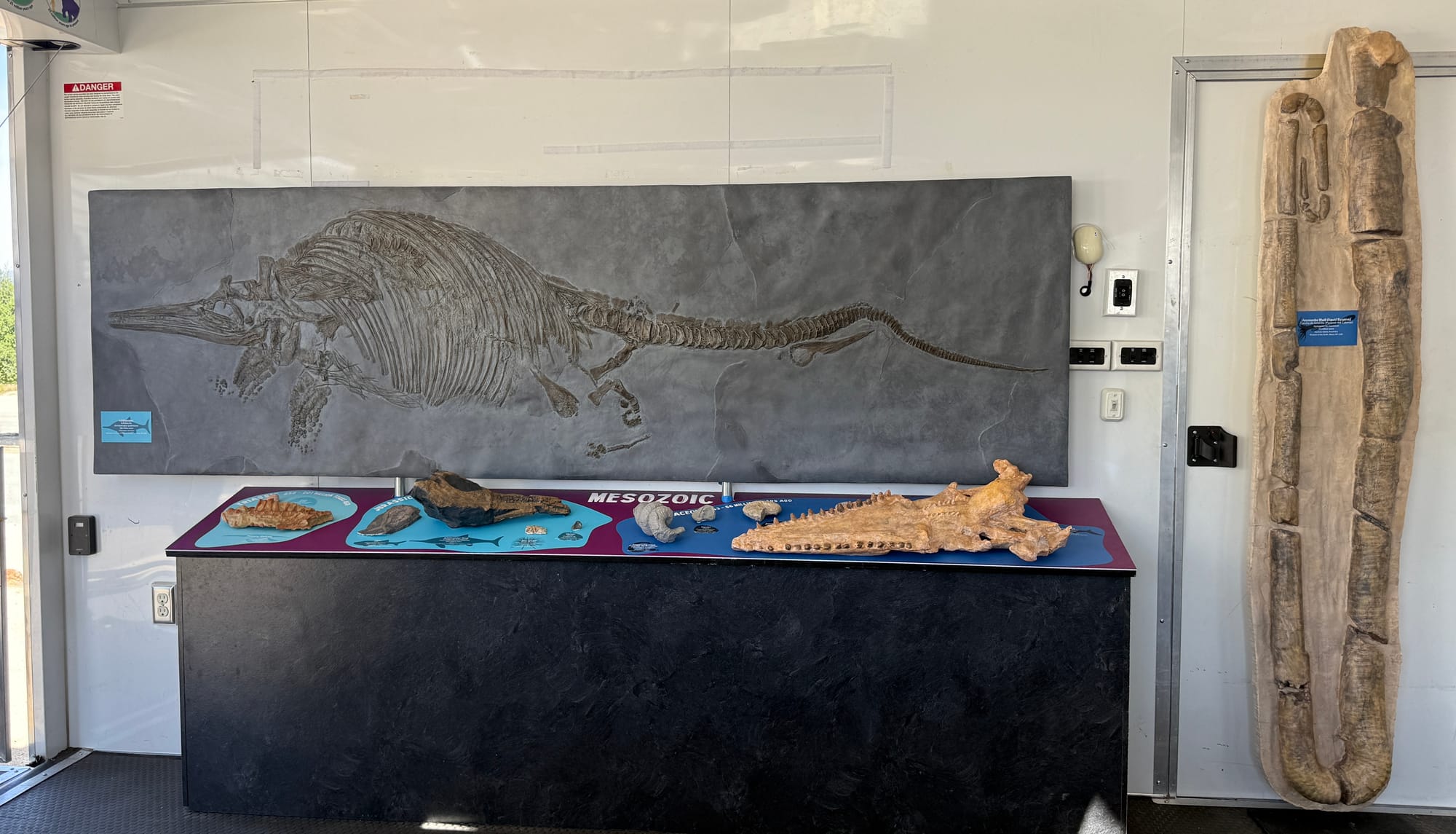
Each of the three sections includes at least one large, showy specimen. Besides Dunk, we also purchased from RCI a cast of the American Museum of Natural History’s ichthyosaur Stenopterygius:
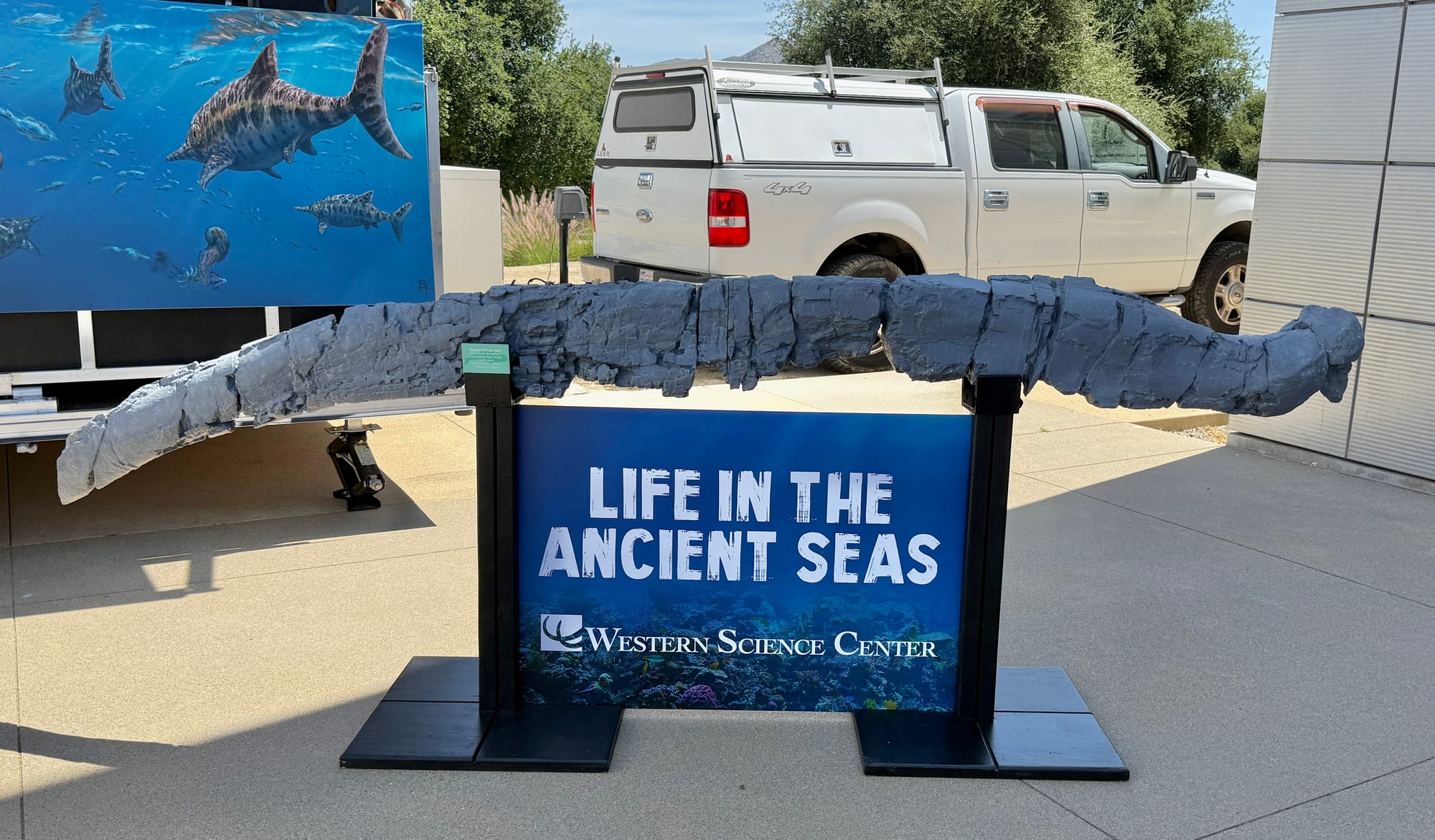
We also for the first time expanded the display beyond the trailer’s limits, adding a title panel that supports the 2.5 meter-long 3D-printed lower jaw of Mystic, a Pliocene right whale in the WSC collection:
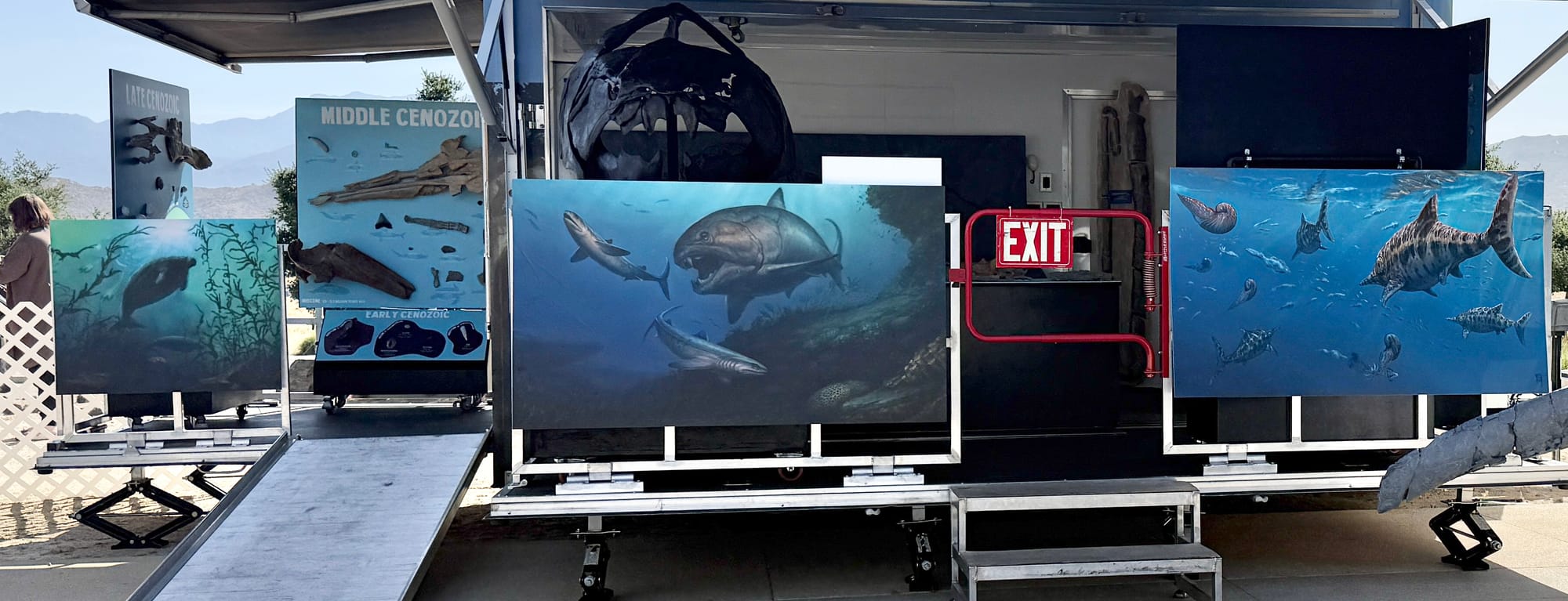
At WSC, we work hard to promote the synthesis of sciences and the arts. An early design decision was to include a commissioned painting representing each of the eras in the exhibit, each done by a different paleoartist. Our Cenozoic scene portraying the sea cow Hydrodamalis is by Corbin Rainbolt, the Mesozoic features Stenopterygius by Brian Engh, and the Paleozoic features Dunkleosteus by Cullen Townsend.
Unlike our Inland Empire exhibit that includes exclusively Riverside County specimens, Ancient Seas has no Riverside County specimens at all, although many are from the WSC collections. Instead we have replicas of specimens from 13 US states and 12 other countries, representing all 7 continents. Our replicas are based on specimens housed in 20 different museums in 8 countries. We hope to give our offsite visitors a brief introduction to the richness and wonder of sea life across time and space.

If you like what you're reading, please consider becoming a paid subscriber or leaving a tip. All proceeds go to cover the cost of maintaining the site and supporting research and education at the Western Science Center.