Fossils at the Mall
Later this year we're going to open a new permanent exhibit at Western Science Center featuring Ice Age fossils from Riverside County. While the largest single fossil collection at WSC is from Diamond Valley Lake, we are the fossil repository for the entire county and hold collections from numerous sites outside of Hemet. The new exhibit will showcase specimens from these sites. Most of the sites have relatively small numbers of specimens, and they aren't always well-preserved. That means that in some cases we'll be displaying specimens that might not be the showiest things in our collection, but they do show that a given species was living in a particular place.
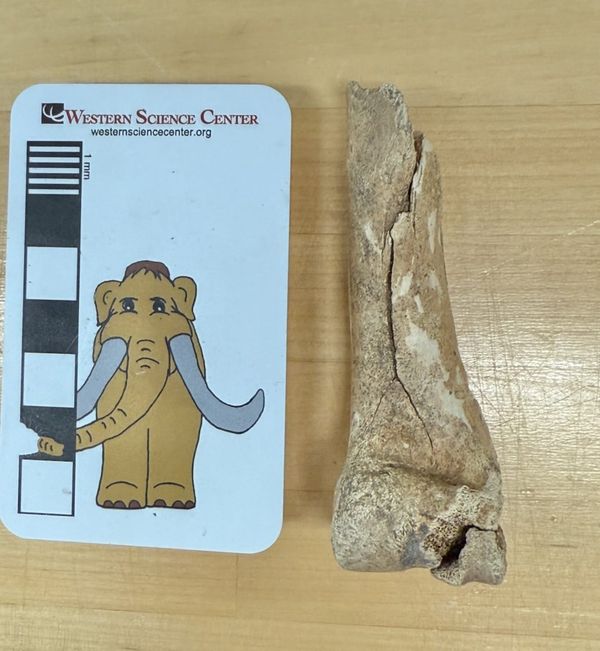
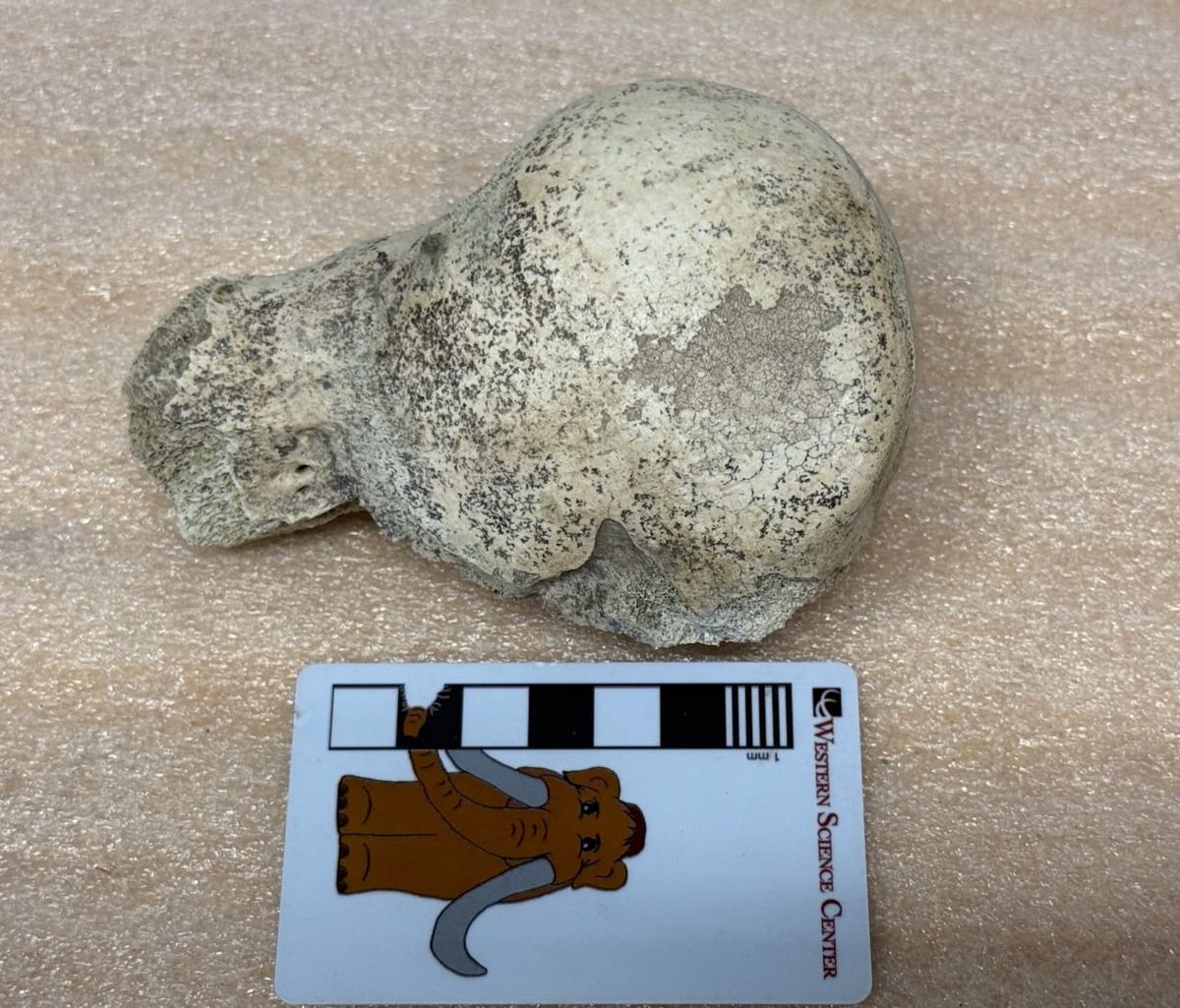
One site we intend to feature is the Promenade Temecula, a large shopping mall that opened in 1999. We have a small collection of mostly scrappy fossils from this site, unfortunately without any identifications or documentation. In our initial scan of the material we only identified horses, but we've been working on some of the material in the lab to see what we can use in the exhibit. This morning as I was looking through the material the fragment shown above and below caught my eye.
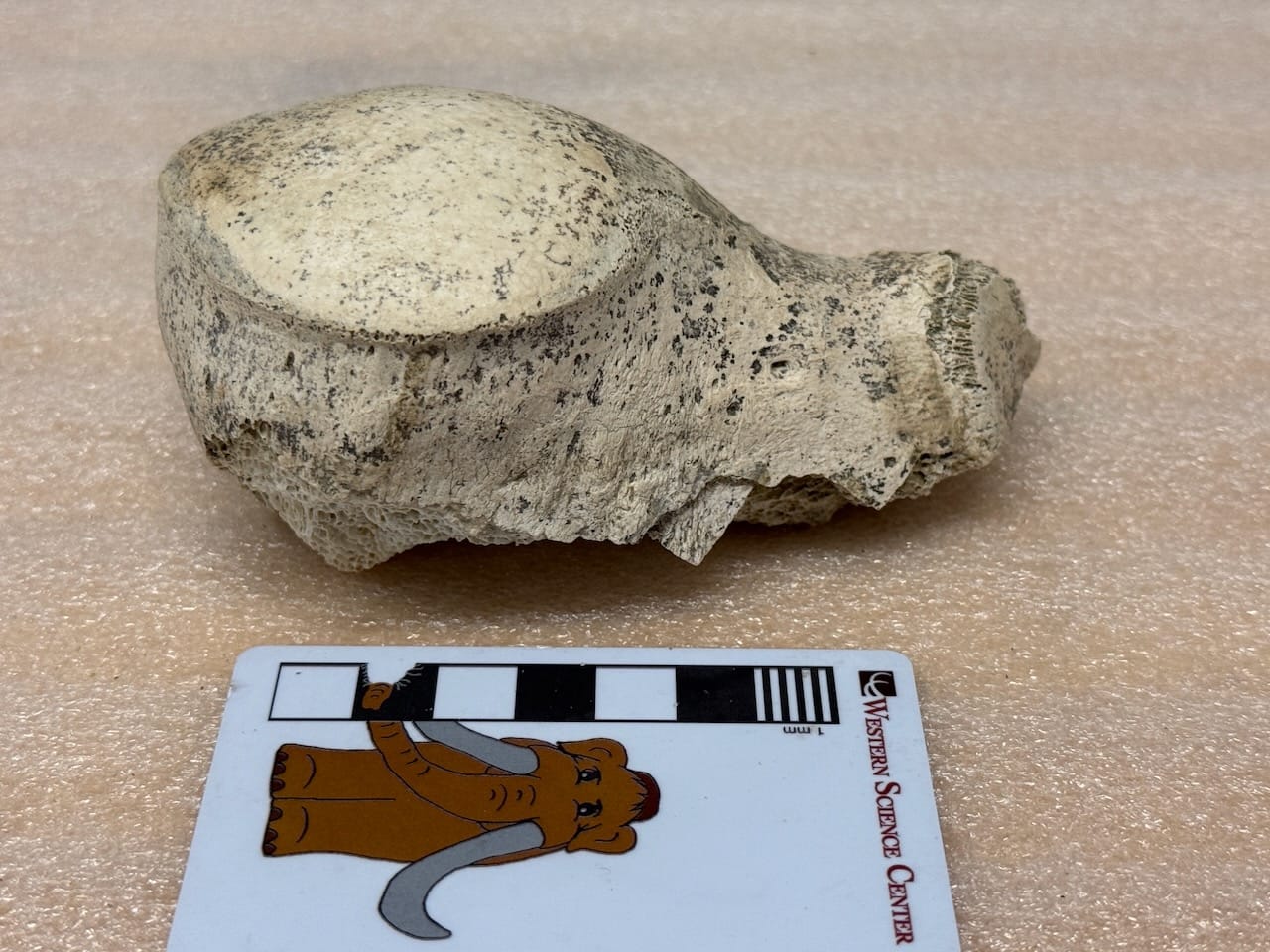
The smooth, curved surface is the ball (or head) of a ball-and-socket joint, indicating that this is the proximal end of a limb bone. In the femur (thigh bone) the head would be constricted at its base and sit on the end of a short, narrow shaft (the "neck"), but in this bone there's no constriction below the head. Instead, this fragment is a much better fit for a humerus (upper arm bone).
Since everything else we've found at the Promenade is a horse I took the fragment into the reference collection to compare to a modern horse, only to find that the fragment was much too large and had the wrong shape to be a horse! Stepping up in size, the head diameter was about right for a bison, but the edge of the bison humeral head has a sharp ridge that this specimen lacks. It seems the best match in size a shape is with the right humerus of the camel Camelops hesternus:
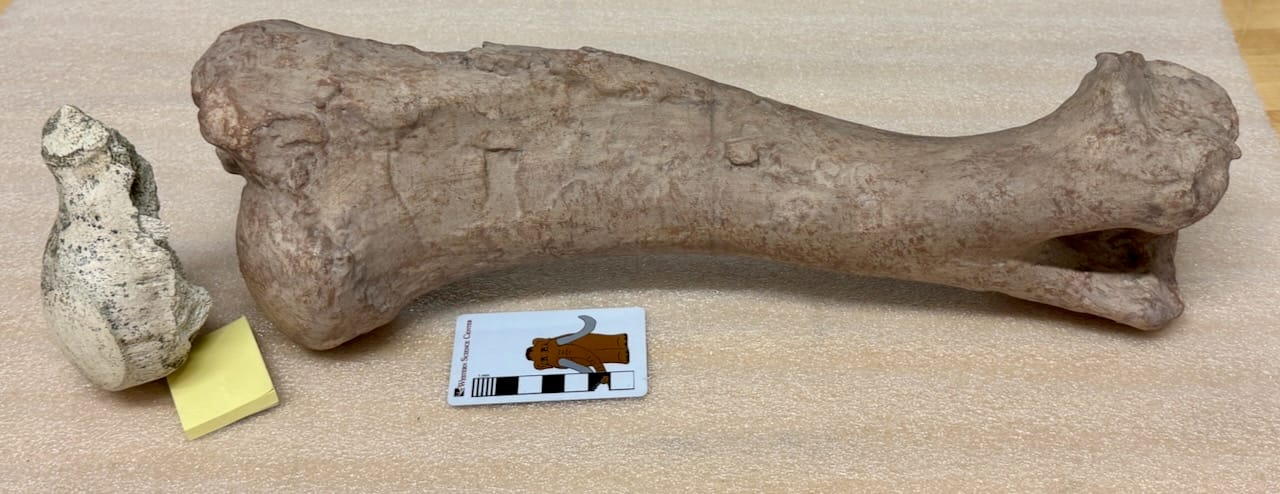
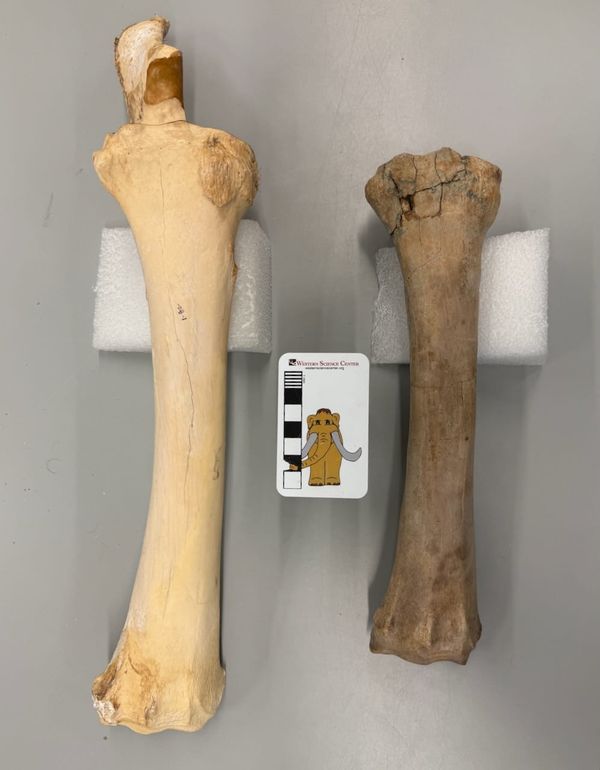
The reference specimen is a 3d print of a right Camelops humerus from Lake Elsinore (also planned for the exhibit), seen in lateral view. Here's a closeup of the relevant area:
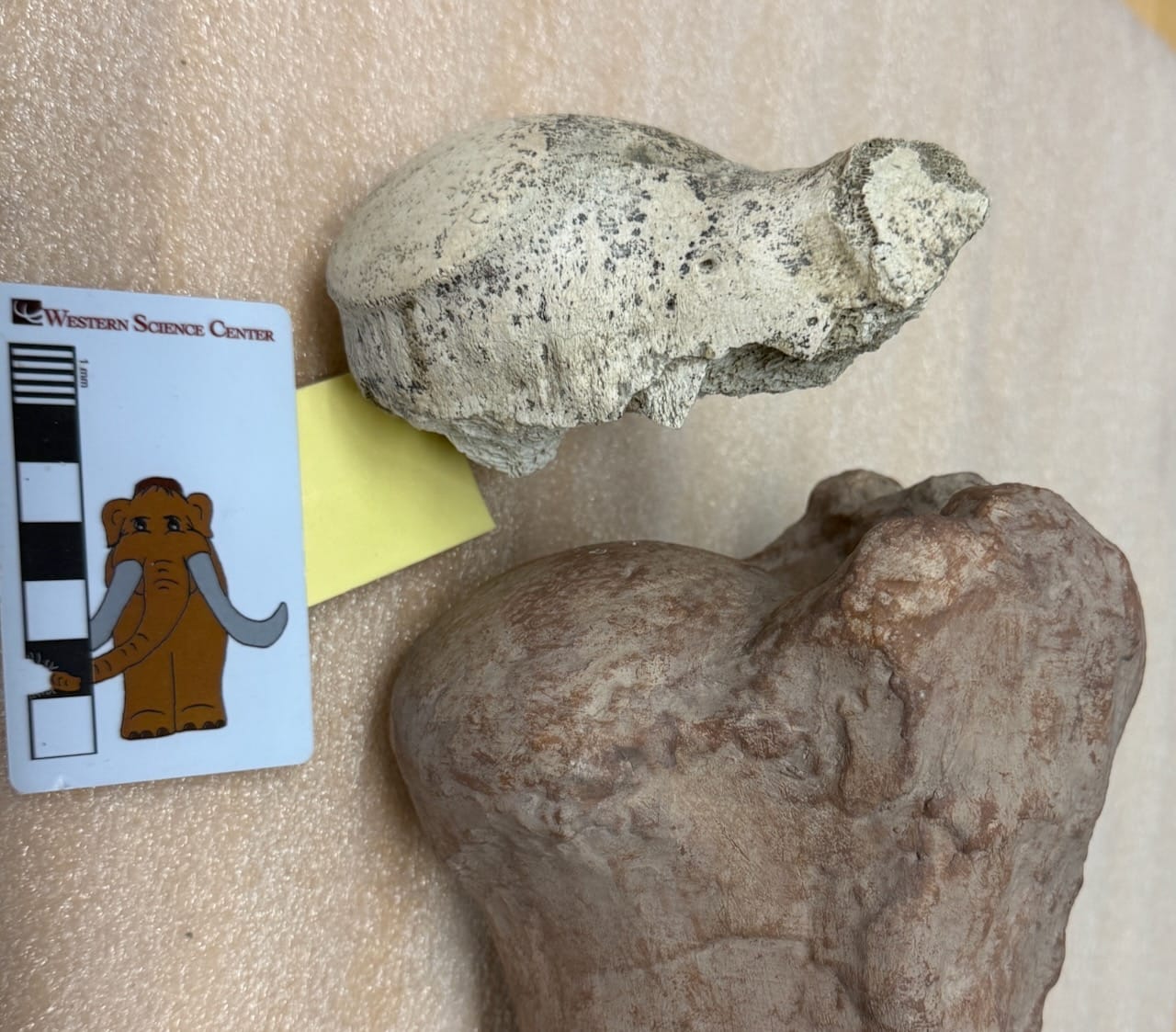
Unlike a bison, the edge of the humeral head comes almost straight down, with no sharp ridge at the edge. The flattened area on the right edge of the Promenade fragment is part of what's called the lateral tuberosity, also visible in its complete form in the Lake Elsinore print.
This fragment, small and incomplete as it is, is currently the only evidence we have establishing the presence of Camelops at the Promenade Temecula. As such it has some scientific value, and is also likely to be included in our new exhibit.
Here are some other posts featuring fossils we're considering for the new exhibit:

If you like what you're reading, please consider becoming a paid subscriber or leaving a tip. All proceeds go to cover the cost of maintaining the site and supporting research and education at the Western Science Center.