A little leg bone from the Ice Age
In our upcoming exhibit on Ice Age fossils from Riverside County, one of the prominently featured localities is the Harveston subdivision in Temecula. This is a small but remarkably diverse collection that includes examples of animals that are relatively rare as fossils from the area.
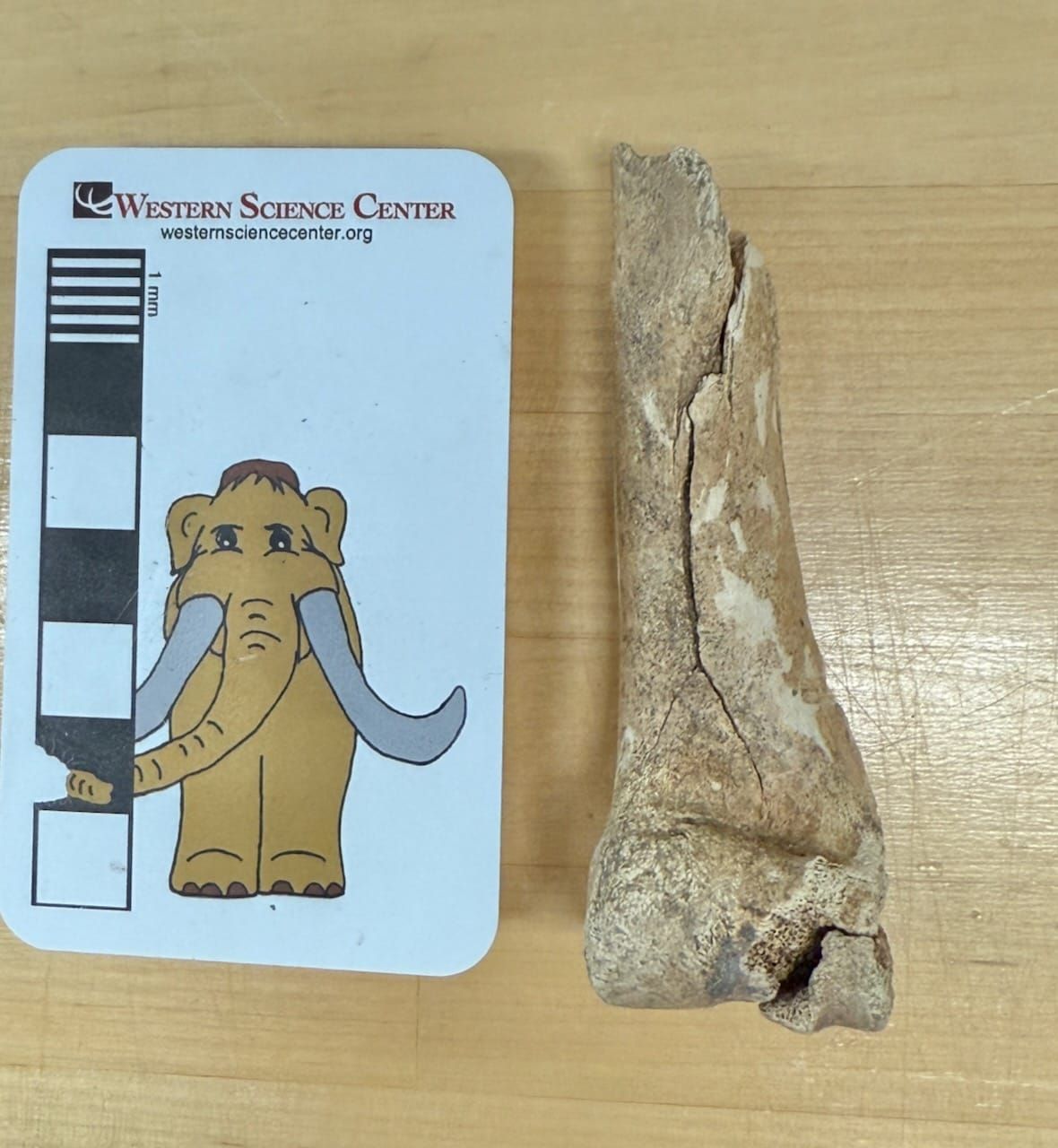
Many of the Harveston bones are fragments, and many of them have extensive evidence of scavenging. The small bone shown above is a typical find from the site. One end is broken off, but the articular surface at the other end is the typical shape for a humerus, the upper bone in the front leg. Above it's shown from the front ("anterior" or "cranial" view), and below shows it from behind ("posterior" or "caudal"):
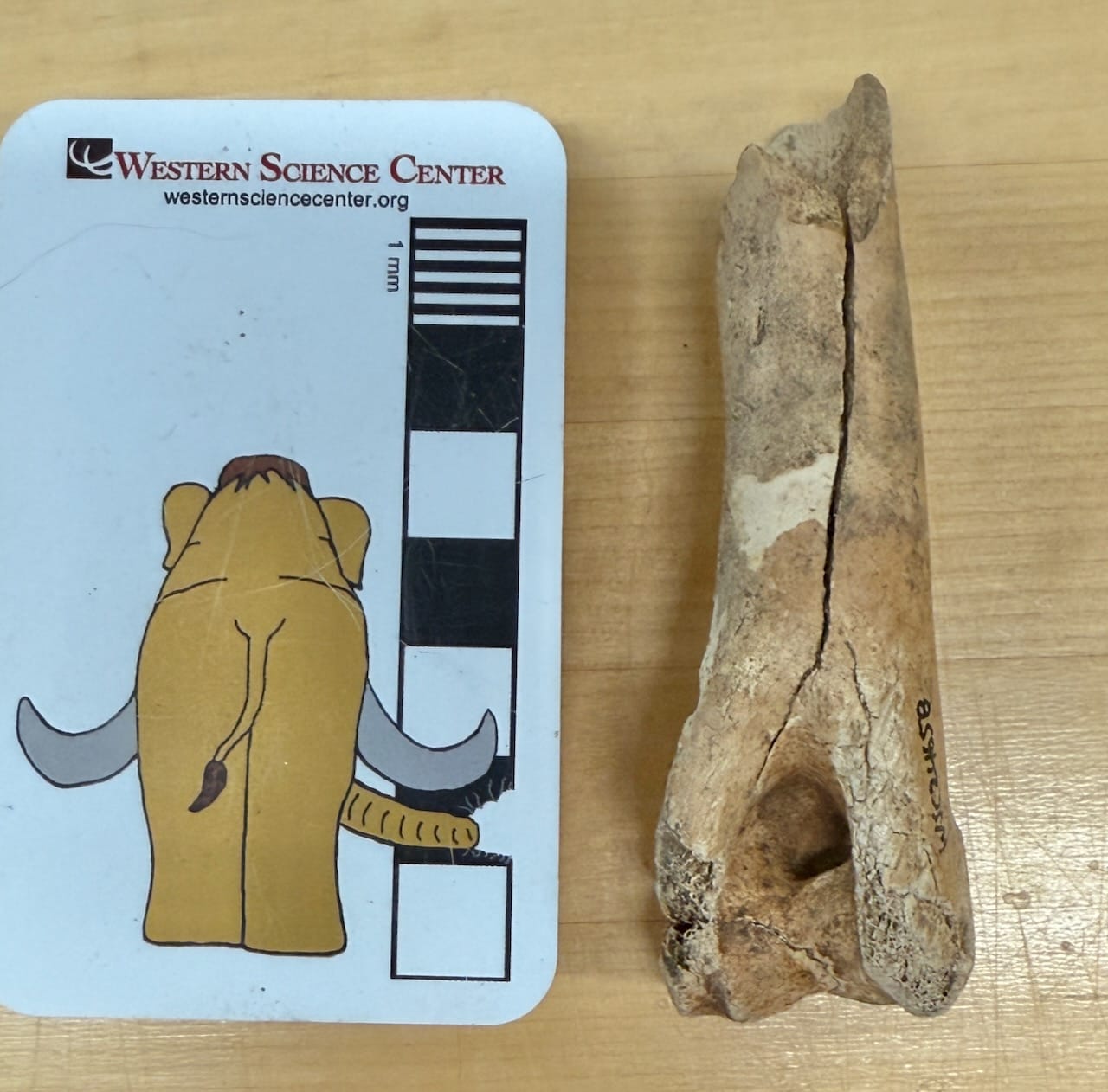
The deep pit at the bottom is called the olecranon fossa, and it's only found in the humerus. When the front leg or arm is extended, the olecranon process of the ulna (your "funny bone") slides into this fossa. There is some interior spongy bone visible on the ridges on each side of the olecranon fossa. The bone could have been abraded by water or some other process after the animal died, our this could be damage caused by teeth from a scavenger; again, many of the bones from this site were scavenged.
Identifying this bone has been interesting. It's from an adult animal, based on the fact that the end of the bone is solidly fused to the shaft. That means that it's too small to be one of our common megafauna (mammoth-mastodon-horse-bison-camel-sloth). It is in the right general size range for a large dog like a dire wolf, but the curvature is a bit off, and canids typically have a large opening called the supratrochlear foramen that this bone lacks. the best match in our reference collection is a white-tailed deer (Odocoileus virginianus).
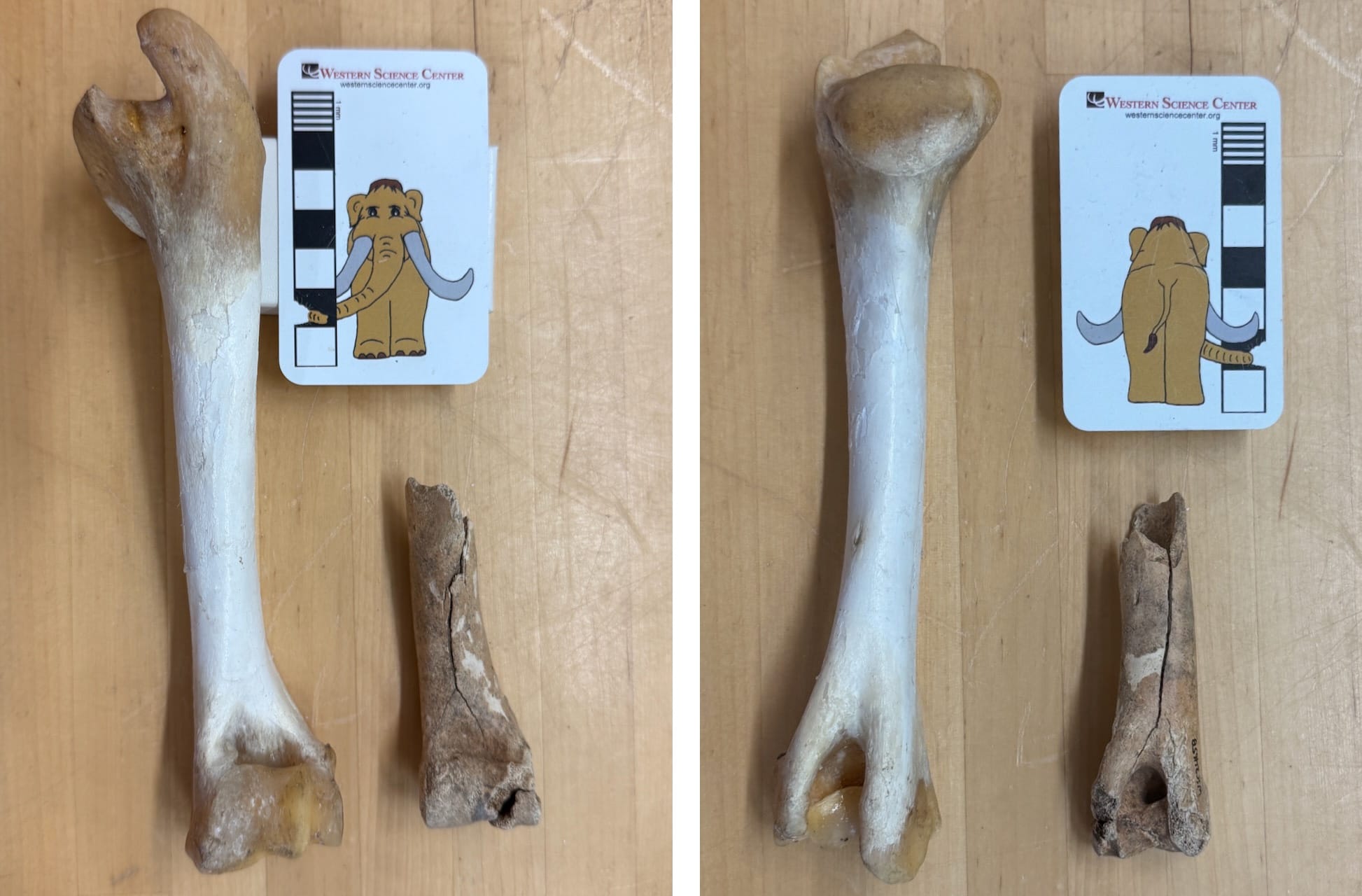
Allowing for damage, our fossil specimen is a good match for our reference white-tailed deer. The biggest issue is that the fossil is a good bit smaller. That's not necessarily a problem, as it seems that Pleistocene white-tailed deer were a little smaller than modern ones based on our WSC collections. But this one seems even smaller than usual. And the thing about Harveston is that it's a diverse site that includes multiple deer bones, but that has also produced a possible pronghorn tooth! The pronghorn Capromeryx was even smaller than a white-tailed deer, and since very little has been published on pronghorn postcranial anatomy I don't know exactly what a pronghorn humerus looks like (but it's probably similar to a deer). So right now I'm fairly confident our humerus comes from a deer, but I can't absolutely rule out a pronghorn just yet.
Here are some other posts featuring fossils we're considering for the new exhibit:

If you like what you're reading, please consider becoming a paid subscriber or leaving a tip. All proceeds go to cover the cost of maintaining the site and supporting research and education at the Western Science Center.