Skeletal mounts, or how to turn scraps into a story
This is the 10th in our monthly series of posts celebrating Western Science Center's 20th anniversary.
Today (October 15, 2026) is the actual 20th anniversay of the opening of the Western Science Center, and yesterday was National Fossil Day in the United States. It seems like a good time to discuss what is perhaps the most iconic fossil display in natural history museums – the mounted skeleton.
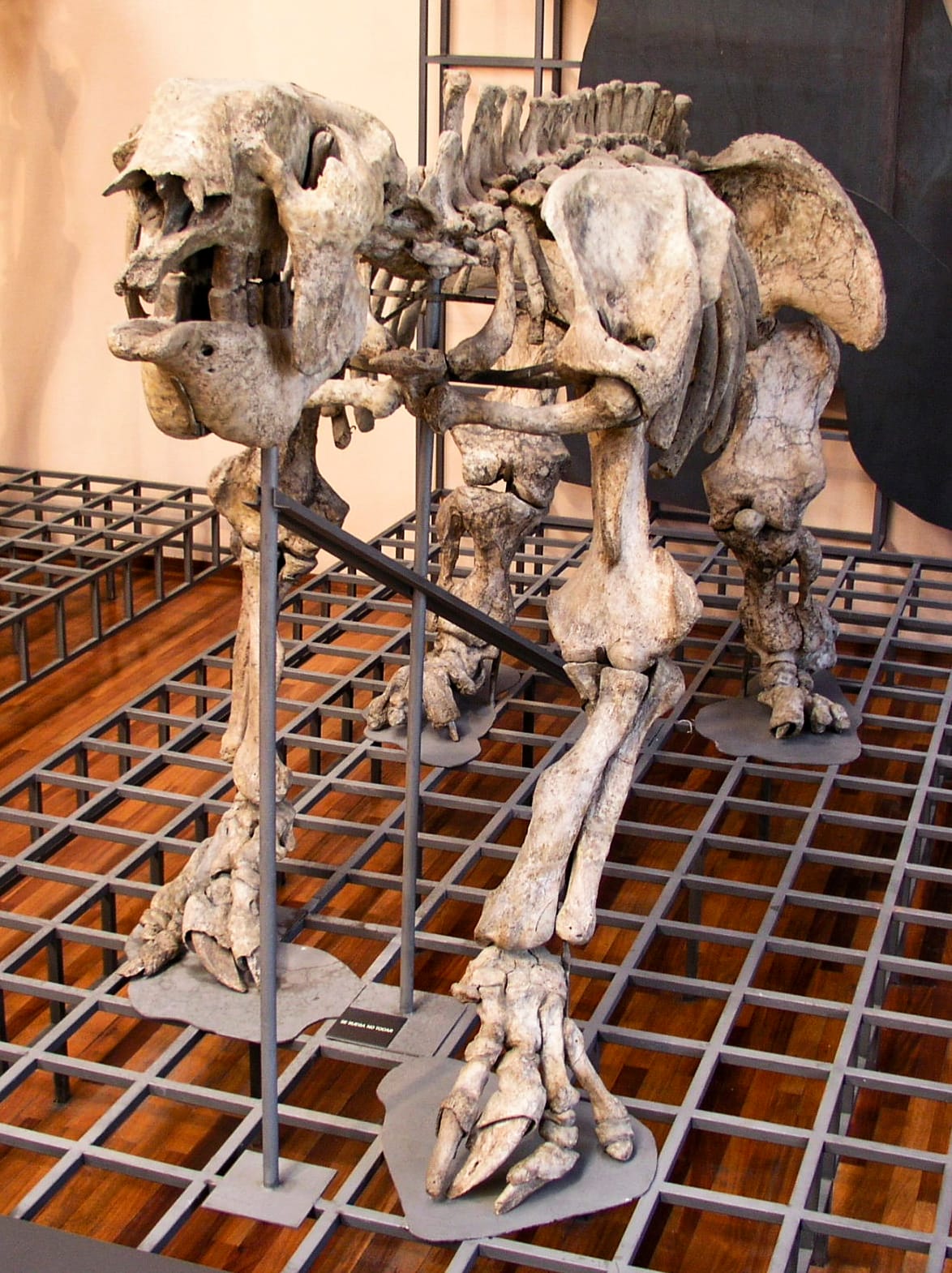
It appears that the earliest mounted fossil skeleton put on display was the ground sloth Megatherium americanum, mounted by Juan Bautista Bru for the Museo Nacional de Ciencias Naturales in Madrid in 1785, although there were earlier mounts of modern skeletons.
There were a few other mounts around this time, most notably the Peale mastodon in 1802. Establishing what would become a typical pattern, the Peale mastodon was a composite of several individuals, and filled in missing elements with paper-mâché and wooden replicas. The first mounted dinosaur skeleton was Hadrosaurus foulkii, at the Academy of Natural Sciences in 1858.
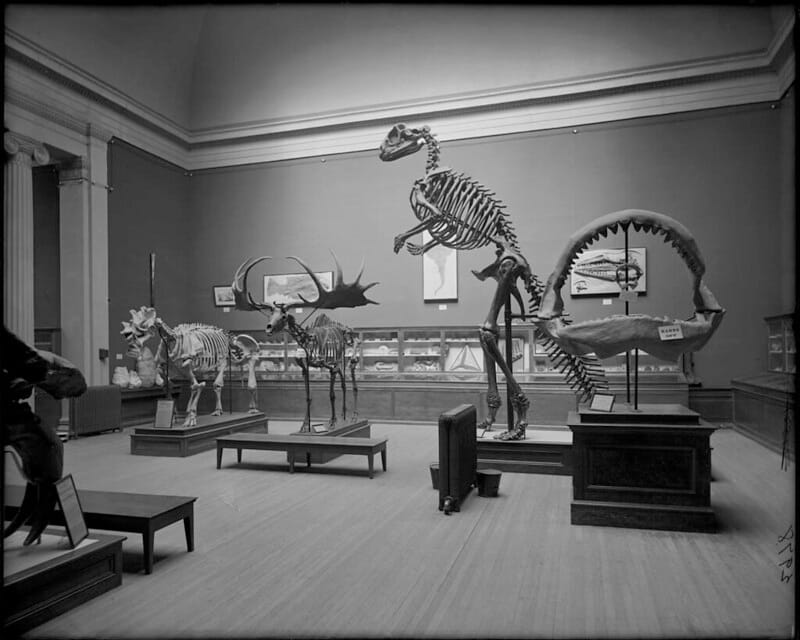
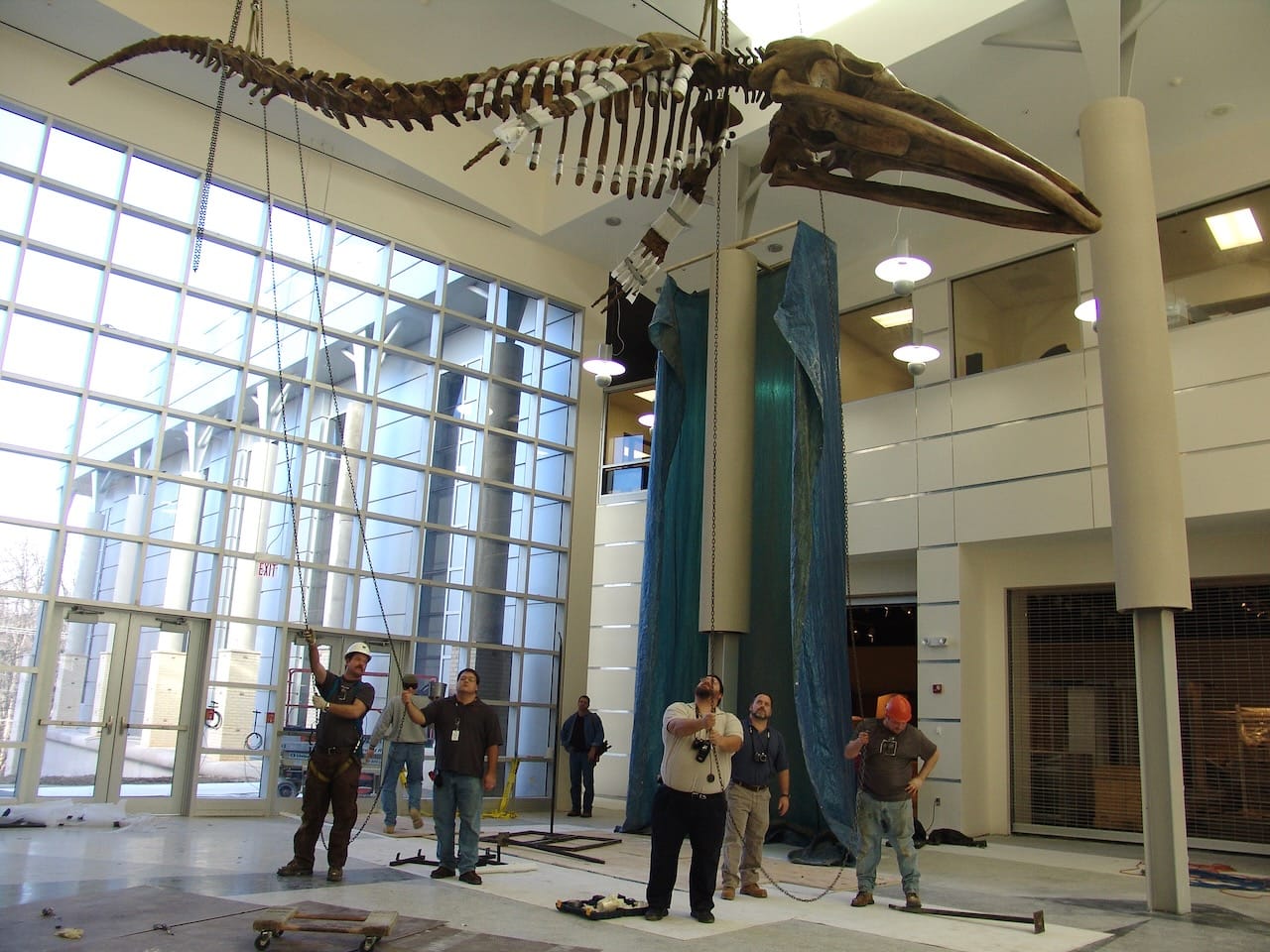
The Peale mastodon and Hadrosaurus in particular were public sensations, and established mounted skeletons as the de facto standard for displaying fossil skeletons. One of the first museum jobs I ever did was to mount a pygmy sperm whale skeleton for the Bermuda Aquarium. A replica of the first species I named, Eobalaenoptera harrisoni, is a featured mount at the Virginia Museum of Natural History. Like many mounted specimens, it's a composite of three different individuals, and about 40% of the mount is sculpted.
Mounted skeletons are often awe-inspiring, and I'm not immune; one of my bucket-list items is to see the giant Giraffatitan skeleton on display in Berlin. There is also some scientific value in articulating a skeleton, in that we can more readily see how everything articulates and what that does to body shape and proportions (although this can sometimes be very misleading). But as I've gotten older, I've started to have a few concerns about our traditional mounted skeletons.
A common complaint from scientists about mounted skeletons that include original material is that it's very difficult to do research on those elements. On older mounts the bones may be reconstructed and it's not always easy to tell what's original and what's modeled. And the logistics of taking measurements on a mounted specimen can be challenging.
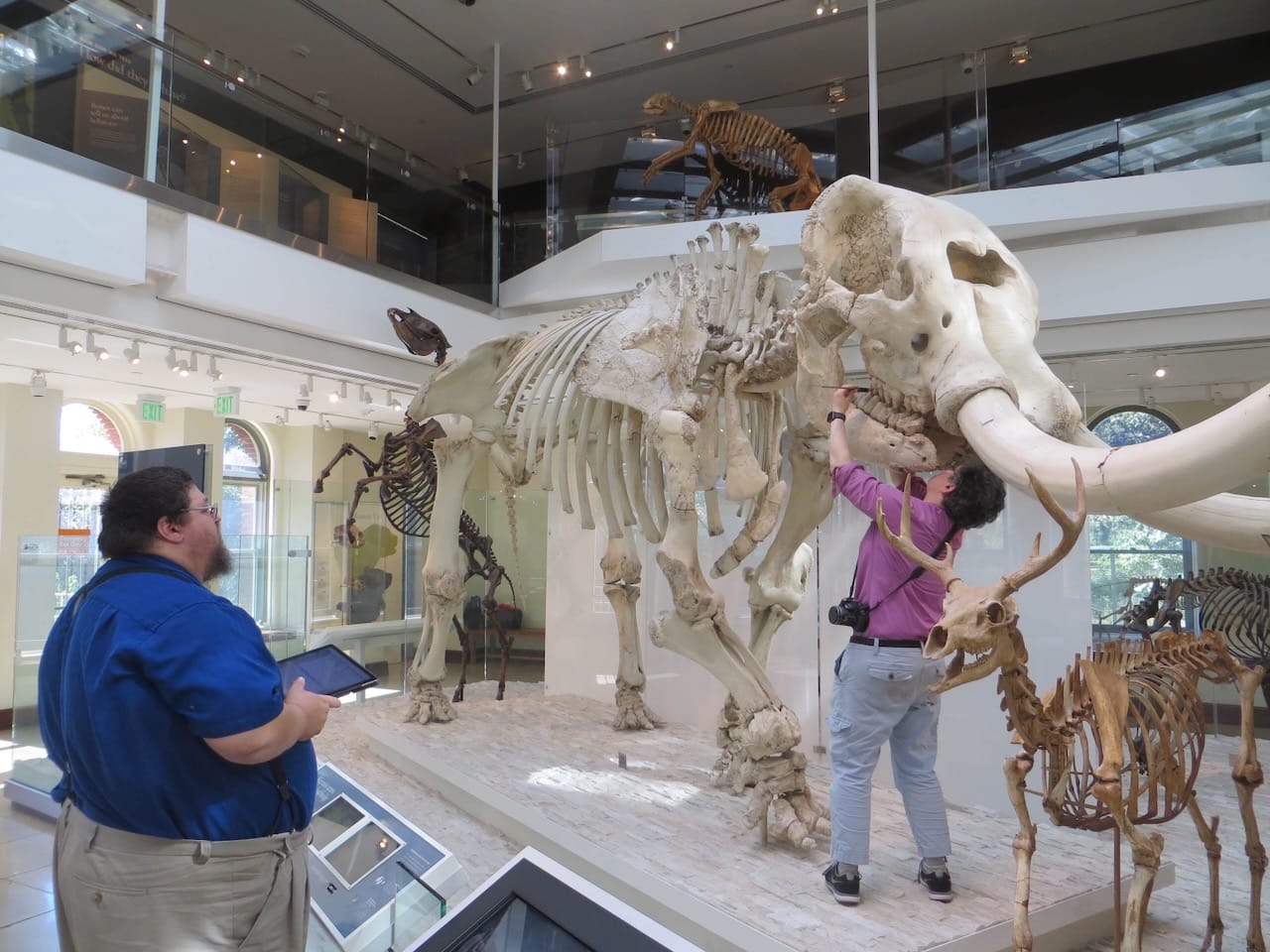
As our ability to make dynamic, complex mounts has improved, I've anecdotally noticed another issue with young visitors, in that they seem to struggle with the idea that the skeleton was inside the living animal. They often seem to imagine a live dinosaur as a walking skeleton (as portrayed in movies such as Night at the Museum). Older children and adults do eventually understand this, but still sometimes have trouble realizing that parts of the animal don't fossilize (you encounter this issue more if you work on animals that have large soft tissue structures such as elephant trunks).
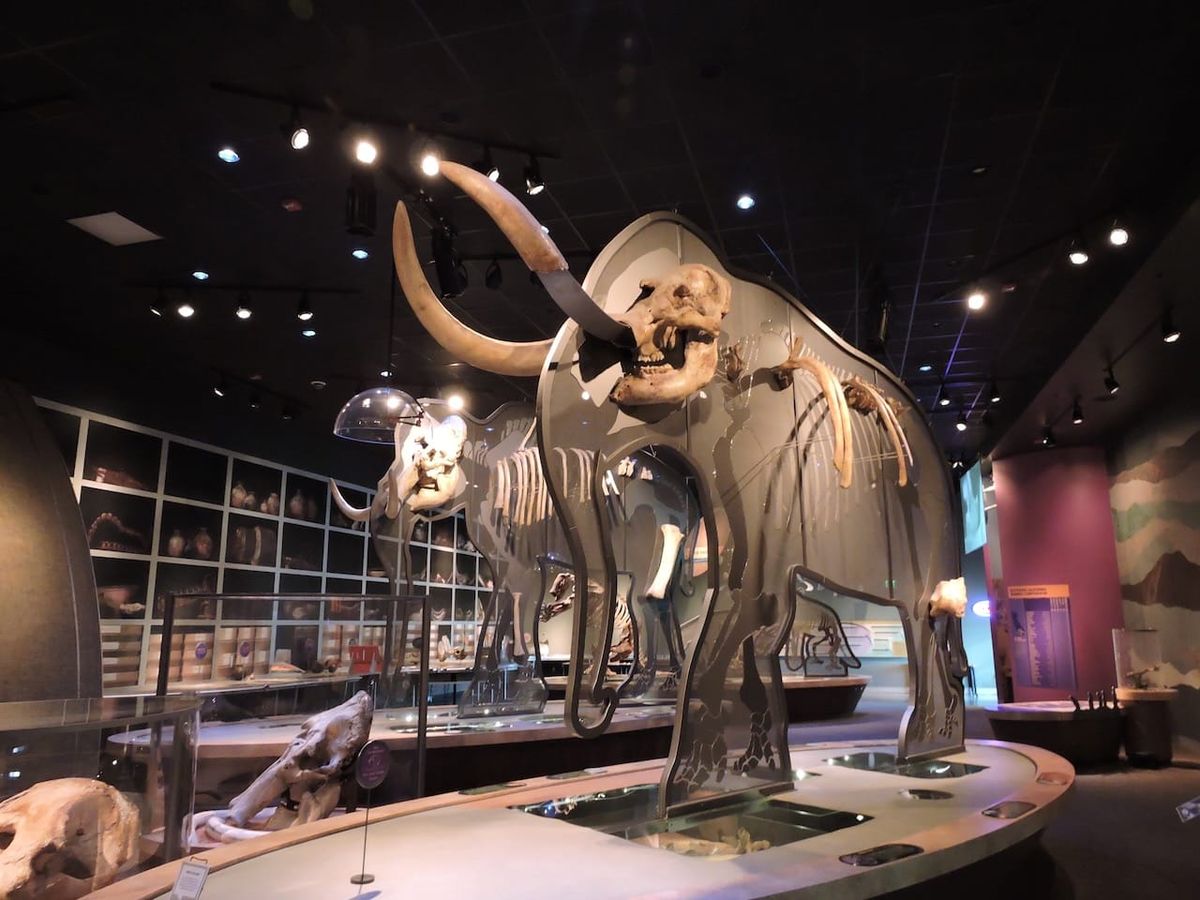
Finally, a feature of many museum exhibits that has bothered me for a long time is that much of the scientific process that results in our knowledge is lost in the final exhibit. Skeletal mounts are essentially a hypothesis in physical form, what the paleontologist thinks a skeleton looks like based on the usually very incomplete material at hand. But the actual evidence, the process of reconstruction, and the areas of uncertainty can be difficult to get across to the visitor. That's why I've gradually come to prefer skeletal scrims like the ones we use at Western Science Center, such as Max and Xena at the top of the page.
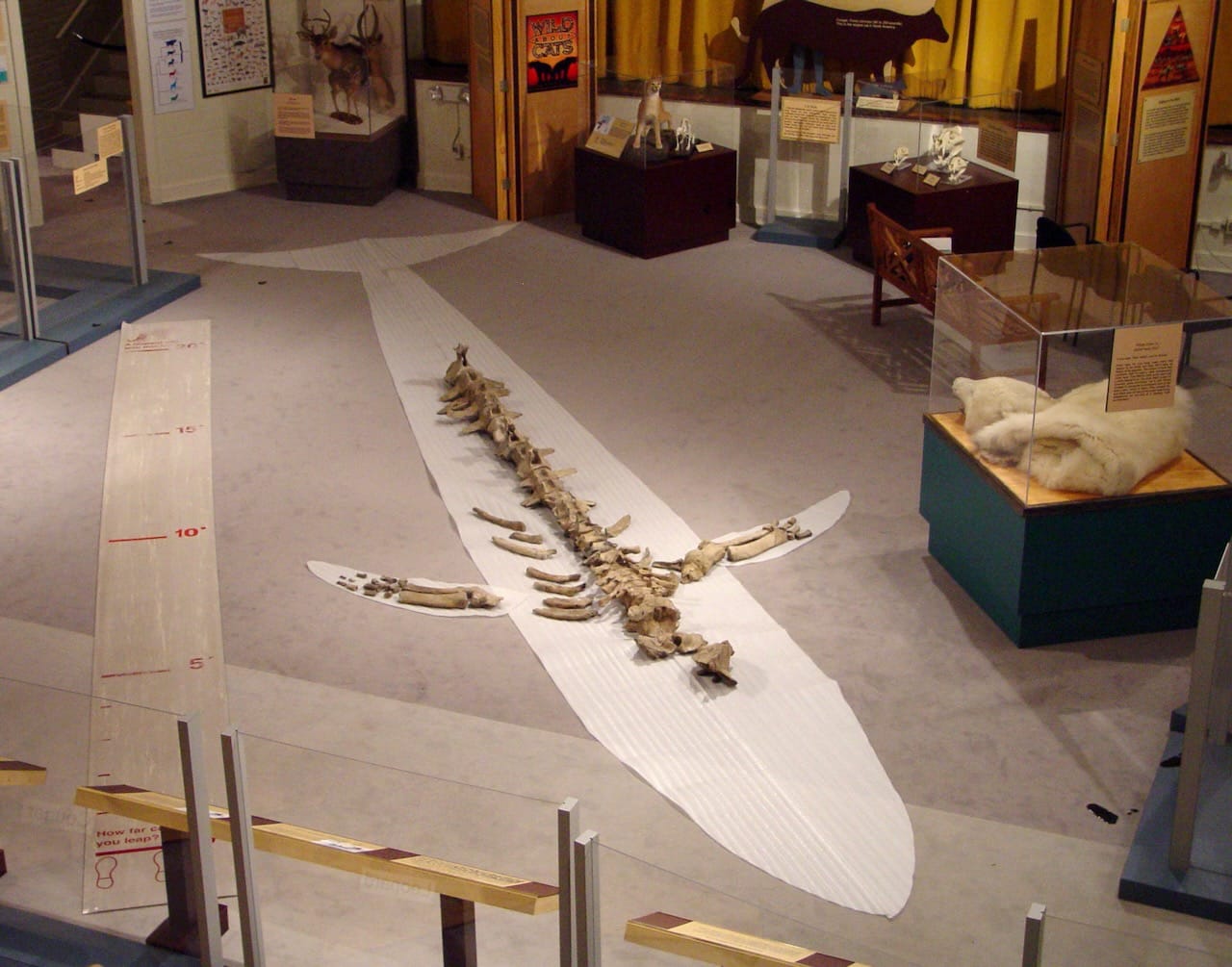
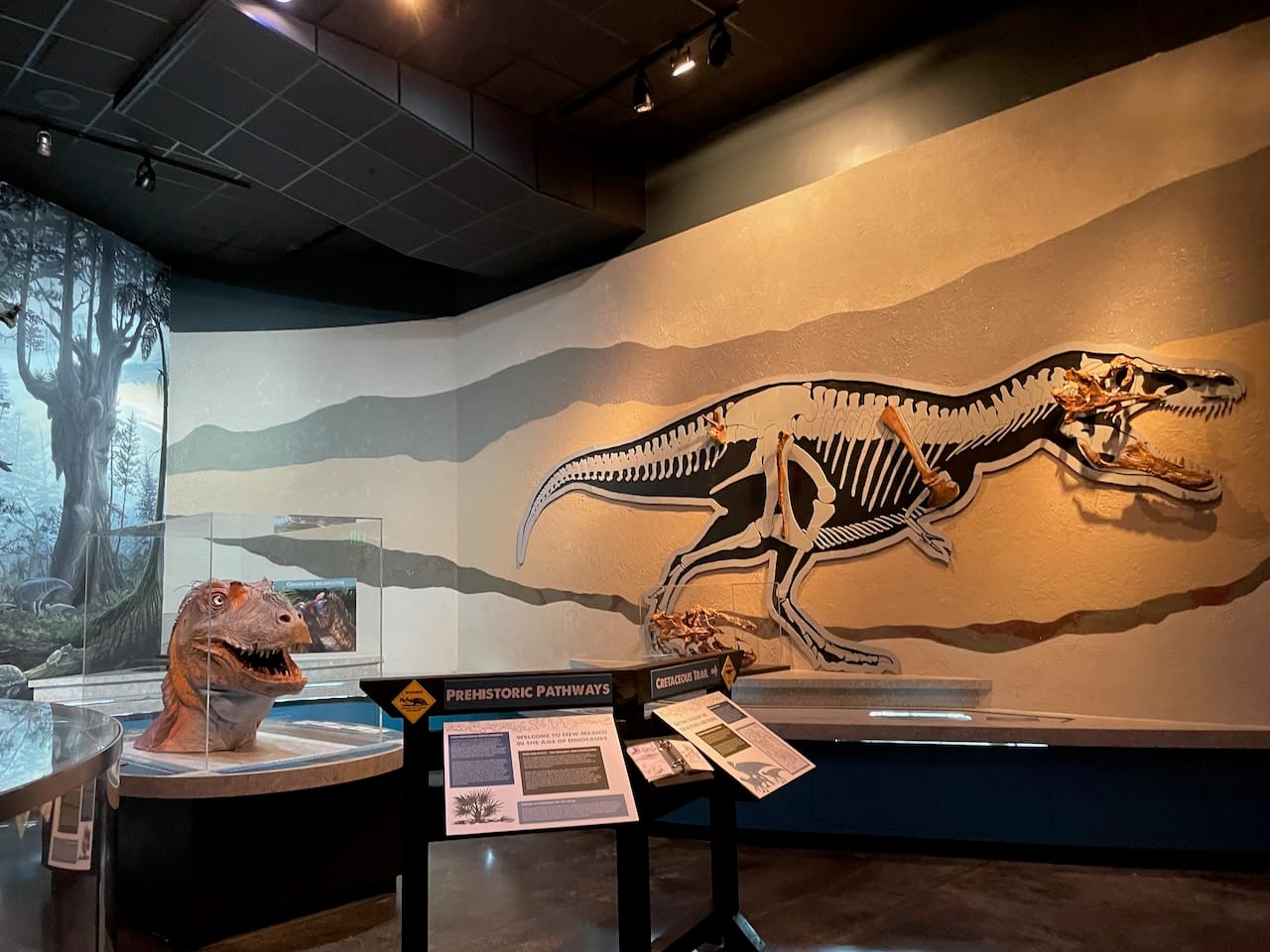
Scrim mounts generally show only the bones that were actually recovered, usually inside an outline of the animal's body. Neither WSC nor I invented the scrim mount. They've been around probably for as long as mounted skeletons, often because they are cheaper, easier to build, and take up less space than a mounted skeleton. But in addition to these logistic advantages, I would argue that there are some significant educational benefits to scrims.
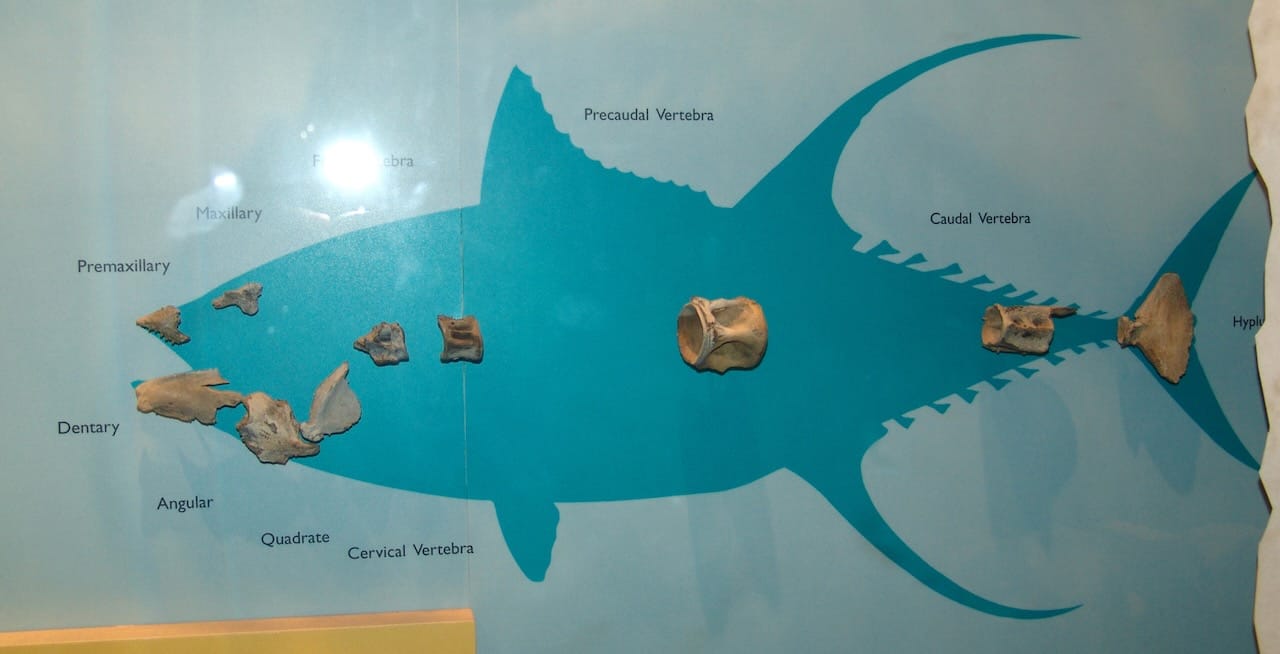
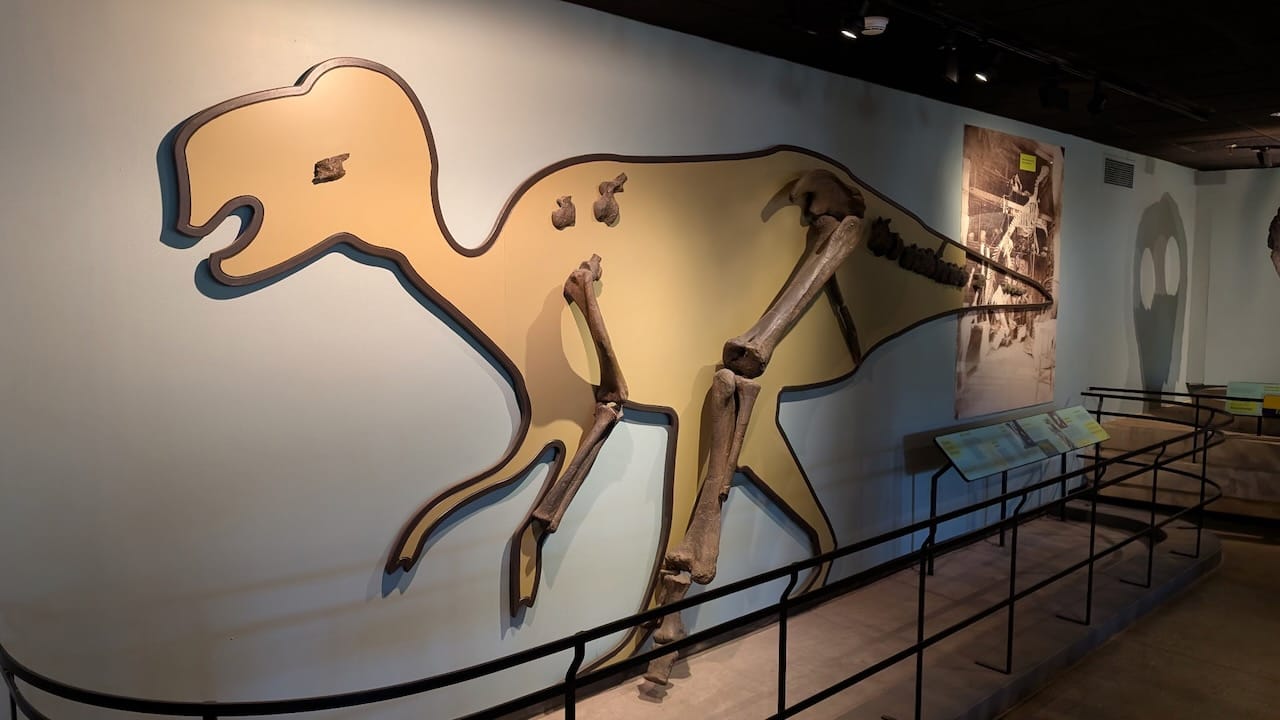
First, the body outline shows how the skeleton fits into the context of the whole animal, including soft tissue structures that aren't supported by bones (such as trunks and dorsal fins). Second, it allows the visitor to see what bones have actually been recovered, giving some insight into what we know versus what we hypothesize. A good example to this can be seen in the original mounted dinosaur skeleton, Hadrosaurus foulkii, which is often described as the first dinosaur known from a substantial amount of material. The original mount from 1858 has not survived, but the actual bones have. They were remounted as a scrim, giving a much better impression of what was actually found. (Unfortunately, due to the extremely short-sighted decision to close the Academy of Natural Sciences museum, this historic specimen will no longer be on public display.)
In the WSC scrims, all of the bones attached to the scrims are replicas, with the original bones displayed in cases underneath them. This make it much easier to access the original material for research while still making it available to the public. This is not a unique advantage of scrims, as the same thing can be done with mounted skeletons, but it does address the accessibility issue.
As you visit a natural history museum and gaze in awe at the fossils on exhibit there, however they're displayed, spare a thought for the work and and knowledge that provides the foundation for the exhibit. Like all science, paleontology is a work in progress, and every display includes what we know, what we suspect, and what we hope to learn in the future.

If you like what you're reading, please consider becoming a paid subscriber or leaving a tip. All proceeds go to cover the cost of maintaining the site and supporting research and education at the Western Science Center.