Horse forearm from Murrieta
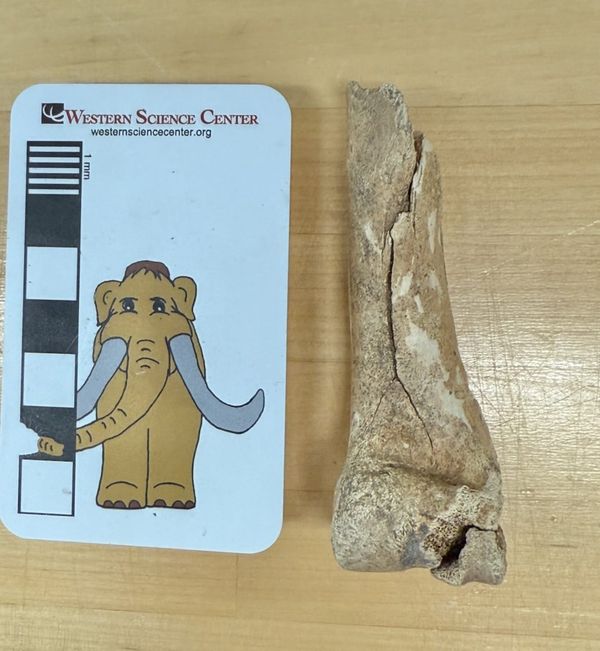
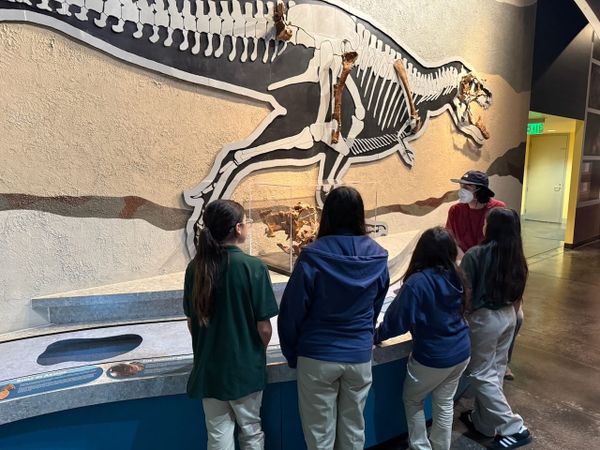
An interesting bone turned up today in our preparations for our new exhibit that opens later this year. We have a small collection of fossils from the California Oaks part of Murrieta, near the 15 Freeway. Unfortunately the company that carried out the excavation didn't collect all the data they should have, but we're pretty sure this material is from the Pauba Formation. As far as is known, the Pauba doesn't contain bison, placing it in the Irvingtonian Land Mammal Age (250,000-1.8 million years ago). But what the Pauba does have a lot of is horses!
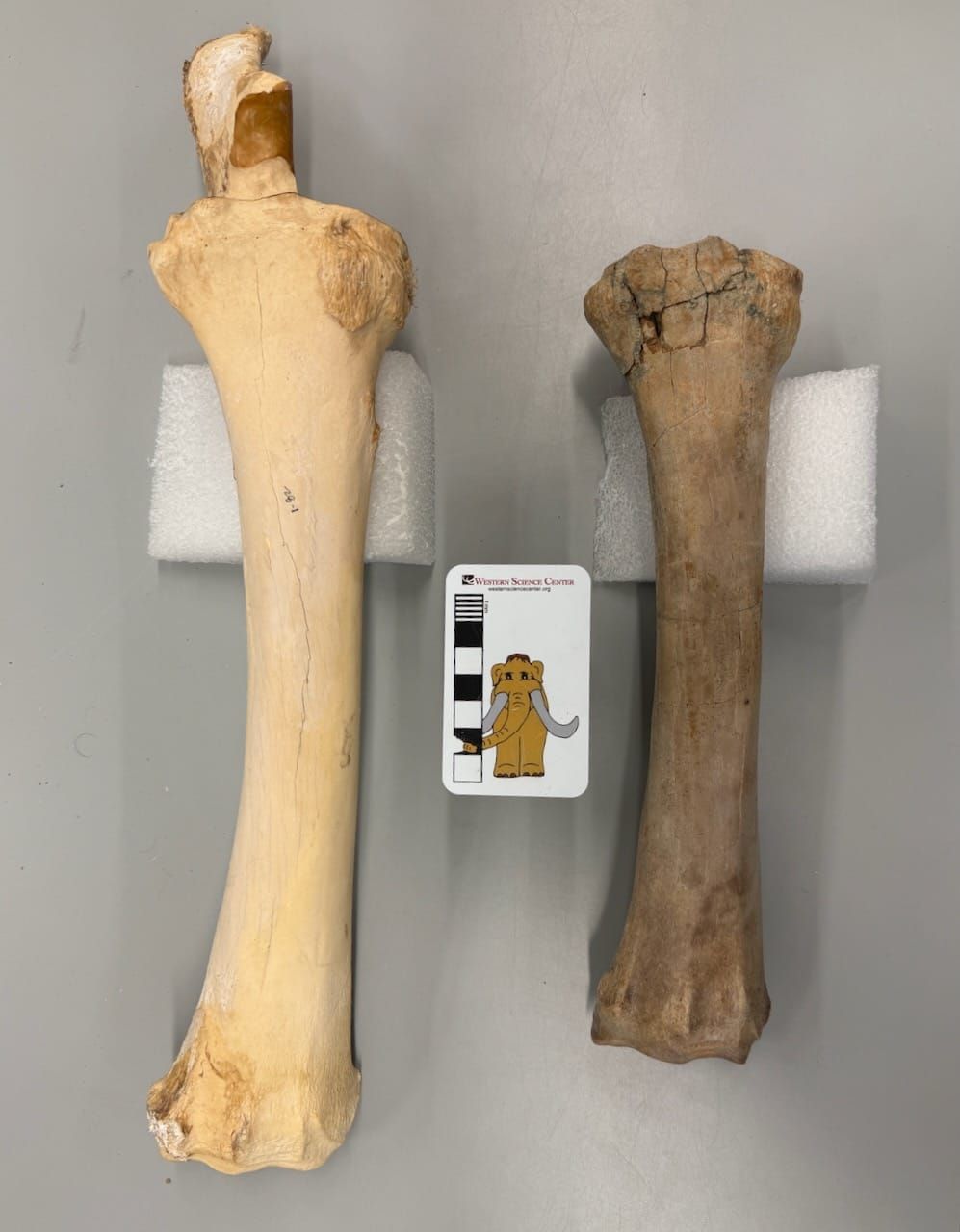
Our new fossil is the right radius and ulna (lower foreleg) of a horse, shown above on the right beside a modern horse. This is anterior view, and in this view the ulna from the fossil is completely hidden. This is because the ulna's olecranon process (the bit sticking up at the top of the modern specimen) is broken off in the fossil.
Here are the same bones in posterior view:
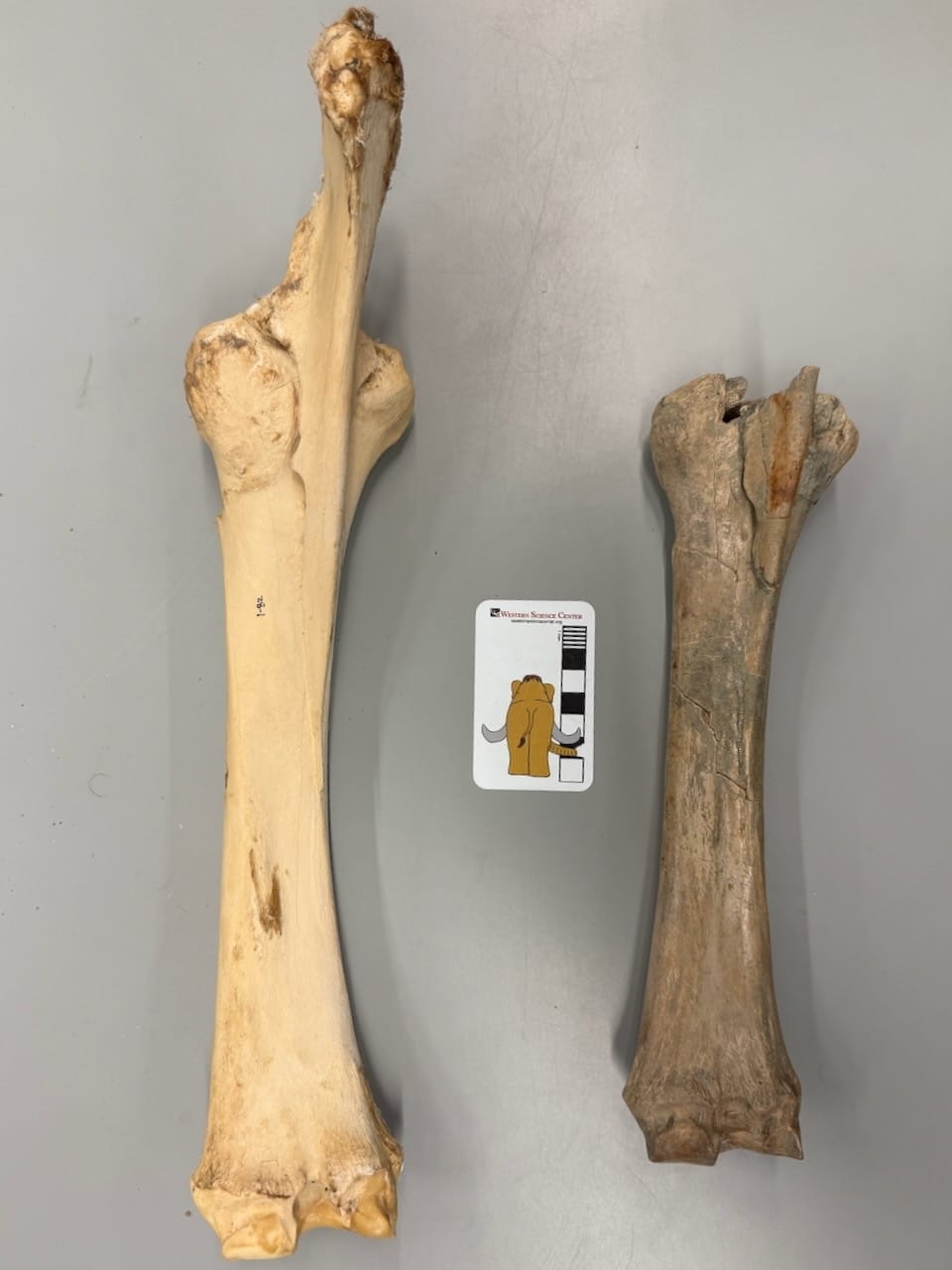
In this view the blade-like ulna is visible. A peculiar adaption of some long-legged running mammals, including horses, is the reduction of the distal end of the ulna, and often its fusion to the radius. If you trace the ulna down from the olecranon process, by the time you get halfway down it has merged completely with the radius.
The thing that particularly struck me about this specimen is its size. We have seen in other specimens that nearly all of our fossil horses, a species called Equus occidentalis, are very close to the same size as our reference modern horse in the WSC collections. Yet the California Oaks specimen is considerably smaller, even though it's from an adult (the ends of the radius are fully fused). Moreover, at another site directly across the freeway from this specimen we have fossils from another Pauba horse that are the same size as our reference specimen.
So why is this horse so small? One possibility is that it's just a small individual of the same species we usually see in these deposits. Not every member of a given species is the same size; for example, I'm 28 cm taller than my wife, a difference of almost 16%. We don't have good data on the size range of Equus occidentalis or really most of the horses in these units. But there is another possibility. There is a rare smaller horse that shows up sometimes in these units, that seems to be too small to attribute to E. occidentalis. Could this radius-ulna represent the supposed small horse?
One of the many unsolved mysteries of the California Ice Age!
Here are some other posts featuring fossils we're considering for the new exhibit:
A Little Leg Bone from the Ice Age

If you like what you're reading, please consider becoming a paid subscriber or leaving a tip. All proceeds go to cover the cost of maintaining the site and supporting research and education at the Western Science Center.