Welcome Scaphokogia huachafo
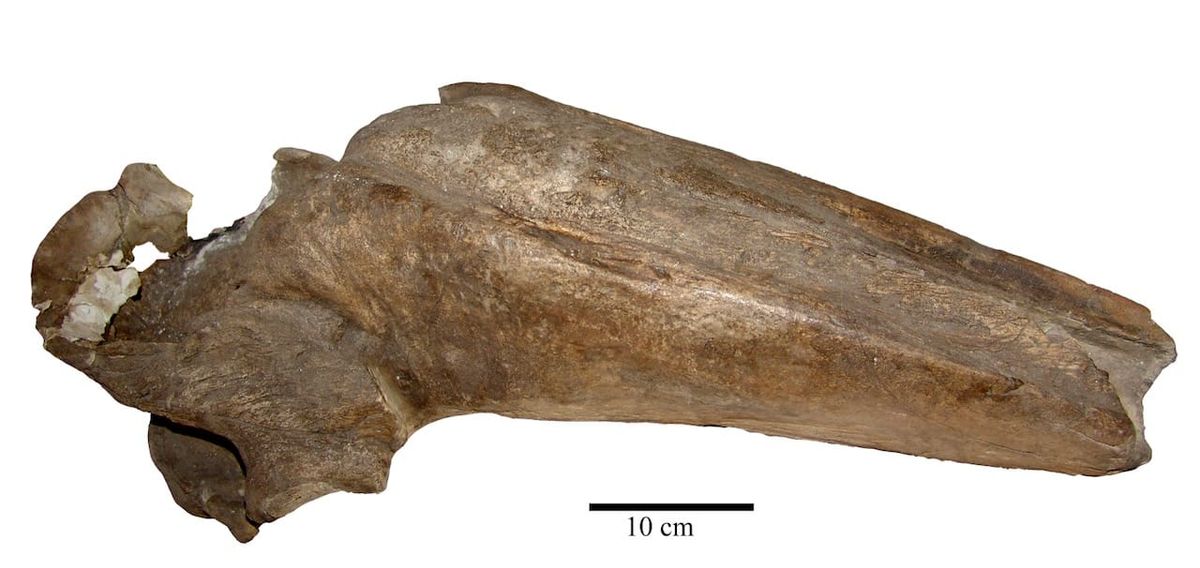
A new paper just came out in Nature Communications naming a new pygmy sperm whale from Peru. I’m proud to have played a small part on the international team of 11 scientists put together by lead author Aldo Benites-Palomino describing this fascinating whale.
The Physeteroidea is a group of toothed whales that can be traced back to the Oligocene, but that only includes 3 living species in two distantly related families. The family Physeteridae has one species, the giant sperm whale Physeter macrocephalus, while the Kogiidae has two dolphin-sized species, the pygmy sperm whale Kogia breviceps and the dwarf sperm whale Kogia simus. These 3 surviving species are the last remnants of what was once a much larger and more diverse group, with numerous branches that are now completely extinct.
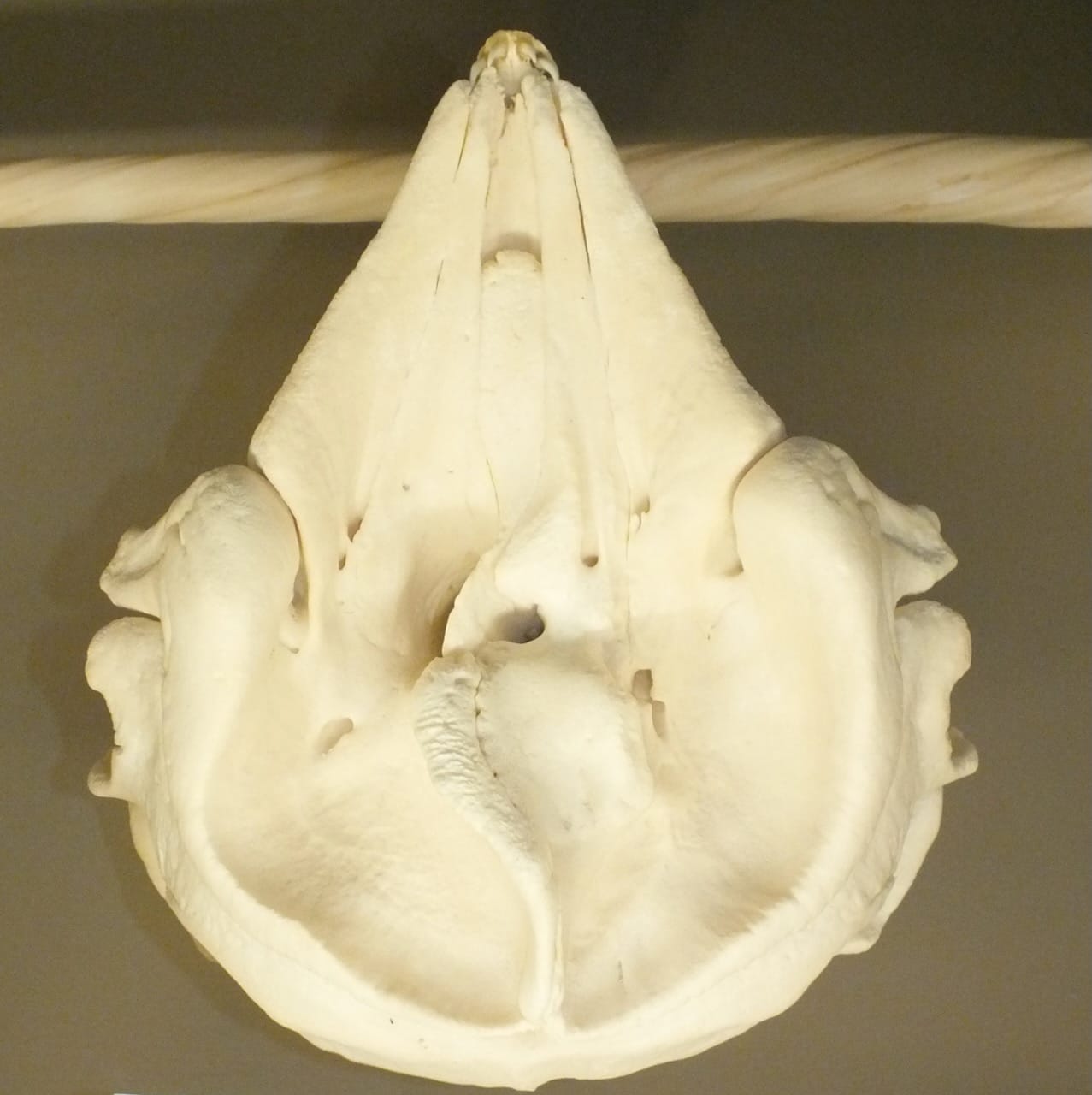
Like all modern toothed whales, physeteroids have asymmetrical skulls, but the asymmetry is much more pronounced in physeteroids than in other groups. Part of this is due to a unique physeteroid structure called the supracranial basin, a bowl-like cavity on the forehead. This holds the spermaceti organ, which produces an oil called spermaceti that is thought to be involved in echolocation. One extinct subfamily of the pygmy sperm whales, the scaphokogines, took the physeteroid cranial asymmetry and ramped it up to 11.
The newly described species, Scaphokogia huachafo, comes from Late Miocene Pisco Formation sediments in southern Peru, a unit famous for its fossil whales. S. huachafo is the 3rd named species of Scaphokogia and is the most extreme in its skull modifications. Below is the skull in dorsal view, with anterior to the left:
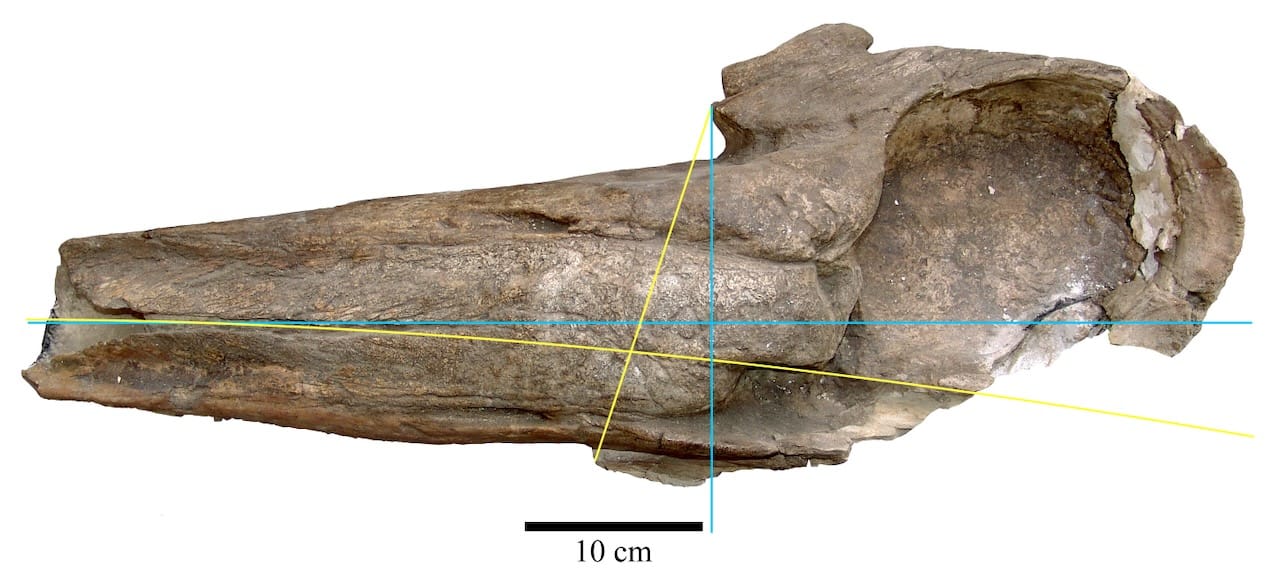
The horizontal blue line represents the midline of the skull, with the vertical blue line set at right angles to the midline. The yellow lines show the osteological midline of the skull, based on the juncture between the left and right premaxillae on the upper jaw. This asymmetry in most pronounced on the dorsal surface of the skull; on the ventral side the bones are much more symmetrical. The asymmetry actually extends all the way into the first neck vertebra, which as far as I know is not seen in any other whales.
Scaphokogia huachafo is also remarkable for its hyperdeveloped upper jaw (rostrum), modified into a slab-sided tube most obvious in lateral view:
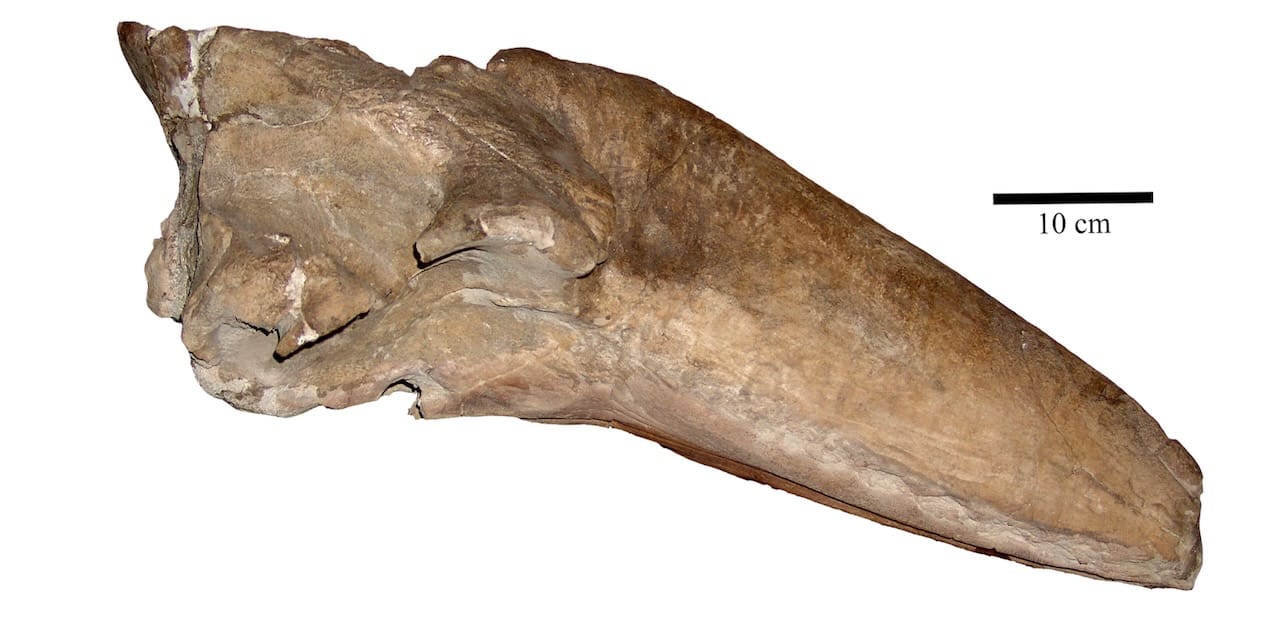
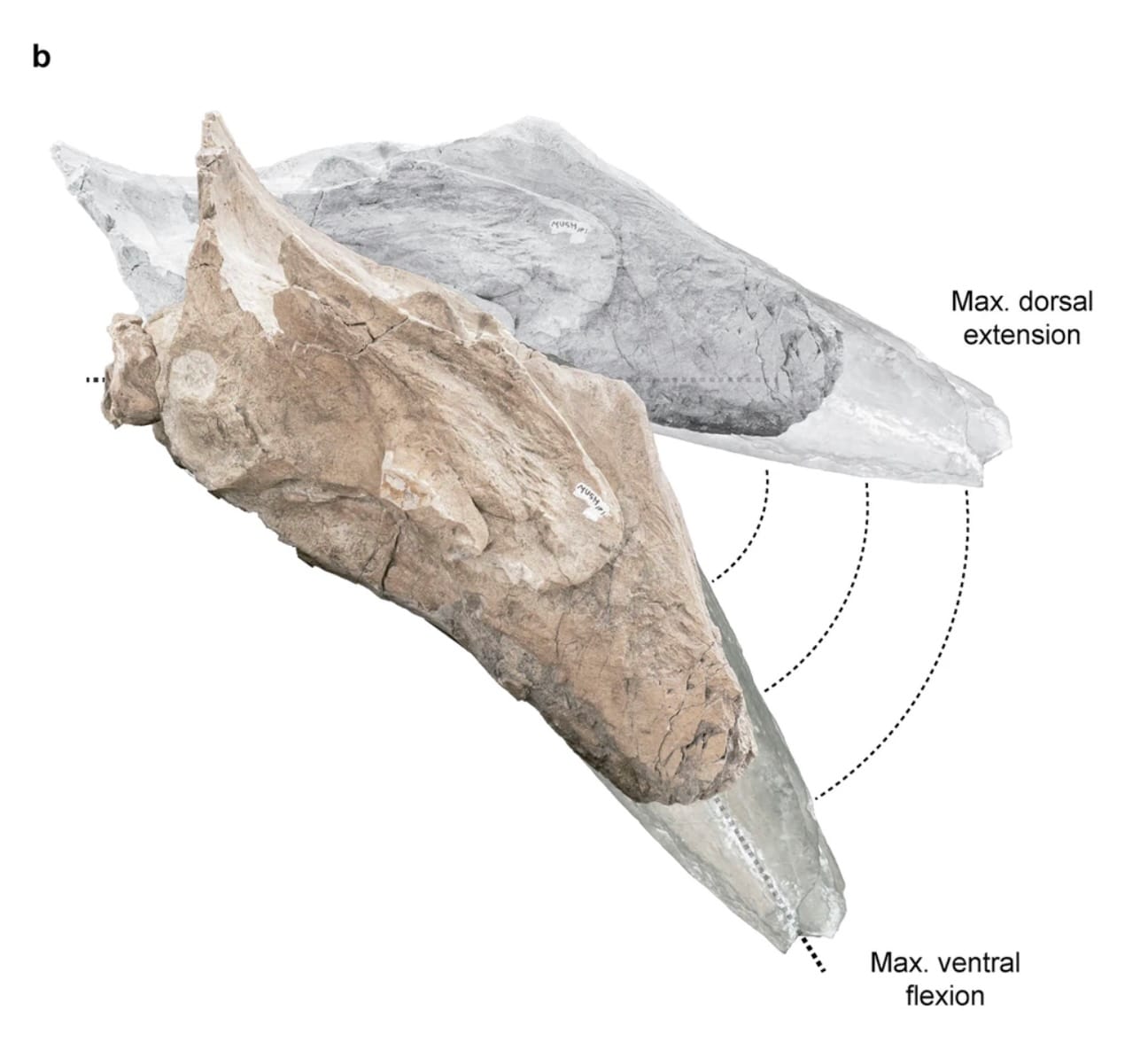
Scaphokogia lost their upper teeth, although they may have had them as juveniles as evidenced by the overgrown tooth sockets in this specimen. All the species in the genus are also notable in that the rostrum in angled downward (and of course there is a technical term for this – klinorhynchy). This angle varies by species and becomes more pronounced in the lineage over time, reaching its most extreme in S. huachafo at 31 degrees. In fact, based on the angle of the rostrum and the shape of the occipital condyles at the back of the skull, even if S. huachafo threw its head back as far as it could go, the snout would still angle down at 22 degrees. Bending its neck down as far as it could would increase the angle to 55 degrees.
The top of S. huachafo's tubular snout has two long grooves formed by the premaxillary bones (visible in the image at the top of the page). These grooves held the elongated melon, a fat body found in toothed whales that focuses echolocation clicks. The spermaceti organ sat behind the melon in the deep supracranial basin:
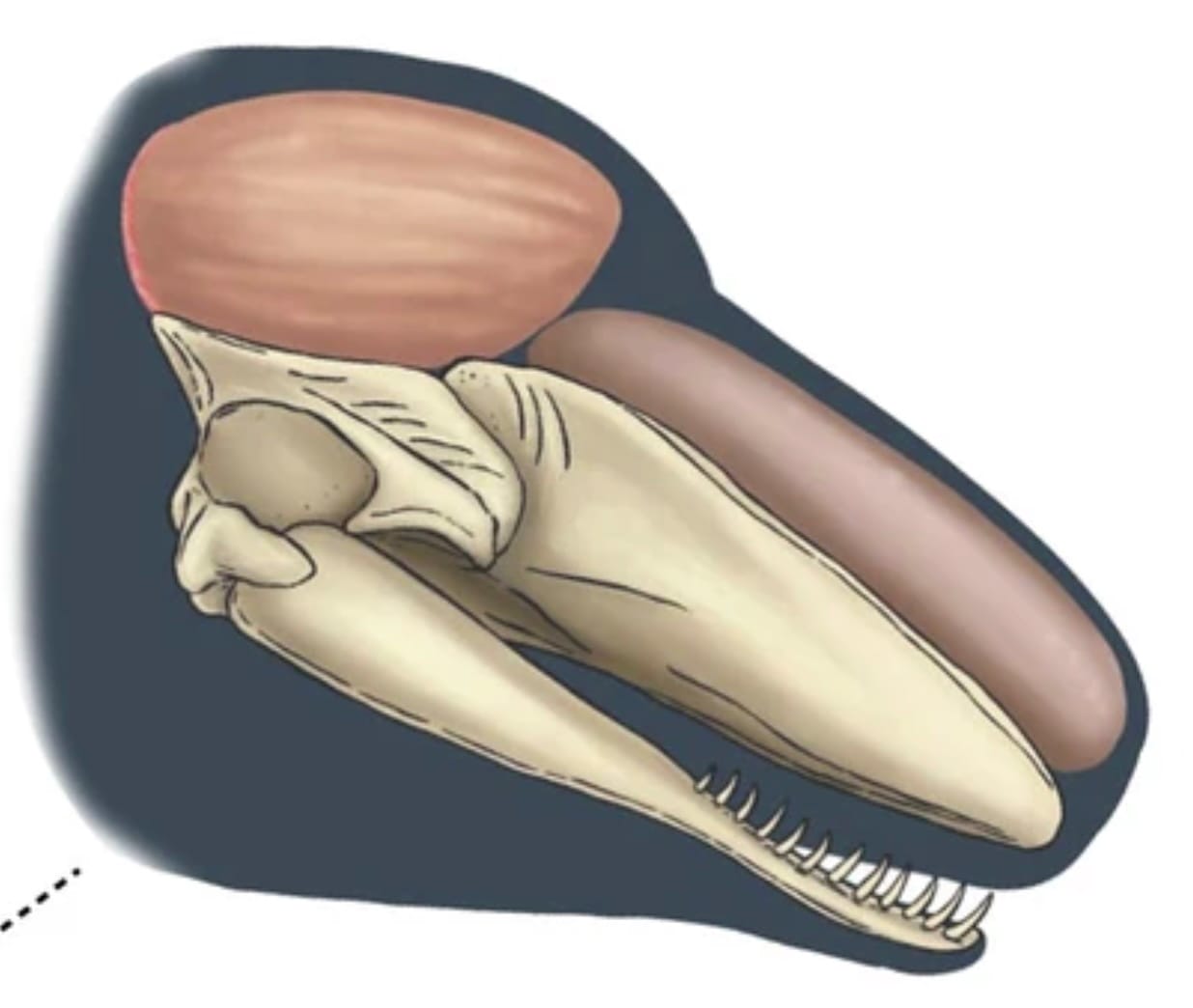
Putting all this together, it appears that Scaphokogia was a specialized benthic feeder, hunting prey that lived buried in the seafloor. The downturned rostrum and melon would allow the whale to send echolocation pulses directly into the sand on the seafloor, pushing its heavy snout into the sand to grab prey upon detection.
As amazing as this sounds, it is actually a behavior that has been observed in modern dolphins. While they don't have Scaphokogia's physical adaptations for benthic feeding, bottlenose dolphins (Tursiops truncatus) are extremely flexible in their behavior. Some populations have learned to hunt fish that are buried in the sand by echolocating into the sediment to find the fish, which they then catch by pushing themselves into the mud, sometimes all the way to their pectoral fins. When documenting this behavior, Rossbach and Herzing (1997) called it "crater feeding" because "After a group of dolphins fed, the bottom resembled a moonscape". It seems that during the Miocene the Pacific coast was so productive that entire species evolved to specialize in a feeding behavior that is only rarely seen today.
If you happen to be in southern California, we have a 3D print of the holotype Scaphokogia huachafo in the "Life in the Ancient Seas" exhibit in our mobile museum. The original specimen is housed in the Museo de Historia Natural in Lima, Peru.
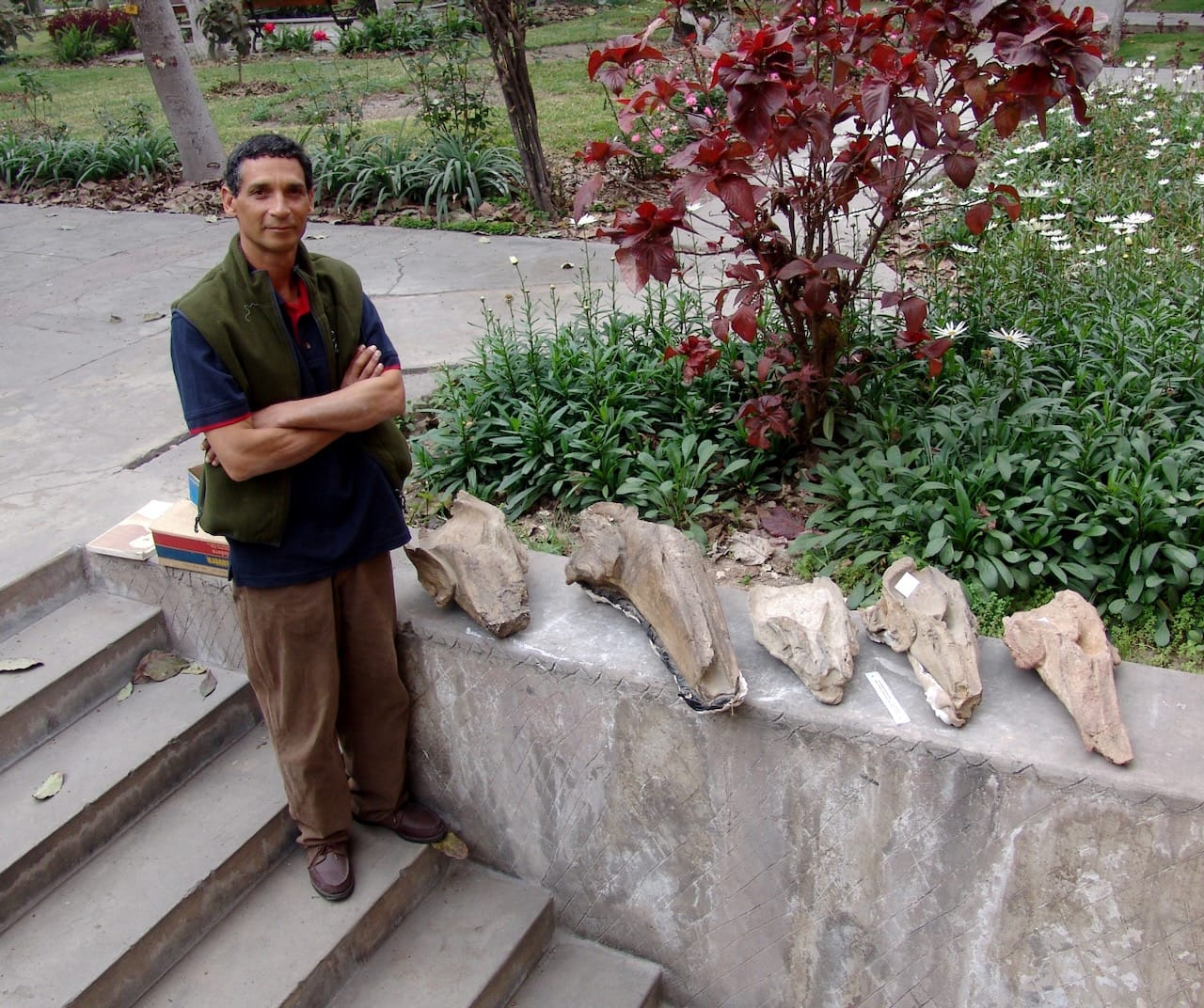
The description of Scaphokogia huachafo can be found in:

If you like what you're reading, please consider becoming a paid subscriber or leaving a tip. All proceeds go to cover the cost of maintaining the site and supporting research and education at the Western Science Center.