Mysterious Temecula bones, Part 2
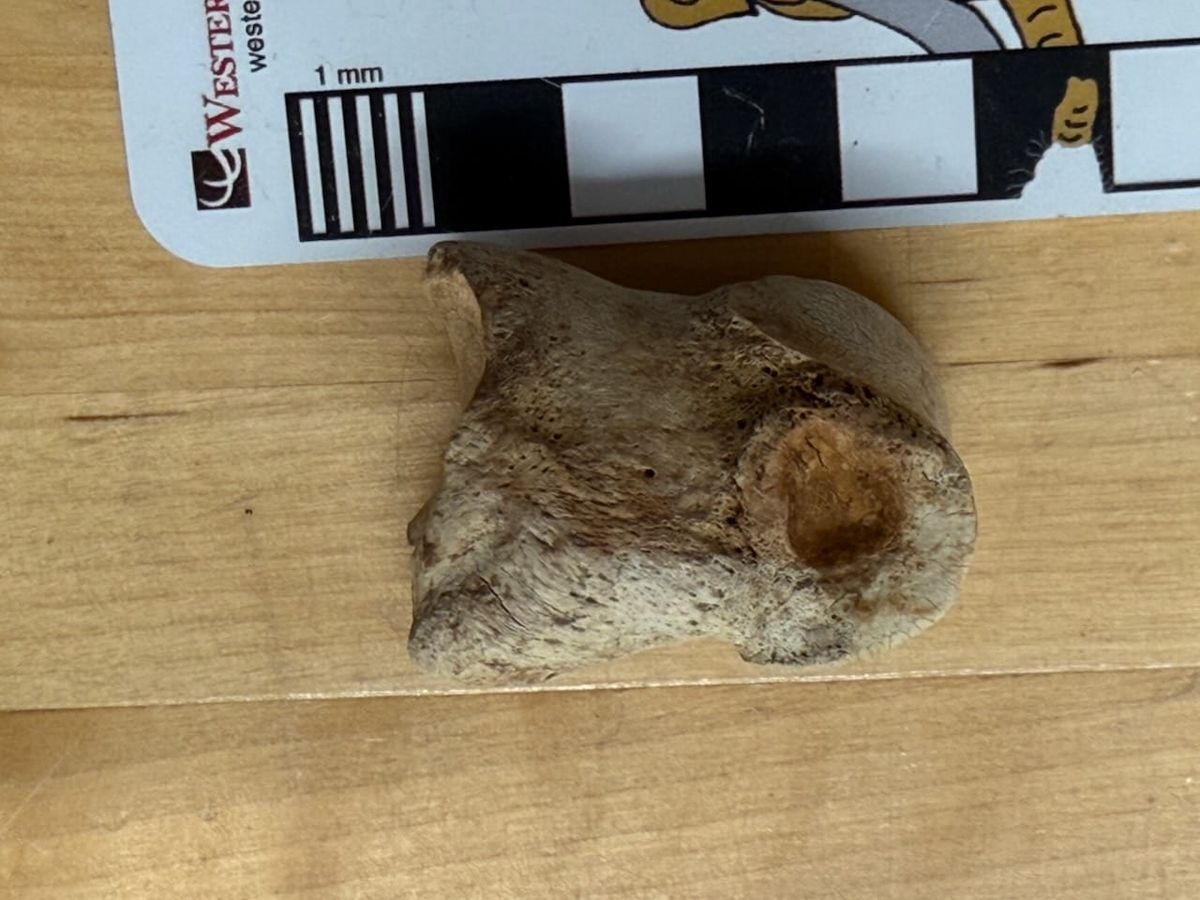
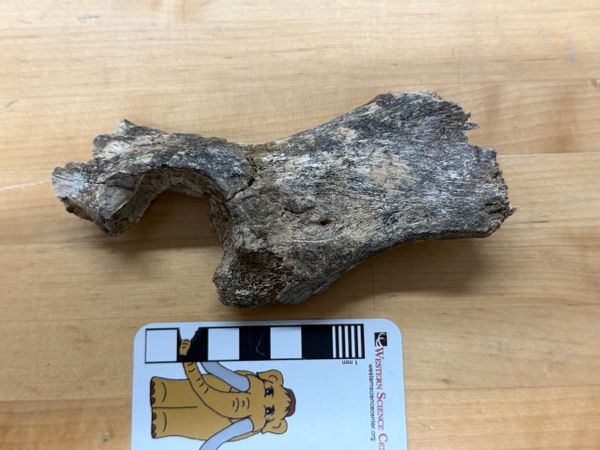
In my last post I discussed the small collection of Ice Age bones from the Woodside site in Temecula that are being considered for our new exhibit. It was pretty easy to determine what part of the skeleton each bone came from; one was a partial right pelvis, and the other was a phalanx (toe bone). But what kind of animal?
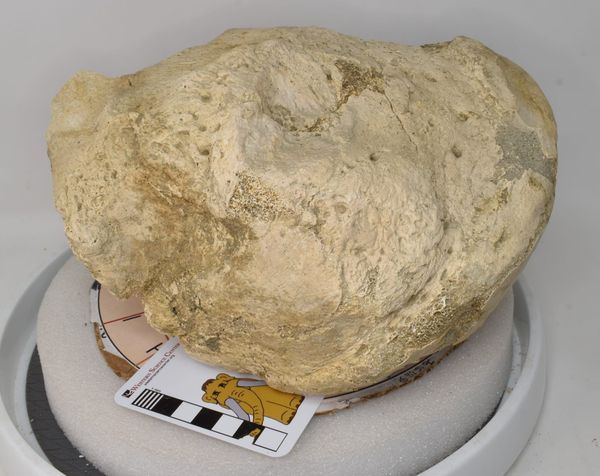
Again, the first choice for a large Inland Empire mammal is a horse, since they're by far the most common and are found at (almost) every Pleistocene location in Riverside County. But this toe bone was definitely not a horse. Horses have a single functional toe, the third digit, on each foot. That means the horse's phalanges are almost symmetrical, unlike this bone.
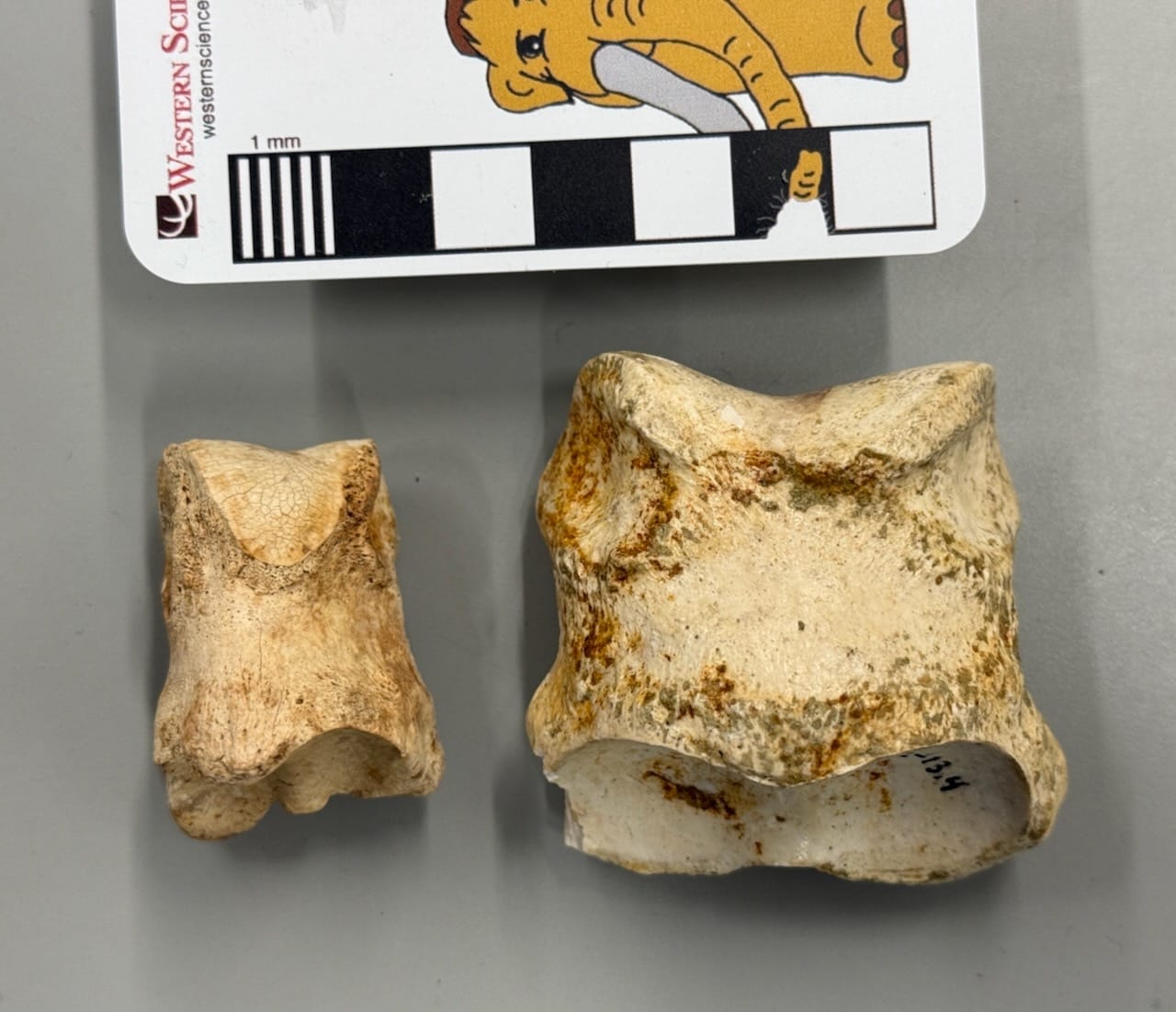
Because the bone is rather short and stout, I wondered about the possibility of a ground sloth. My friend Ascanio Rincón is an expert on sloths, so I sent him photos, but he confirmed that it was not a good match and suggested that it could be a camel, which are also quite common in Riverside County. We have several camel phalanges in the collection, but they were all too long and slender to match the Woodside fossil.
With a small collection you don't really expect to find anything unusual; by definition, if it's a rare animal, you don't see it very often so it generally only shows up in large collections. Since the Woodside collection produced not one, but two bones I couldn't readily identify, I considered that they may have come from the same type of animal. After all, what are the chances of getting two unusual species in a collection that only has a few dozen bones?
I was familiar with two Pleistocene animals in about the right size range, the tapir Tapirus californicus and the extinct so-called mountain deer, Navahoceros fricki. Tapirus is actually pretty well known from the Pauba Formation in Temecula Valley, so it seemed like a good possibility. But using 3D models for comparison, it turned out that neither the pelvis nor the toe were good matches for a tapir. As for Navahoceros, there is very little good material online, and most of the published material concerns bones other than the toes. But I did download a phalanx from a modern elk from MorphoSource:
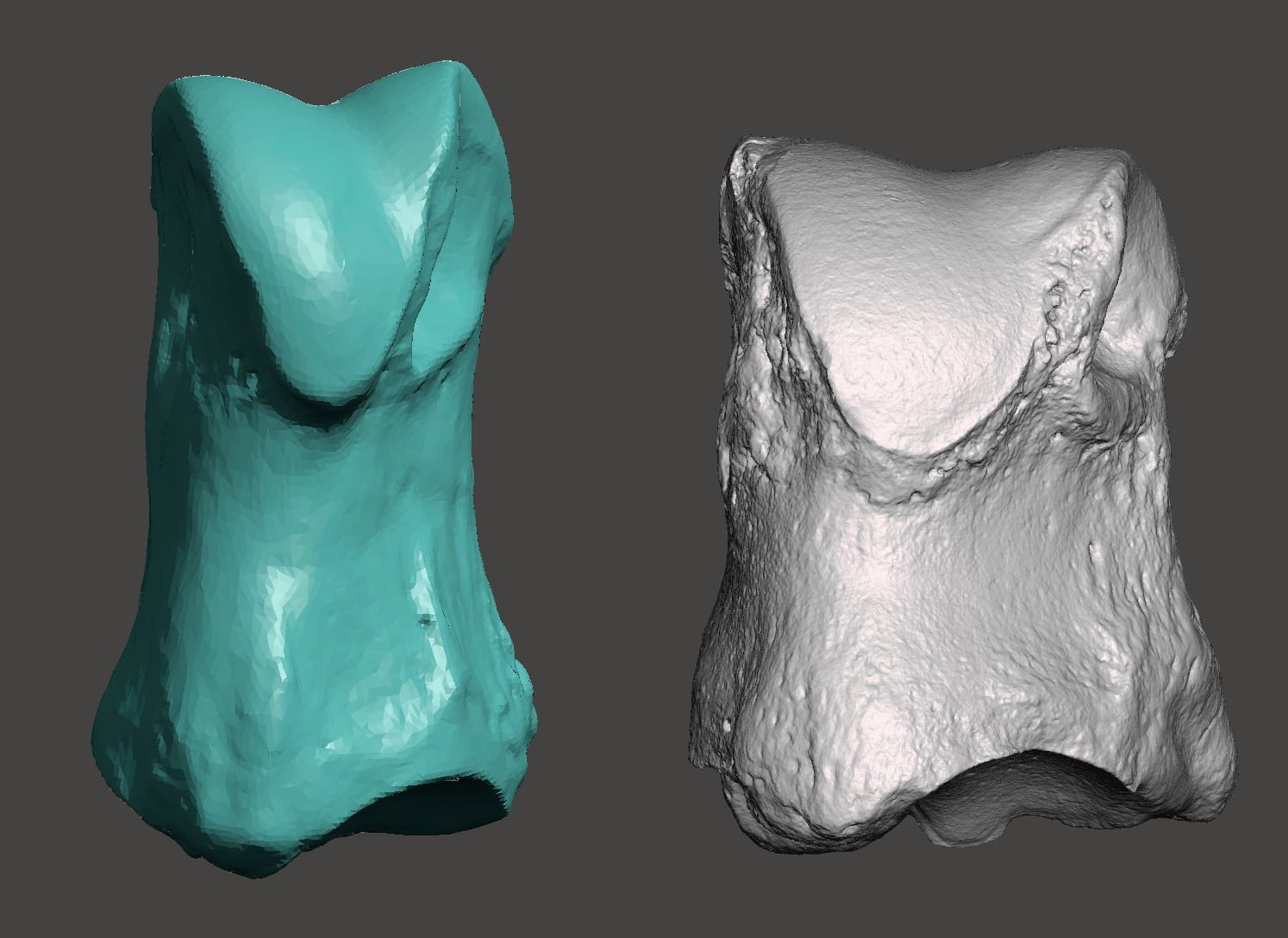
While the elk is too long and slender, the overall shape is very good, so I was definitely looking at some artiodactyl. The problem is that Navahoceros has never been reported from Riverside County, or really from anywhere in Southern California; it's even absent from Rancho La Brea. And by this point I had identified the pelvis as the sabertooth cat Smilodon fatalis. The toe bone was definitely not a cat, so I was definitely looking at two different animals.
So what is not a deer, but related to them, and tend to be more stoutly built? The obvious choice is the cattle family (Bovidae), which includes bison. Bison are very rare in Temecula Valley because most of the sediments are too young (bison only arrived in California about 250,000 years ago). But there are a few small deposits of younger sediment in the area, including one patch in another part of Temecula a few miles away where bison have been found. We don't have any bison 2nd phalanges in our collection, so again I went to MorphoSource to download one:
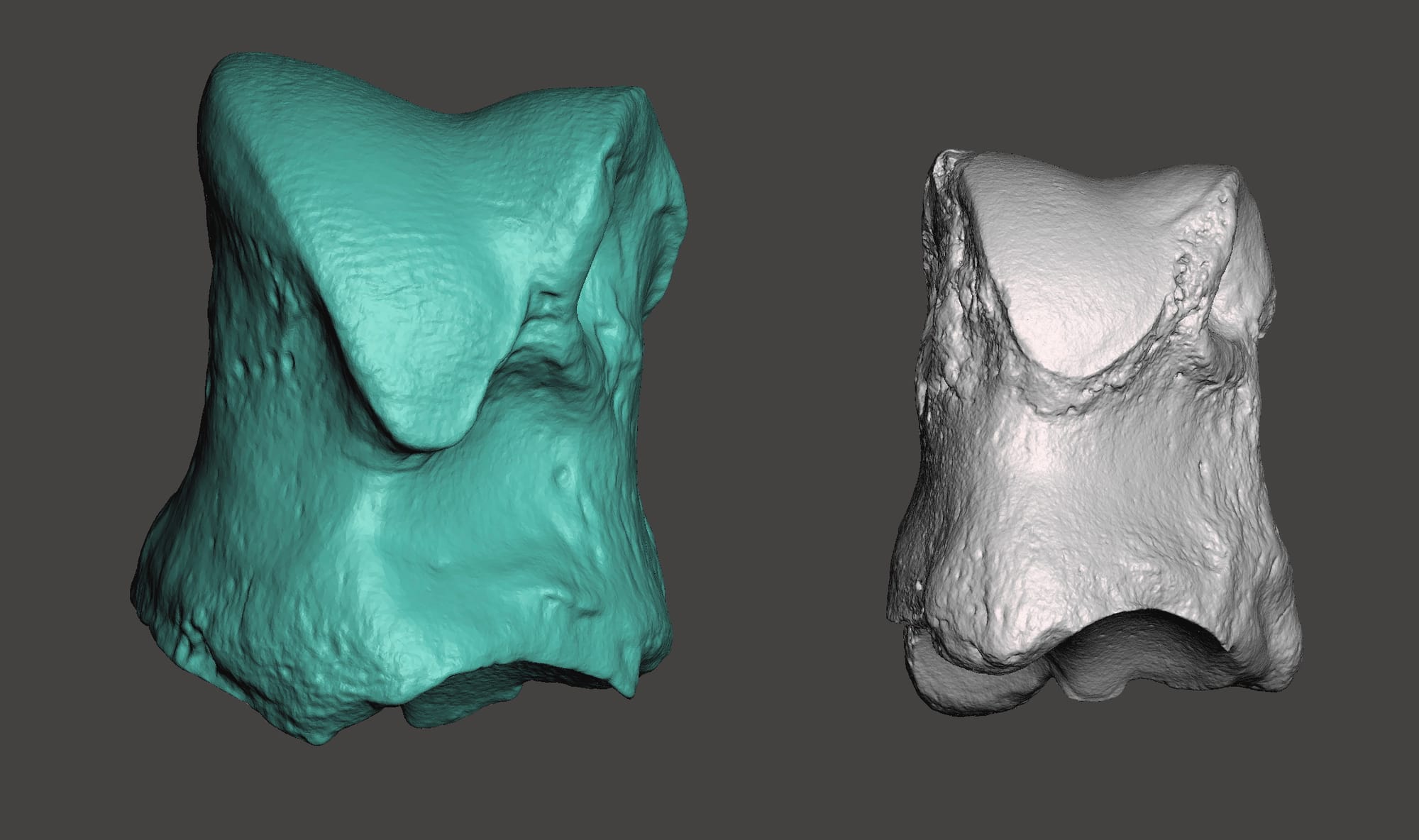
This was a much better match! The morphological differences are very slight, with the biggest difference being the difference in size. This is problematic because the Pleistocene Bison antiquus was on average quite a bit larger than the modern Bison bison, but the Woodside bone is smaller. Even with it's small size, this still looks like a good match for a bison, and suggests that Woodside has some relatively young Pleistocene deposits. Except...
It turns out there is a second, very rare, large bovid in the Pleistocene of Southern California. The "scrub ox" Euceratherium collinum is related to the modern musk ox of the far north. It's in the same family as bison, but a little smaller. A few of its bones have been reported from Rancho La Brea and from Anza-Borrego State Park. Unfortunately, I've only been able to find one photo of a Euceratherium 2nd phalanx, and while it's morphology isn't quite as good a match as Bison, it is the same size as the Woodside specimen. And if the toe is from Euceratherium, it means that Woodside might be older after all, because Euceratherium arrived in California long before Bison did.
So which one is the Woodside specimen? I'm actually still not sure. I'm leaning toward Bison, but I'm going to have to make some visits to other museum collections to look at Euceratherium before I can say with a reasonable degree of certainty. Right now I'm only confident calling this specimen a bovid.
Here are some other posts featuring fossils we're considering for the new exhibit:
More Mysterious Bones for the New Exhibit
A Fragment of a Proboscidean – But Which One?