More Mall Fossils
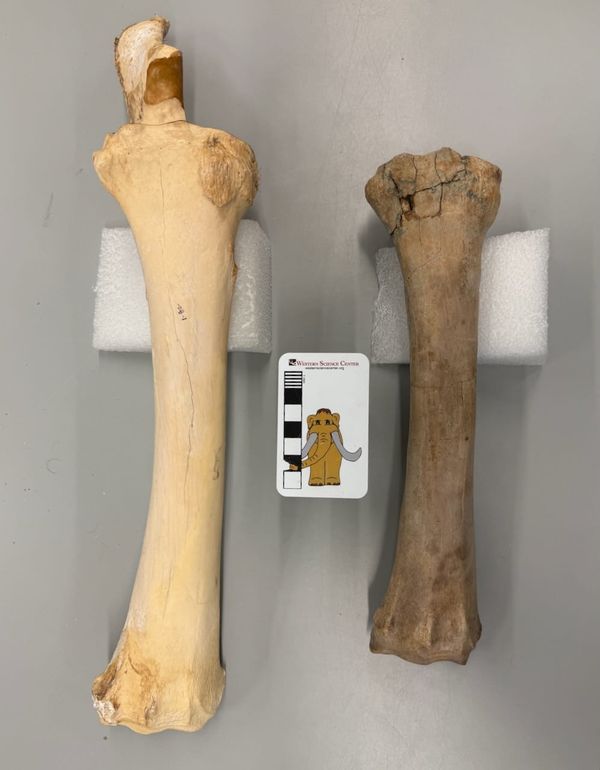
A commonly found and easily identifed part of a mammal skeleton is the head of the femur. This is visible in the Pacific mastodon femur below, as the large knob at the upper right end of the bone:
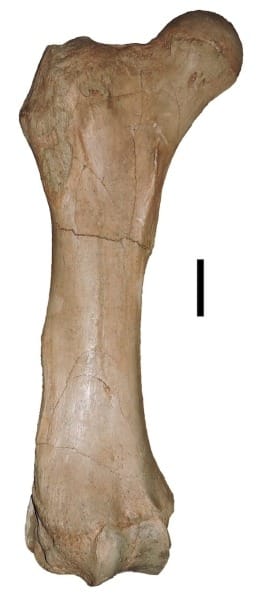
The femoral head is a large hemispherical mass that generally sits on the end of a short narrow shaft (the "neck"). It's not uncommon for the neck to break in the fossil, so that the head is often found as an isolated fragment.
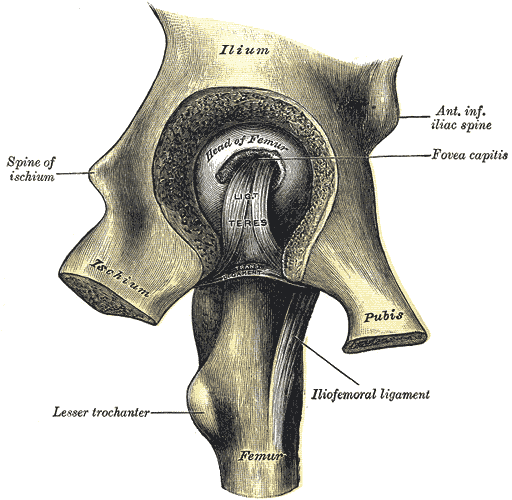
The femoral head forms the ball part of the ball-and-socket joint where the leg attaches to the hip, inserting into the hip socket (the acetabulum). Because it's a ball joint we can move our leg forward and backward or from side-to-side (compare this to a hinge joint like the elbow, which can only move in one plane). But even though the femur can pivot in multiple directions at this joint, we don't want it to separate from the hip; it needs to stay in the socket. To make sure the femur stays in its socket and doesn't dislocate, there are a series of ligaments that surround the femoral head, connecting the neck to the pelvis. There is also an additional ligament, the ligamentum teres (or foveal ligament), that attaches the head of the femur to the acetabulum. There is a depression or notch in the femoral head, the fovea capitis, where the foveal ligament attaches to the femur.
I recently learned from my friend Eric Scott that the fovea capitis varies in appearance quite a bit between the species that are common in the Pleistocene of Southern California. So I took a look at our most common large non-proboscidean genera that are all vaguely similar in body size – Camelops (camel), Equus (horse), Bison (umm...bison), and Paramylodon (ground sloth):
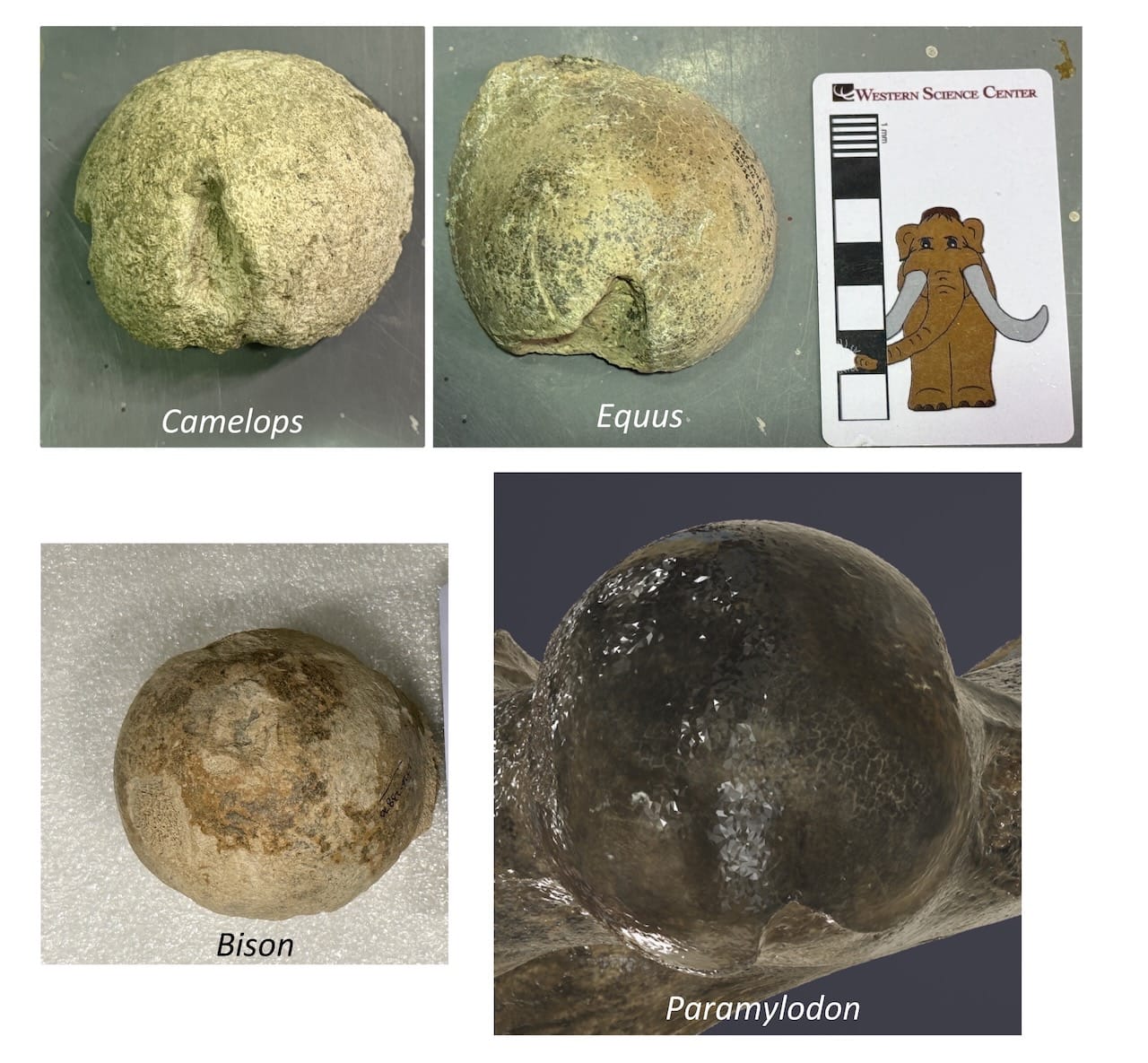
These images are all to the same scale. A few notes; three of these are from the WSC Diamond Valley Lake collection, but Paramylodon is from a 3D model of a University of Florida specimen (via MorphoSource). We have three Paramylodon femoral heads at WSC, but one is incomplete, one has not yet been prepared out of its field jacket, and one is on exhibit and displayed in such a way that the end of the femoral head can't be easily photographed. There are also a few other Southern California animals in this size range, such as the ground sloth Megalonyx, but they're all very rare compared to these four.
The first obvious observation is that even though these animals are all roughly similar in body size (the horse being the smallest), the femoral head in Paramylodon is much larger than the others. Ground sloths have enormous hips relative to the size of their bodies, and it seems that this is reflected in the size of the femoral head, even though Paramylodon has the shortest femur of these four taxa. The other noteworthy observation is the variation in size, shape, and position of the fovea capitis, which I've highlighted in blue below:
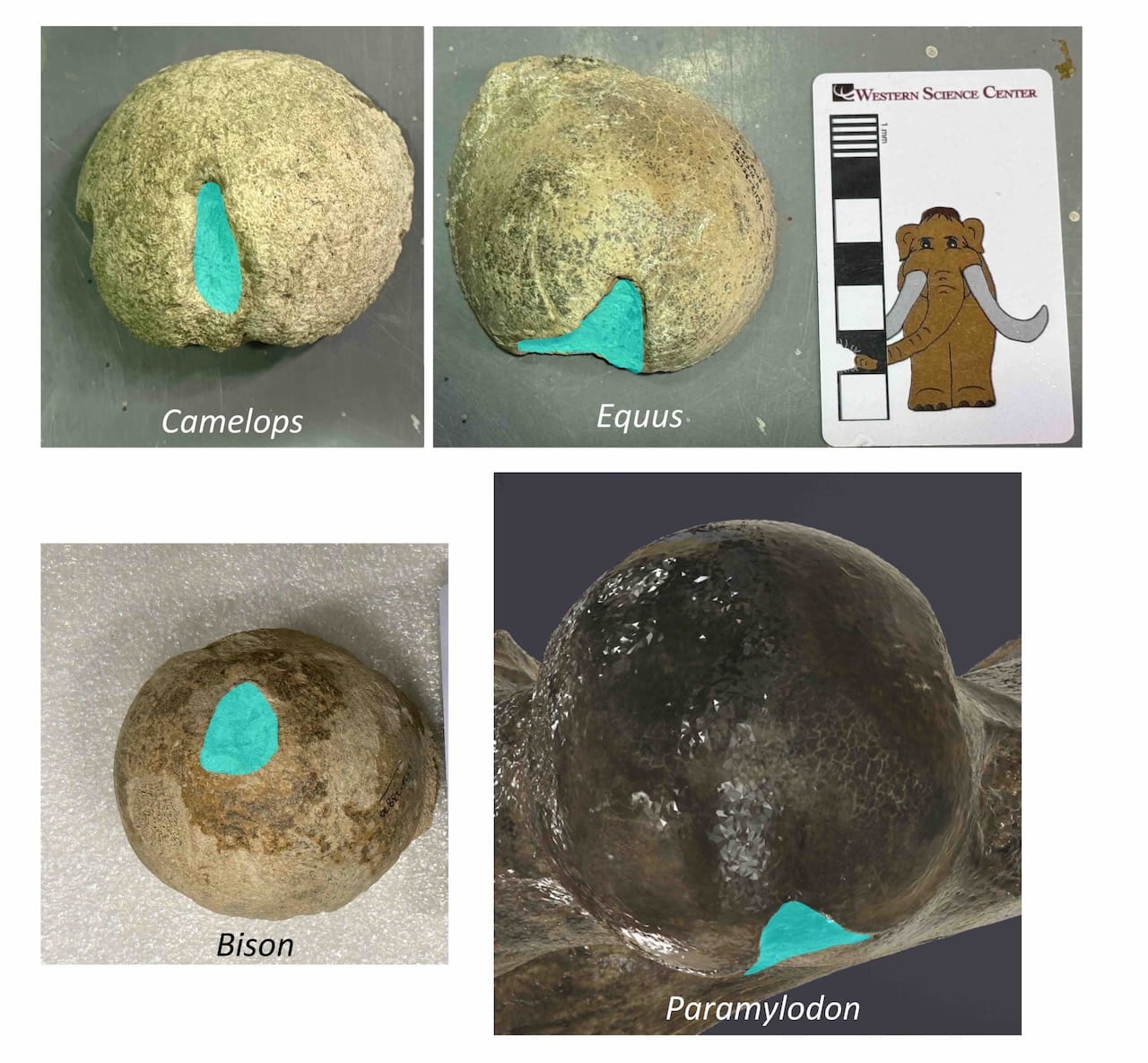
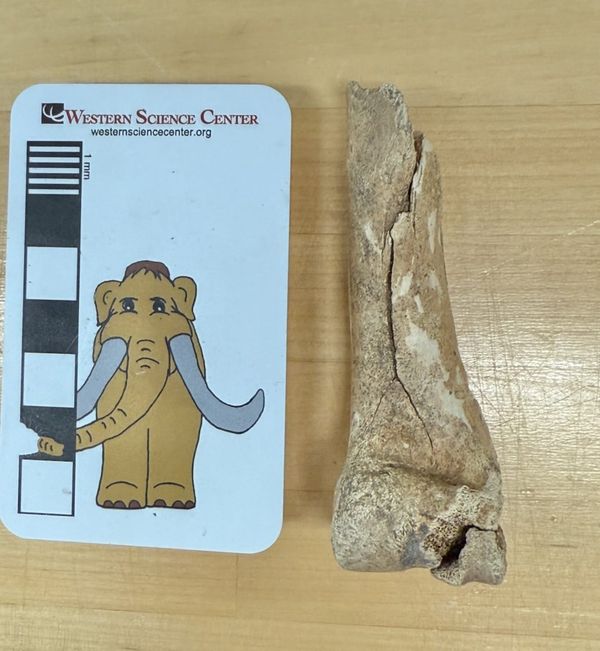
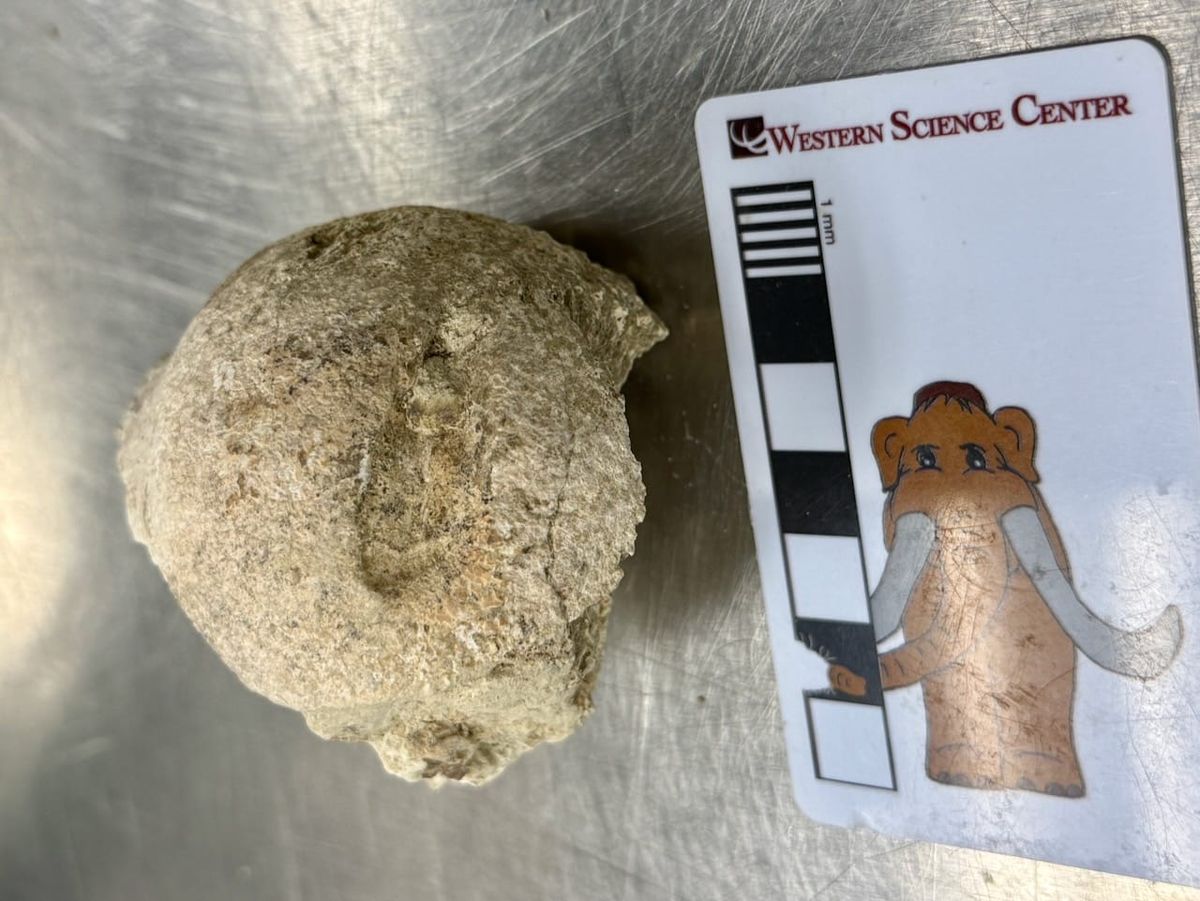
This variation means that we can generally identify an animal in this size range even if we only have the femoral head. This was immediately relevant for us, because the material from the Promenade Temecula shopping mall being considered for our new exhibit includes an isolated femoral head:
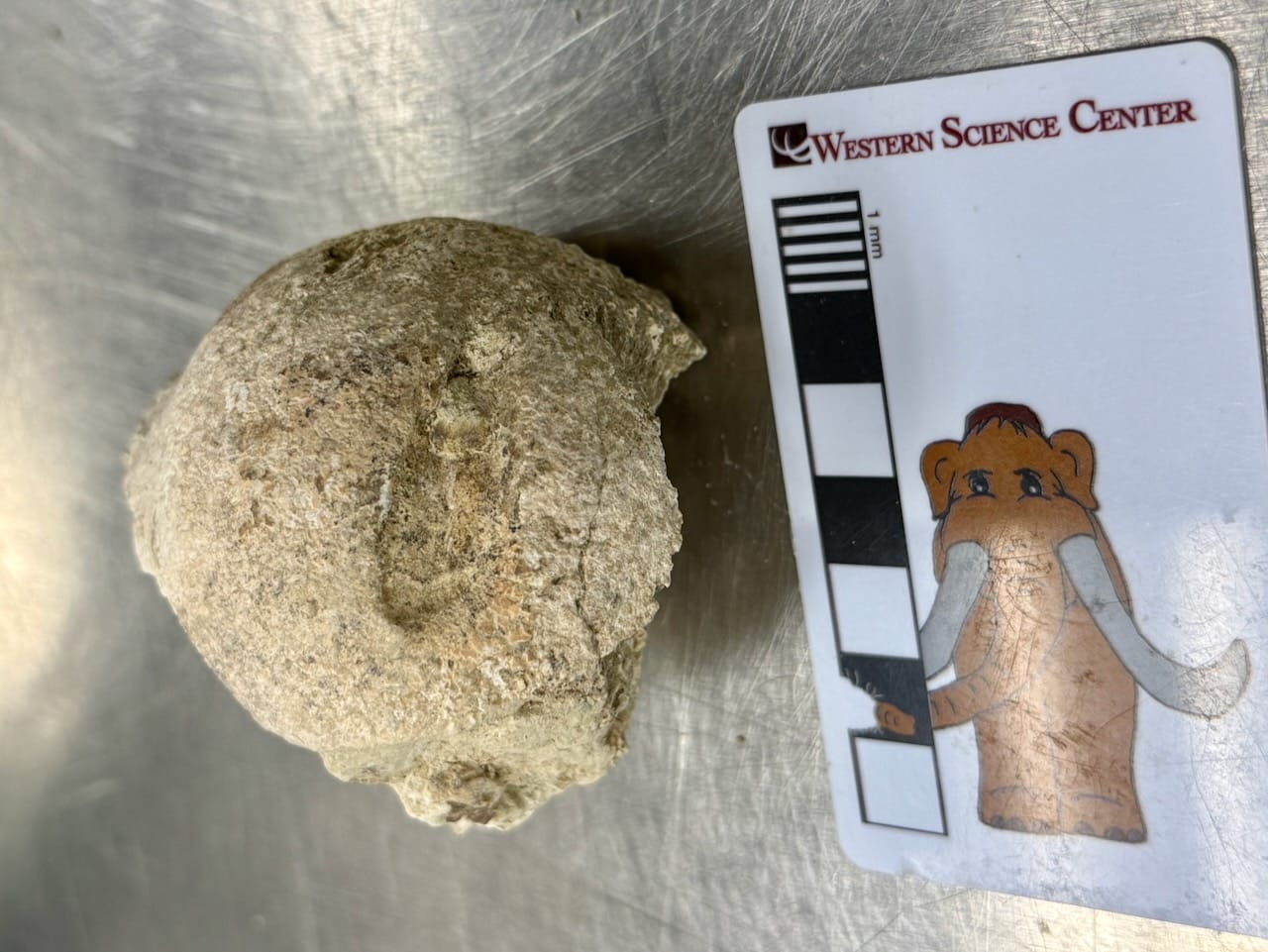
The narrow, elongate fovea capitis immediately shows that this comes from Camelops, the same species as the humerus fragment I wrote about last week. So we do have more than a single fragment of a camel from this site; there are at least TWO fragments!
Most of the time in vertebrate paleontology, we're dealing with only a few bones or bone fragments. But we can still often glean a surprising amount of information from these incomplete remains.
Here are some other posts featuring fossils we're considering for the new exhibit:

If you like what you're reading, please consider becoming a paid subscriber or leaving a tip. All proceeds go to cover the cost of maintaining the site and supporting research and education at the Western Science Center.