Tiny teeth
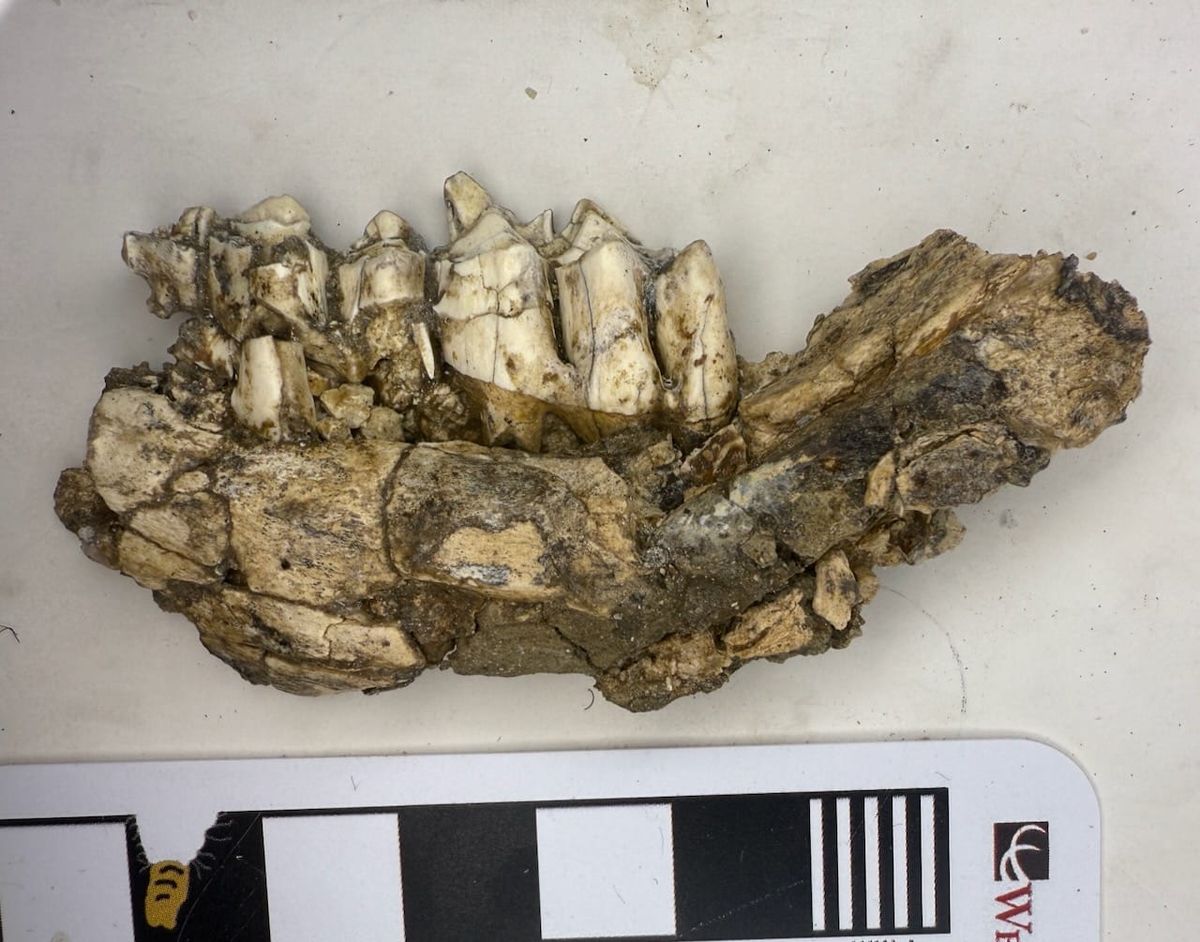
As we prepare our new exhibit on Ice Age fossils from Riverside County, one of the things we chose as a focus was to highlight the diversity of these deposits. To that end we've specifically looked for fossils that represent a broad range of species. Over a year ago we noticed a small jaw fragment that we knew we wanted to include in the display.
The fossil comes from early Pleistocene deposits from the Copper Canyon neighborhood of Murrieta, about 13 kilometers southwest of Diamond Valley Lake. The other species identified from this site were mastodons, horses, and camels, so we know right away this was something different based on the size alone. But what kind of animal is it?
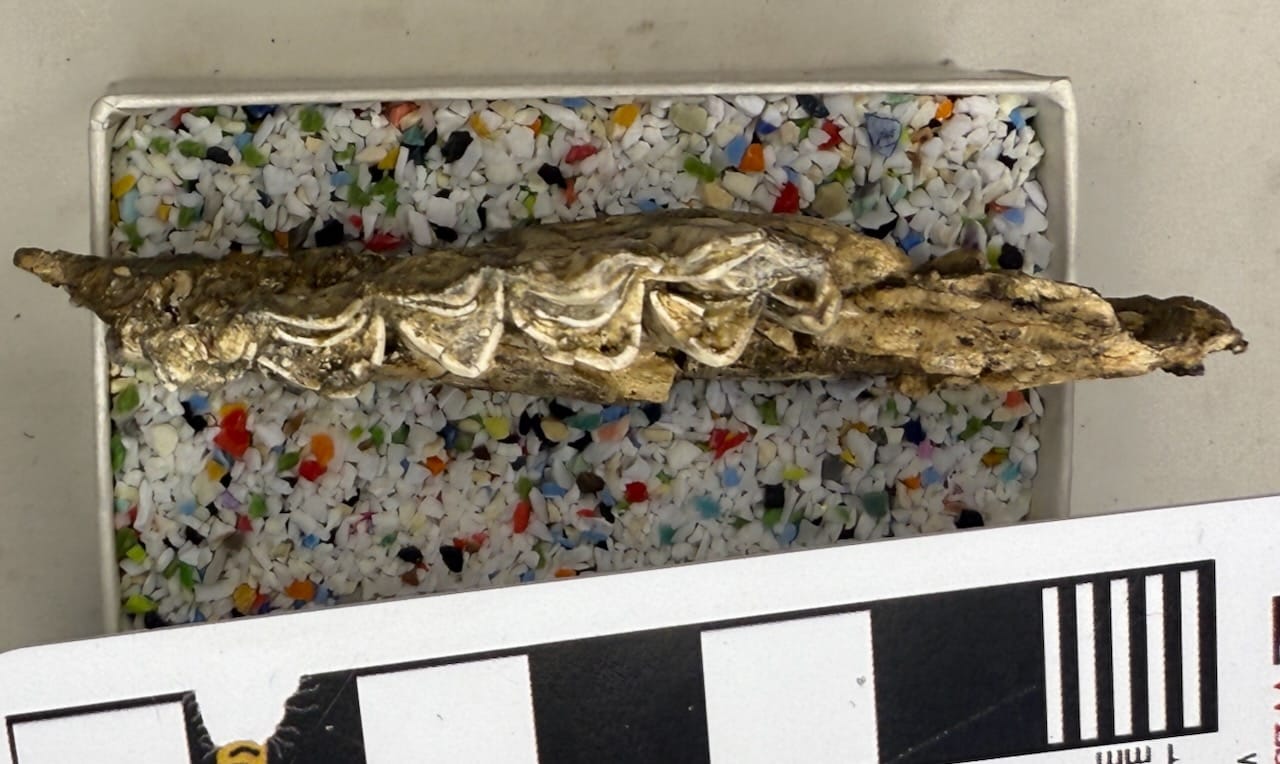
In occlusal view (above) we can see that the teeth form a series of cresent-shaped lobes. This tooth structure is referred to as selenodont, and it's only found in a few groups of artiodactyl mammals, the tylopods (camels) and ruminants (a very large group including cattle, deer, pronghorns, giraffes, and others). In this specimen, two teeth are present. The back tooth (on the right in both images) has three lobes, showing that this tooth is a lower third molar and indicating that the animal was an adult in spite of its small size. When I saw that we had such a tiny artiodactyl I immediately got excited, because that raised the possibility that we might have a specimen of the tiny dwarf pronghorn Capromeryx. If so, it would be the only one in our collection.
Recently, I finally had the opportunity to test this hypothesis. Since we don't have any Capromeryx in the collection for comparison, I went to the literature to find measurements and images, eventually coming across Jiménez-Hidalgo et al. 2004. The six Capromeryx third molars in their dataset ranged from 16.7 - 17.8 mm in length, while our specimen was a bit over 18 mm long. And it turns out the tooth shape is quite a bit different:
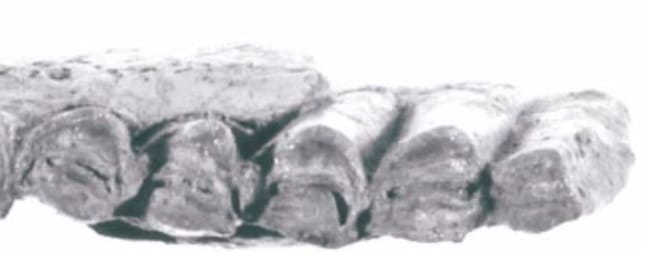
So my hopes were dashed; our tooth was too large and the wrong shape to be Capromeryx. Instead, the shape is very close to a white-tailed deer (Odocoileus virginianus), and it's only a little bit smaller:
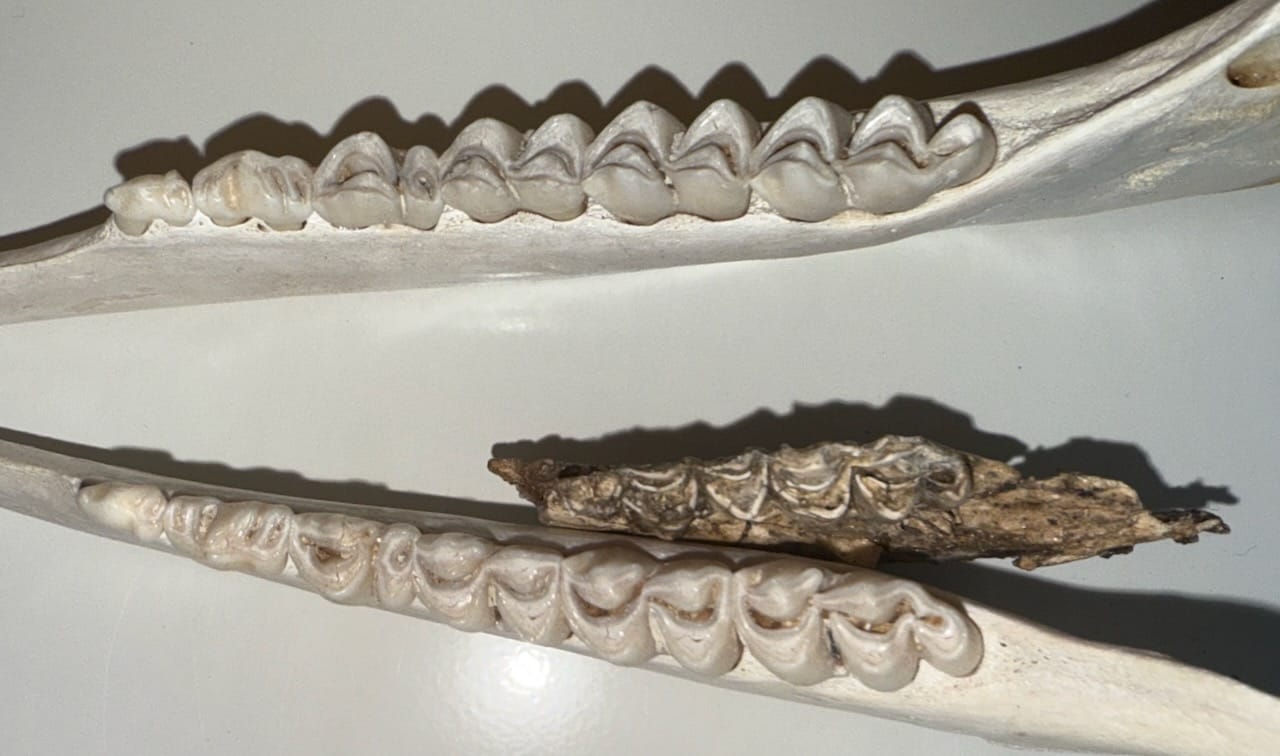
The slightly smaller size is particularly interesting. Odocoileus is not especially common in our Pleistocene deposits in Southern California, but they do show up from time to time; we probably have around 15-20 specimens in the WSC collections from various localities. And universally they seem to be slightly smaller than modern white-tailed deer. So in that regard, this jaw fragment is completely consistent with our other fossil white-tailed deer specimens.
So we didn't get our dwarf pronghorn, but we did get an interesting deer specimen, the only deer so far from Copper Canyon, and it's still planned for the upcoming exhibit.
Here are some other posts featuring fossils we're considering for the new exhibit:

If you like what you're reading, please consider becoming a paid subscriber or leaving a tip. All proceeds go to cover the cost of maintaining the site and supporting research and education at the Western Science Center.