A fragment of a proboscidean–but which one?
In our upcoming exhibit on the Ice Age fossils of Riverside County, we're focusing on representation across different locations. That means that some of the fossils we'll be displaying might be small fragments, but they're the only evidence that a particular species was present in a particular place.
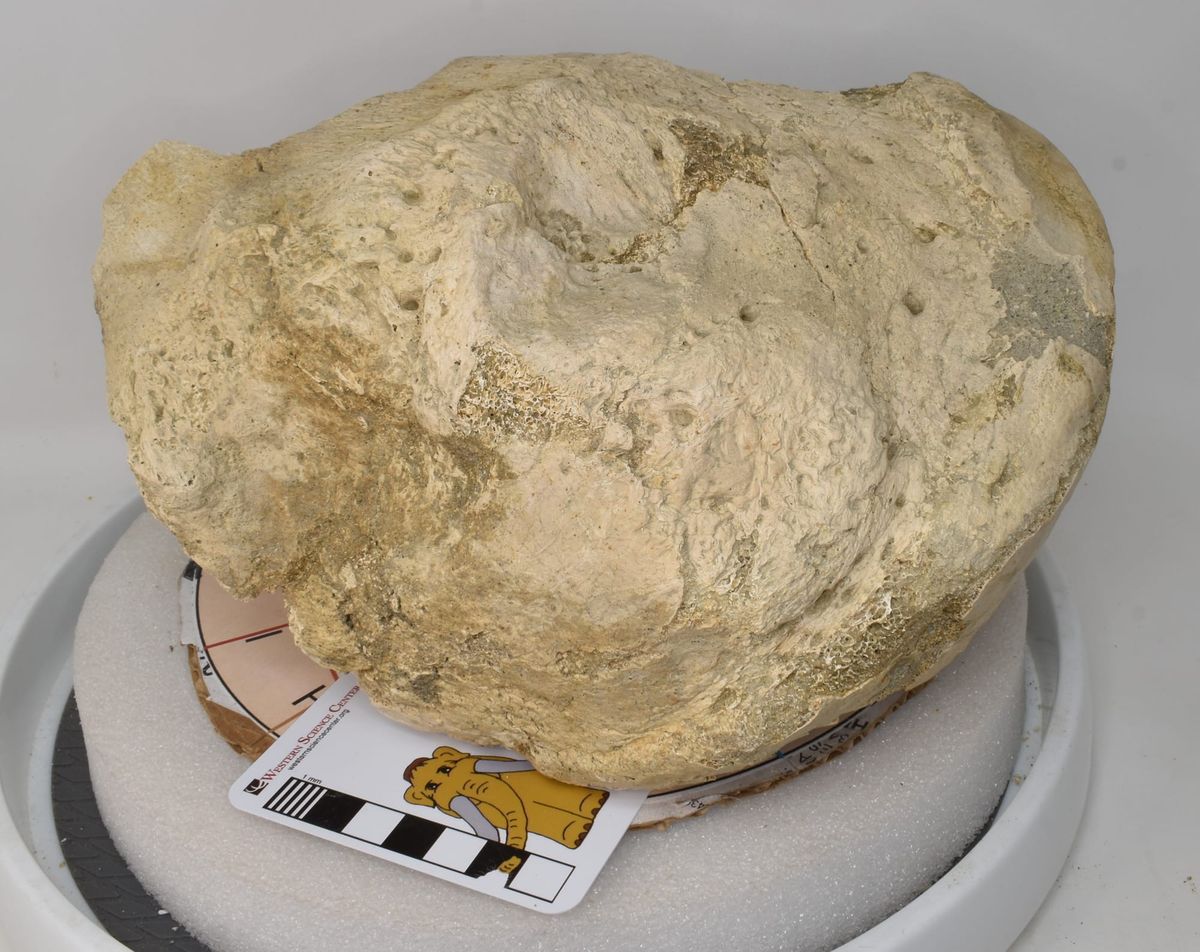
That brings us to the bone shown above. This lump was recovered during construction of the Four Seasons subdivision, just south of the French Valley Airport in Riverside County. Most of the fossils recovered from this site are horses, but the size of this element is only consistent with a proboscidean. At Four Seasons, this is the only proboscidean bone we've found, so we want to include it in the exhibit. But what bone is it, and which proboscidean species does it come from?
Looking first at the type of bone, the broad, curved surface on the right is an articulation. Only two bones of this size have features anything like that, the humerus (upper foreleg) and the femur (upper hindleg). The long, oval curve of this surface is more consistent with the humerus, specifically the medial part of the trochlea on the left humerus. The trochlea articulates with the ulna at the elbow joint. The mass of bone on the side of the trochlea (coming straight out toward the camera) is the medial epicondyle. This serves as an attachment point for the ulnar collateral ligament that stabilizes the elbow, as well as for various muscles that rotate the hand and flex the fingers. When you turn your hand palm down or ball up your fist, you're using muscles that attach to the medial epicondyle.
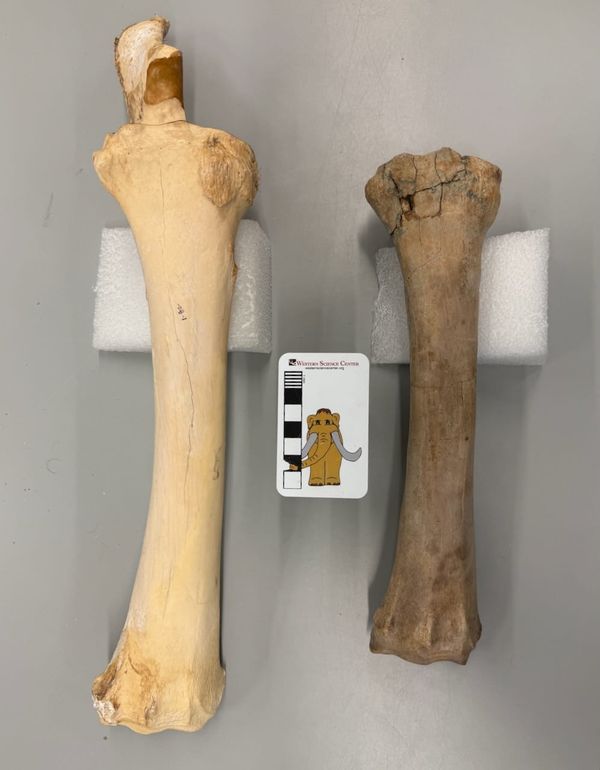
So we know what bone we have, but what species? There are two likely possibilities, a Pacific mastodon (Mammut pacificus) or a Columbian mammoth (Mammuthus columbi). It turns out answering this question is a bit more difficult. When I'm attempting an identification like this, I first go to our collection to find a known example of the bone I'm considering for comparison. But while we do have some Pacific mastodon humeri, we don't have a single prepared Columbian mammoth humerus in the WSC collection (we have several that have not yet been prepared). So I made a digital model of the Four Seasons fragment, and put it in a file with a digital model of the Grizzly Ridge mastodon humerus (which is also going in the exhibit). I then downloaded a wooly mammoth humerus from the Múseum national d'Historie naturelle in Paris, via MorphoSource (there are several Columbian mammoth specimens on MorphoSource, but they can only be downloaded by request and I didn't feel like waiting). I put all the digital models together in a Meshmixer file and scaled them to the same epicondyle size.
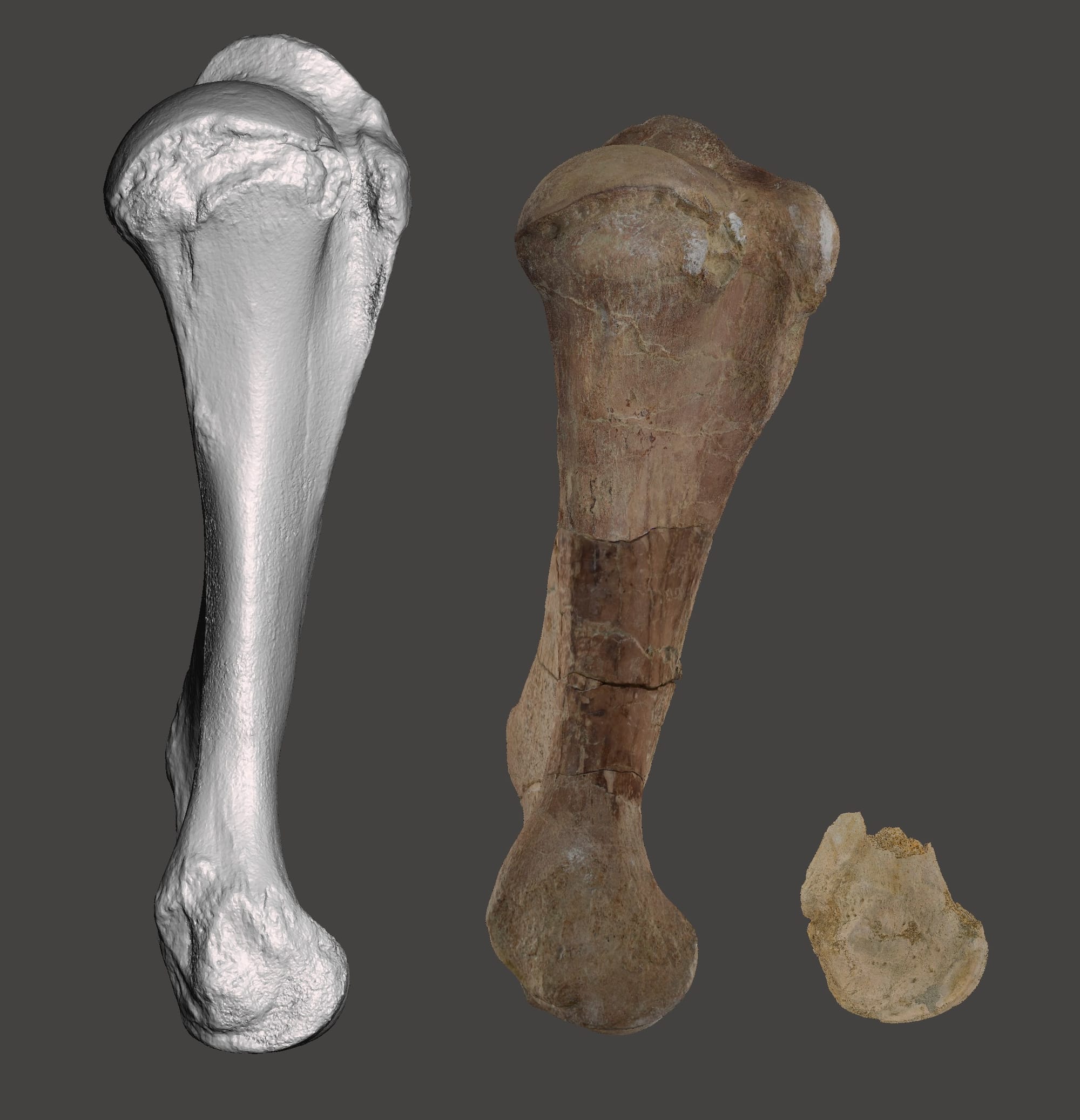
The epicondyles of these specimens differ in shape along the posterior margin (the extreme lower left of each bone). The mastodon epicondyle extends farther posteriorly and ventrally, while the mammoth is more slender and beveled in that area. The Four Seasons specimen more closely resembles the mammoth, and that's what we'll go with in the exhibit.
As an aside, showing these humeri scaled to the same epicondyle size really emphasizes the different mammoth and mastodon body plans. We think of elephants (and mammoths are in the same family) as massive, but by proboscidean standards the elephantids are actually relatively slender and "leggy". Mastodons were shorter, but have generally much more robust limb bones suggesting that they were much heavier than mammoths for a given height.
Here are some other posts featuring fossils we're considering for the new exhibit:
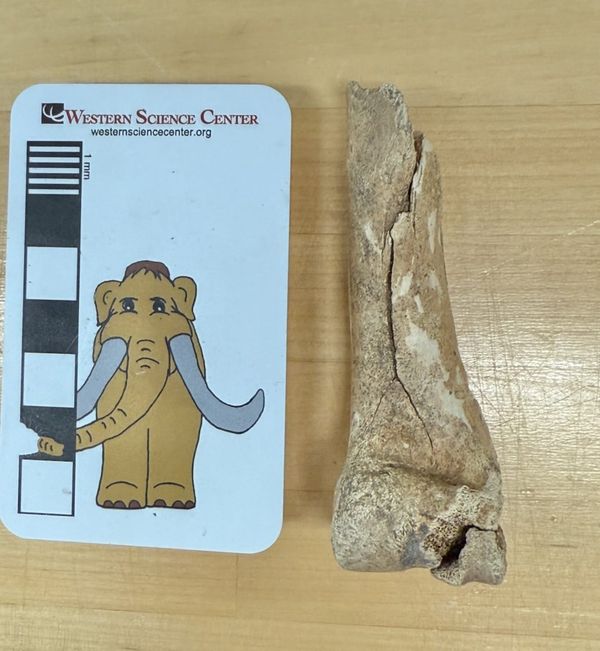
A Little Leg Bone from the Ice Age

If you like what you're reading, please consider becoming a paid subscriber or leaving a tip. All proceeds go to cover the cost of maintaining the site and supporting research and education at the Western Science Center.