Why Museums?
"Museum collections provide the record of past research, and the baseline for future research."
This is the 6th in our monthly series of posts celebrating Western Science Center's 20th anniversary.
It’s a common question, asked of museum professionals by the public, potential donors, and especially by politicians – why should we spend money on museums?
Moving past the annoyance of essentially being asked “Why should your passion and life’s work even exist?”, one of the issues in responding to this question is that there are so many philosophical aspects (What do we mean by “museum”? Is financial output the only way to measure value?). But another is that there are actually so many positive reasons to have museums that it’s difficult to choose just one.
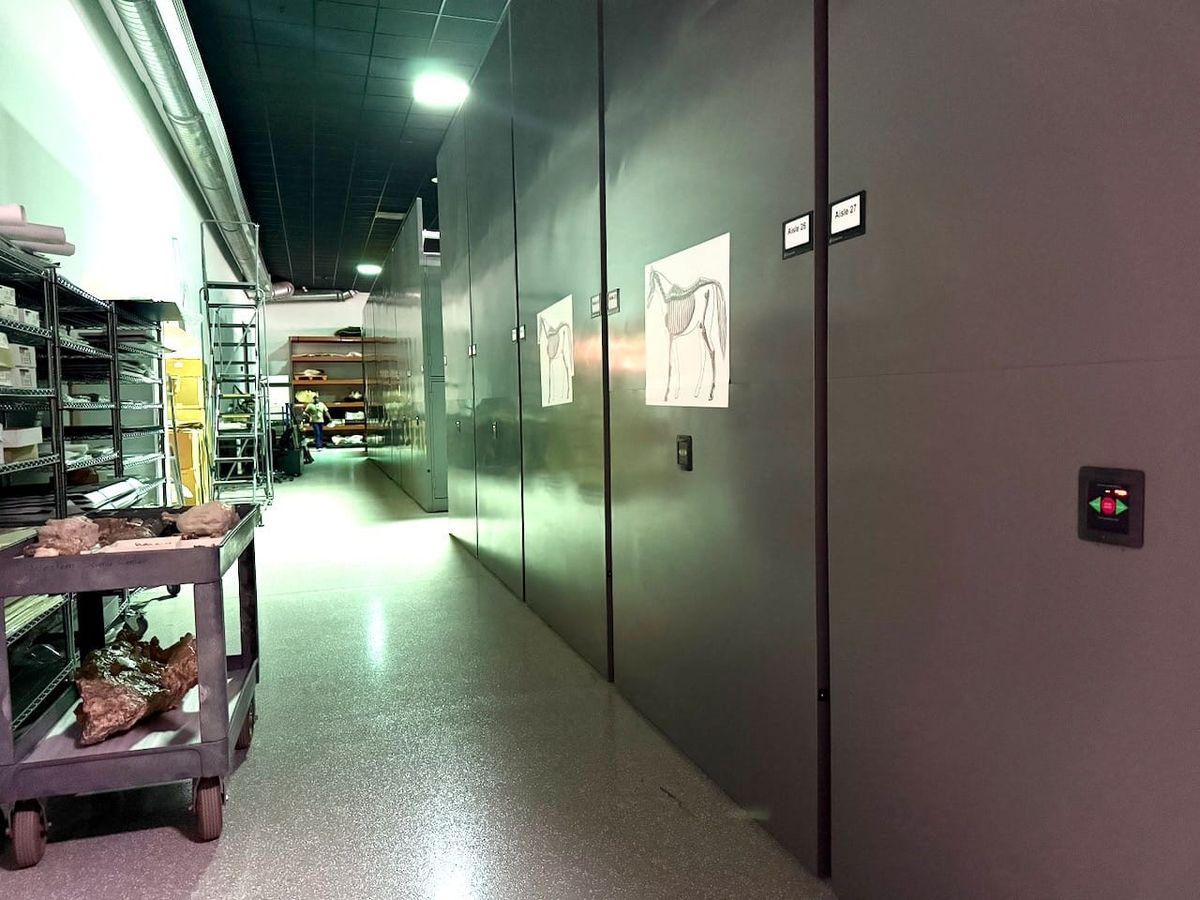
I use a restrictive definition of a museum, as an institution that holds and preserves collections in the public trust. This excludes many organizations that may have “museum” in their name, and that often do outstanding work in outreach and education, but that to me are a different type of institution. This definition doesn’t preclude museums with collections from promoting or conducting research and education, and I feel it’s critical that they do so. But it’s the collection itself that makes them a museum. So for the purposes of this essay, I want to focus more narrowly on collections.
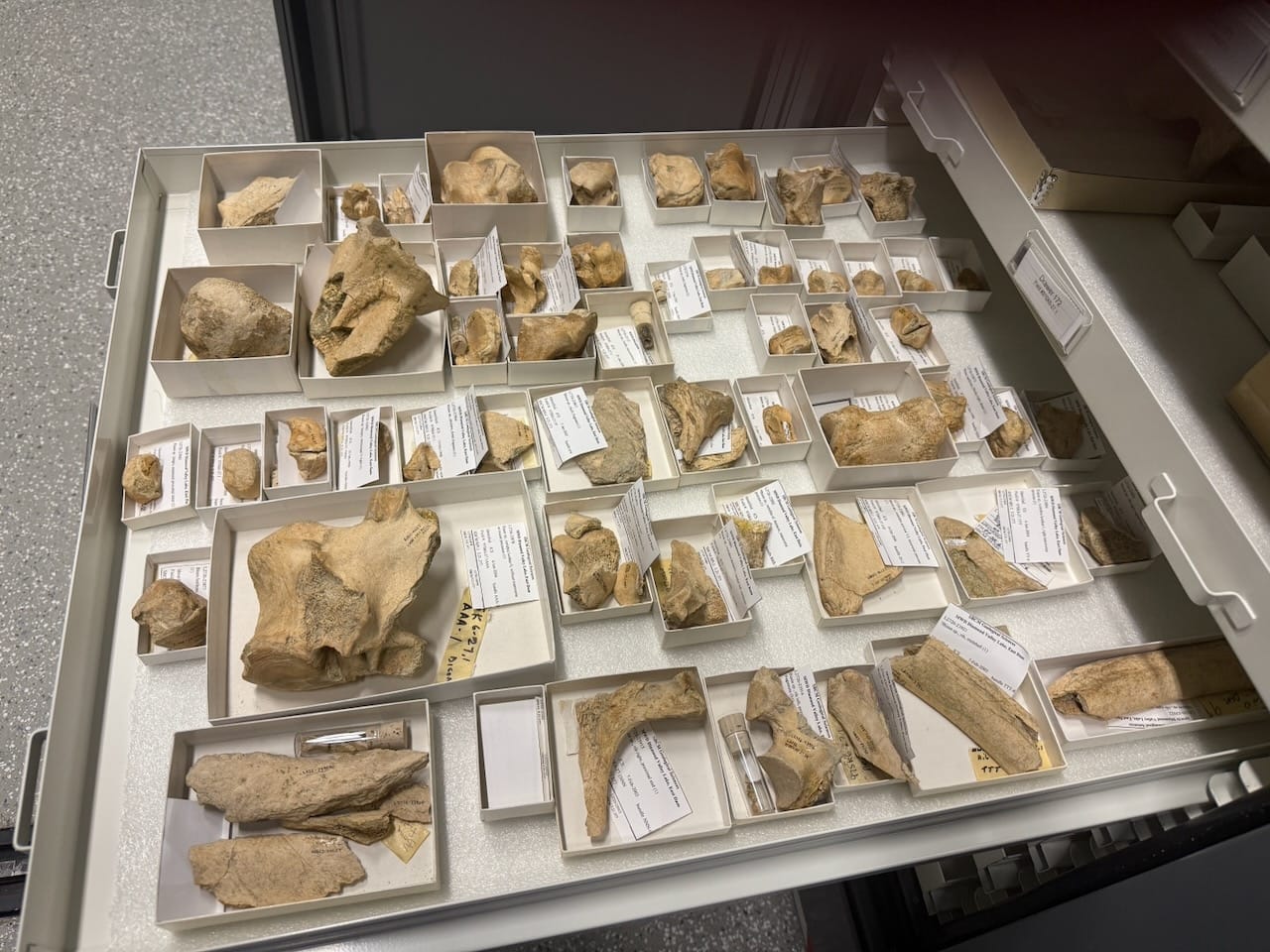
Scientific discovery is incremental, in that each discovery is based in part on earlier observations and experiments. Really big ideas (thermodynamic laws, evolution) are never based on a single, or even a few, observations, but rather on hundreds or thousands of examples of prior work. Because of the importance of prior work, science is also iterative. We always work to confirm that experiments were performed and interpreted correctly, and that observations were accurate. That’s why we have things like peer review, why we run statistical tests to confirm that our results aren’t just a chance event, and why we redo experiments and observations. In natural history, collections are a key part of this process. If someone says that species X lived in place Y at time Z, the evidence for that is generally in a museum collection. Other scientists can look at that specimen and confirm the observation. Museum collections provide the record of past research, and the baseline for future research.
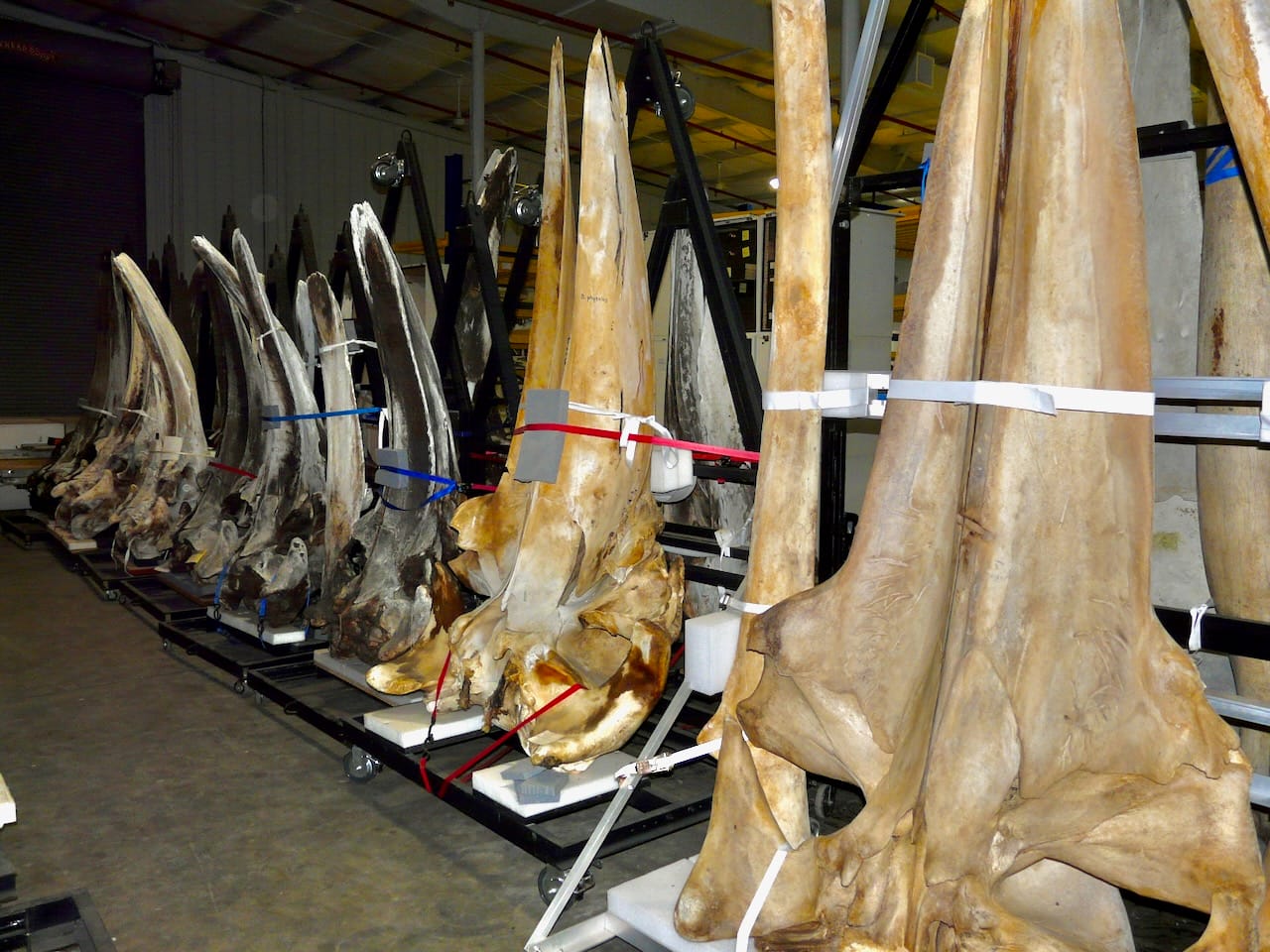
Because science is incremental, those collections have an importance far beyond the mere curiosity of the collection itself. For example, the development of vaccines, especially for things like influenza, requires a deep understanding of the mechanisms of evolution. But how do we know how evolution works? It’s based on vast numbers of genetic and biological experiments, combined with a huge amount of observational work of both modern and fossil organisms; much of that data is contained in museum collections.
As another example, consider the effects of anthropogenic climate change. Politics aside, for decades there has been no real scientific debate anymore about the reality of climate change. Climate change research today largely focuses on what the effects will be and how we may mitigate them. But it’s worth thinking about how we measure those effects – we’re comparing projected future conditions to current conditions and to past conditions. And the way we know about those past conditions is largely through things like ice cores, sediment samples…and fossils, stored in museum collections. If we want to know how ecosystems respond to climate shifts, our record of prior events is preserved in museums.
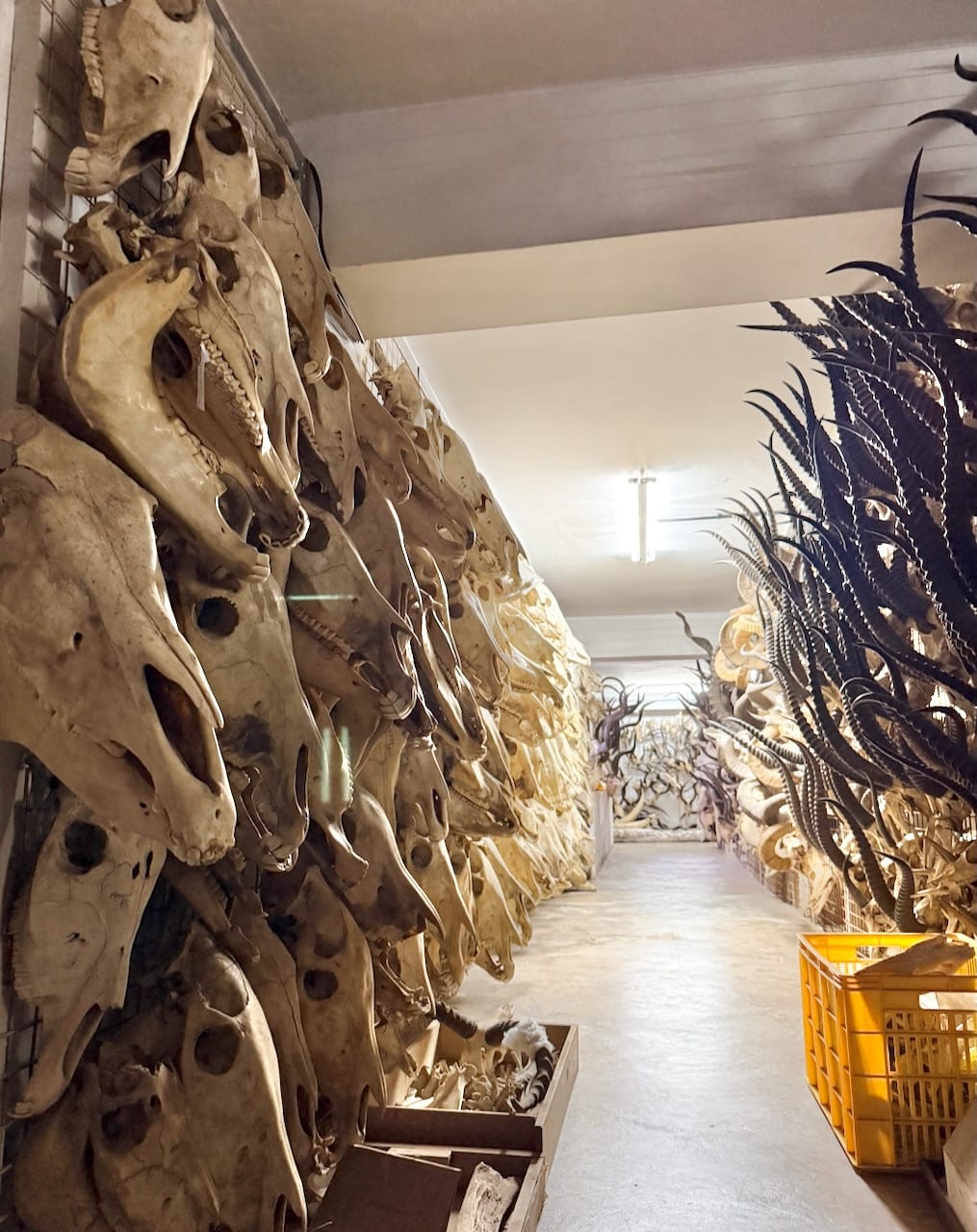
Much of the research done on collections seems at first glance to be rather esoteric, with few implications for society at large. But in addition to the significance for providing a scientific baseline, collections-based research sometimes has immediate impact on the general public. For example, back in the late 1980s I spent a summer working as a paleontology intern at the Virginia Museum of Natural History. My boss took me to the Coastal Plain to collect fossil shells for the museum, and while there we made a brief stop to visit a coring operation being conducted by the Department of Environmental Quality (my boss knew the DEQ scientists, and I had never seen a coring operation before). They explained to me that the Tidewater area, including Norfolk, Newport News, and Virginia Beach, was having some difficulty with salt water intrusion. This is a common issue in populated coastal areas, when fresh water wells are overpumped and start to turn salty as they pull in underground seawater. DEQ was drilling to get a look at the underlying sediments to see if they could learn why this seemed to happen faster than expected in the Tidewater area, and if there were deeper subsurface layers that would be less susceptible to salt water intrusion. To this end they were taking cores all over the region to try to trace the geometry of the subsurface layers. Identifying the layers requires in part identifying the fossils they contain. Geologists and paleontologists have spent decades mapping and collecting fossil occurrences across the Coastal Plain, so that we know the ages of the layers and the order in which they occur. The fossil specimens documenting this are housed in museums, in this case mostly at the Virginia Museum of Natural History and the U.S. National Museum.
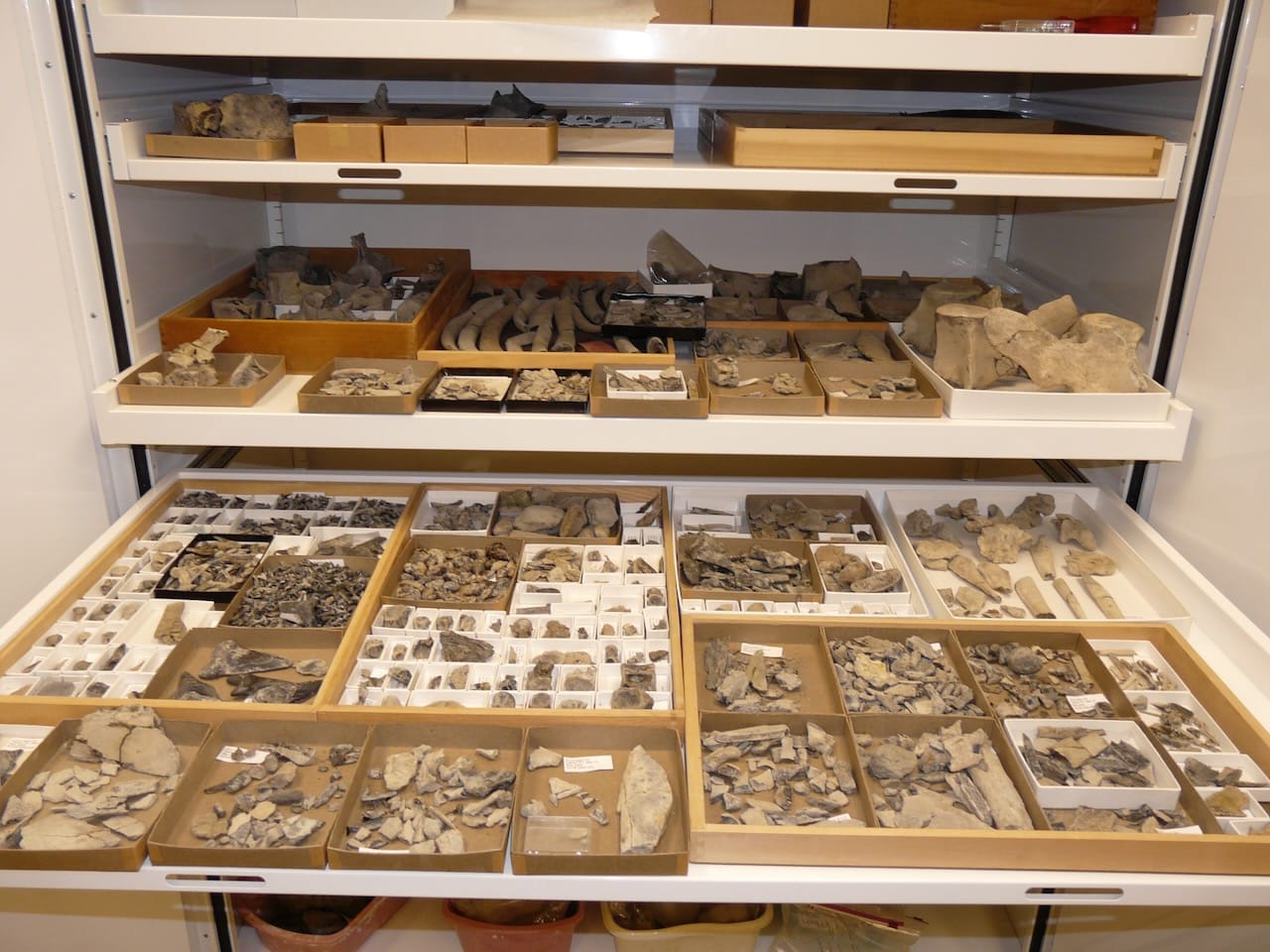
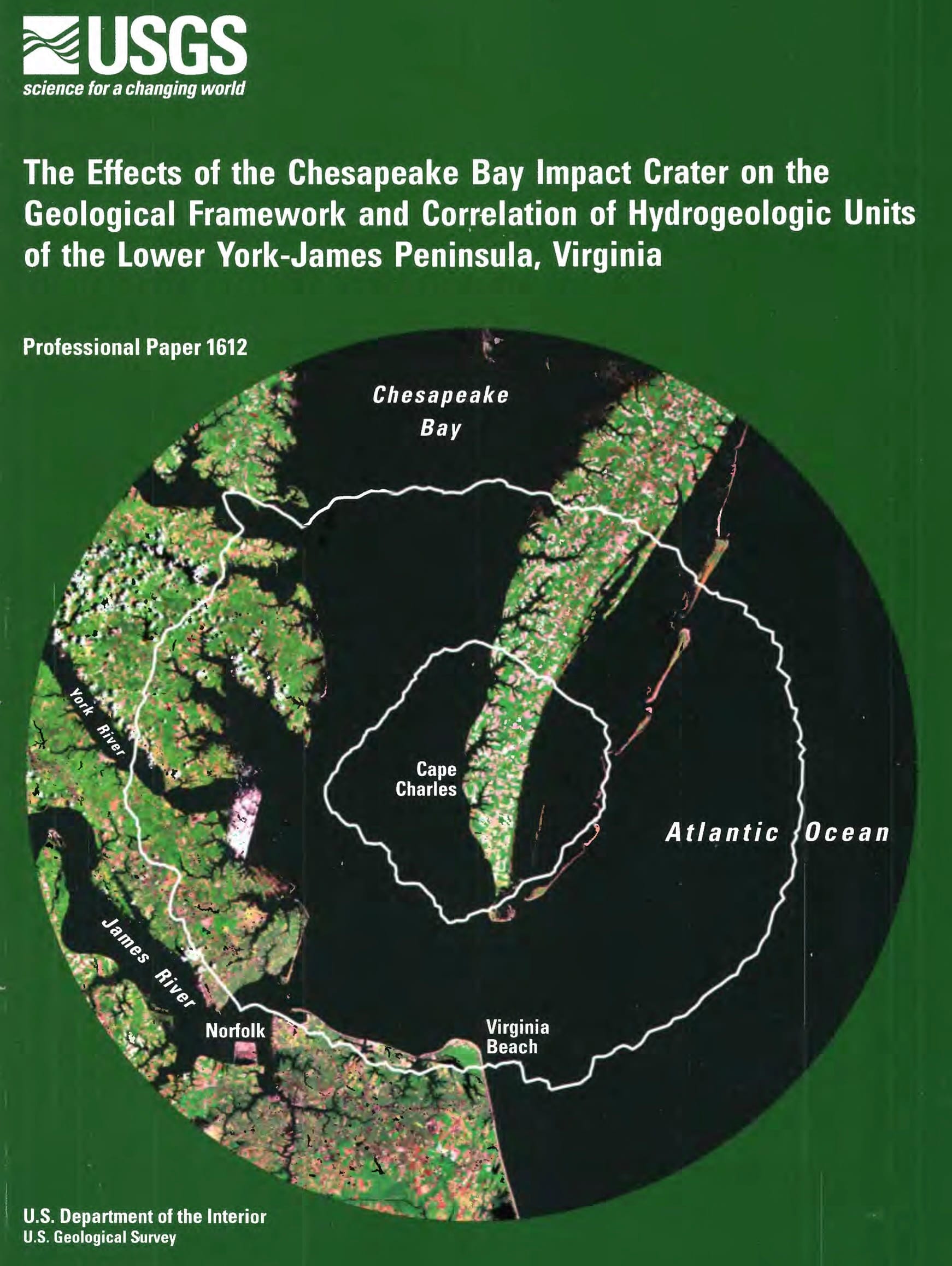
When compared to the museum collections, the cores from Tidewater made no sense. The fossils were there, but they were all out of order, more of a jumble with the order differing from core to core. With lots of cores, the geologists were able to map this “disturbed zone” and found that it was a large, circular region over 80 km in diameter. The team working on the problem presented their interpretation in 1993 (here's a summary from 1999). It turns out there is a giant asteroid impact crater at the mouth of the Chesapeake Bay that formed about 35 million years ago. It is buried under younger sediments so there it not much evidence of the crater on the surface, but below ground all of the sediment layers that would normally serve as water aquifers were completely jumbled in the impact. Shallow wells drilled into sediments that were younger than 35 million years old did ok, but deeper wells into older sediment generally would fail rapidly or would not produce fresh water at all. This discovery allowed for much better planning for water management in the region.
The thing about research is that by definition you're exploring the unknown. Usually we don't know where research is going to lead, what new questions it might reveal, and what problems it might solve. Any single specimen may be a small thing. But taken together, the world's museum collections provide an unparalleled resource for solving our scientific mysteries and planning for the future.

If you like what you're reading, please consider becoming a paid subscriber or leaving a tip. All proceeds go to cover the cost of maintaining the site and supporting research and education at the Western Science Center.