Grizzly Ridge mastodon vertebra
As I mentioned last week, many of the Western Science Center's fossils are actually recovered by paleontology mitigation companies, thanks to California's robust protections for fossil resources. Most of these companies are highly skilled and professional and do a great job recovering the specimens and their associated data. But occasionally we encounter specimens that were not properly collected.
More that a decade ago WSC acquired a large collection of mitigated fossils from Temecula Valley. Unfortunately the specimens had not been well collected or cared for, and included no field notes. For many of the specimens we don't even know where they came from, which makes them nearly useless from a scientific standpoint (these mostly ended up in our teaching collection).
For some of the fossils we were able to figure out which construction project they came from. Several boxes were from Grizzly Ridge, a housing development in the city of Murrieta. With this information we could narrow down the excavation location to just a few blocks, and the rock unit to the early Pleistocene Pauba Formation. This was useful because most of the Grizzly Ridge bones were from a mastodon, which are rare in the Pauba.
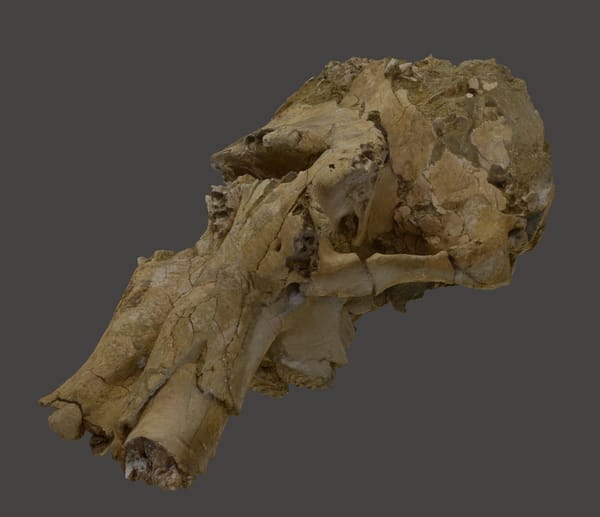
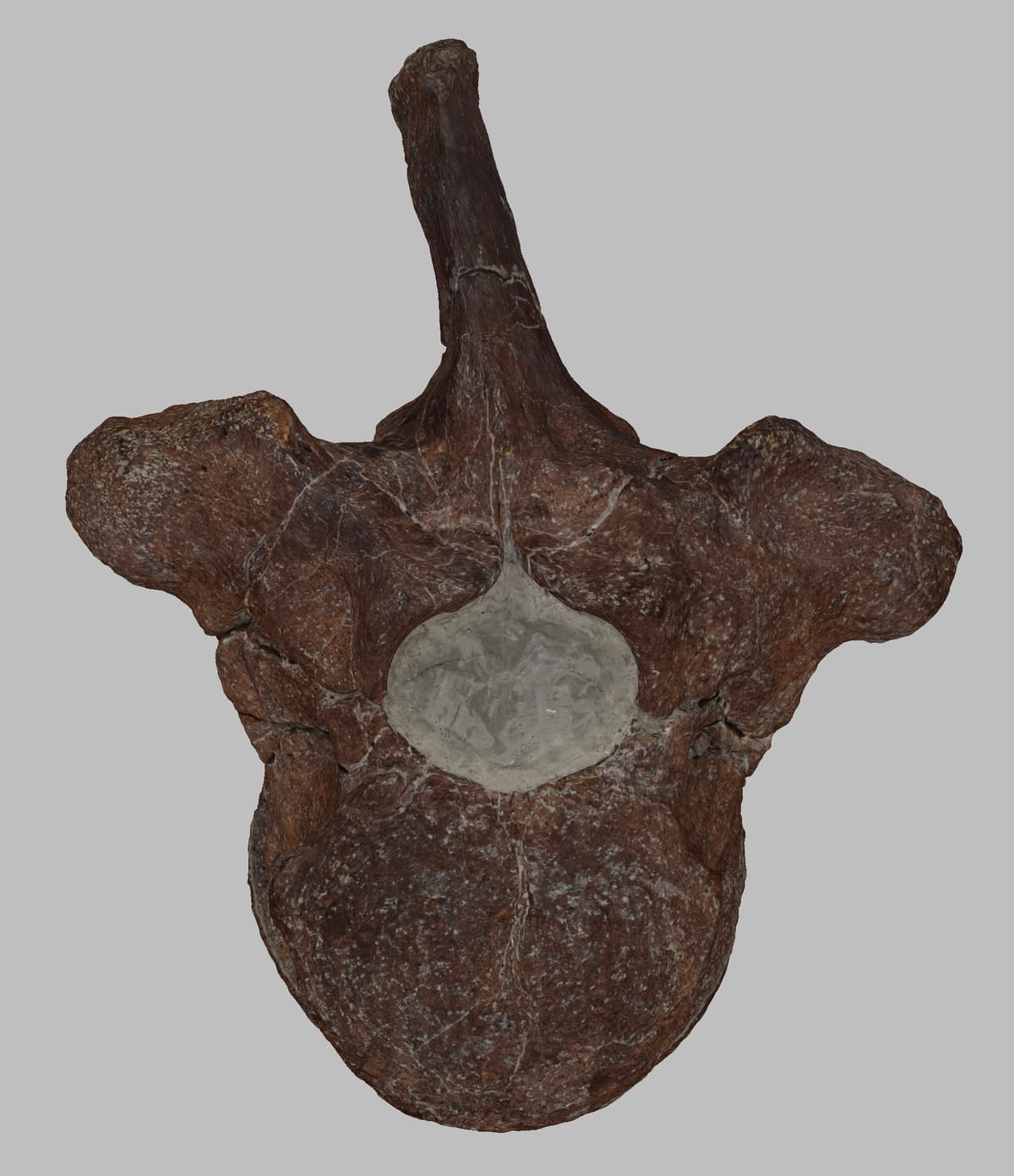
Our lab staff and volunteers have spent several years cleaning the bones from the Grizzly Ridge mastodon (and they do all appear to come from a single animal). Several of these are vertebrae, one of which is shown above. This is not actually a photograph; rather it is an orthographic view of a digital 3D model we produced of the bone.
The image above is in anterior view. The grey area is the sediment-filled neural canal for the spinal cord. The oval prezygophyses sit just above the neural canal. At the top corners of the centrum, just below and beside the neural canal, are two facets for rib articulations, showing that this is a thoracic vertebra.
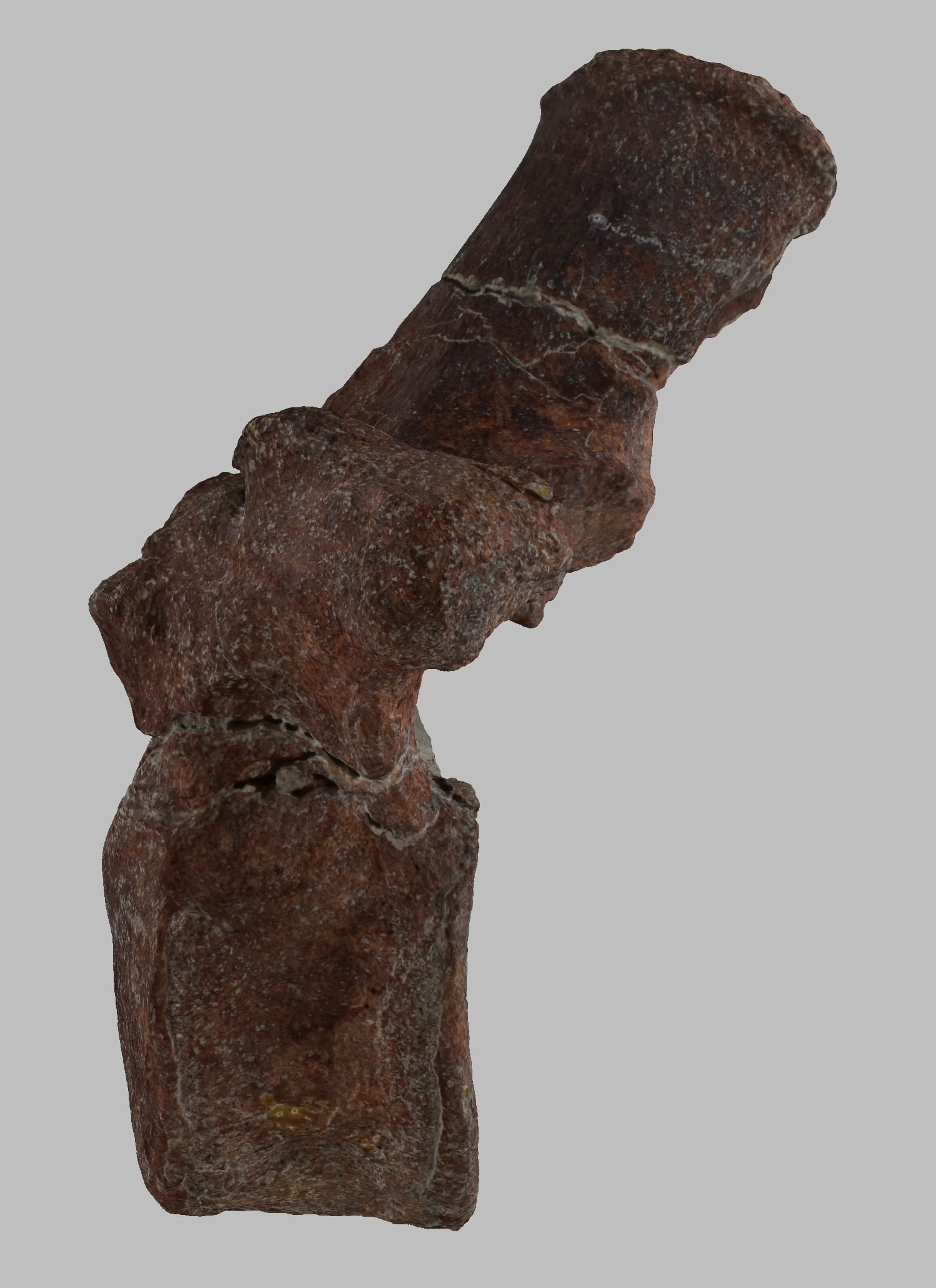
In left lateral view (above) we can see that the centrum has a rib articulation near the anterior margin, but not at the posterior margin. That means this is a posterior thoracic, because the anterior ribs articulate at the intervertebral disk, leaving two articulation facets on the centrum. We don’t know the number of thoracic vertebrae in Mammut pacificus, but the related Mammut americanum had 20. If M. pacificus was similar, this vertebra was probably one of the last 6 thoracics.
We'll see more of the Grizzly Ridge mastodon in future posts.

If you like what you're reading, please consider becoming a paid subscriber or leaving a tip. All proceeds go to cover the cost of maintaining the site and supporting research and education at the Western Science Center.