Harvey the Mammoth
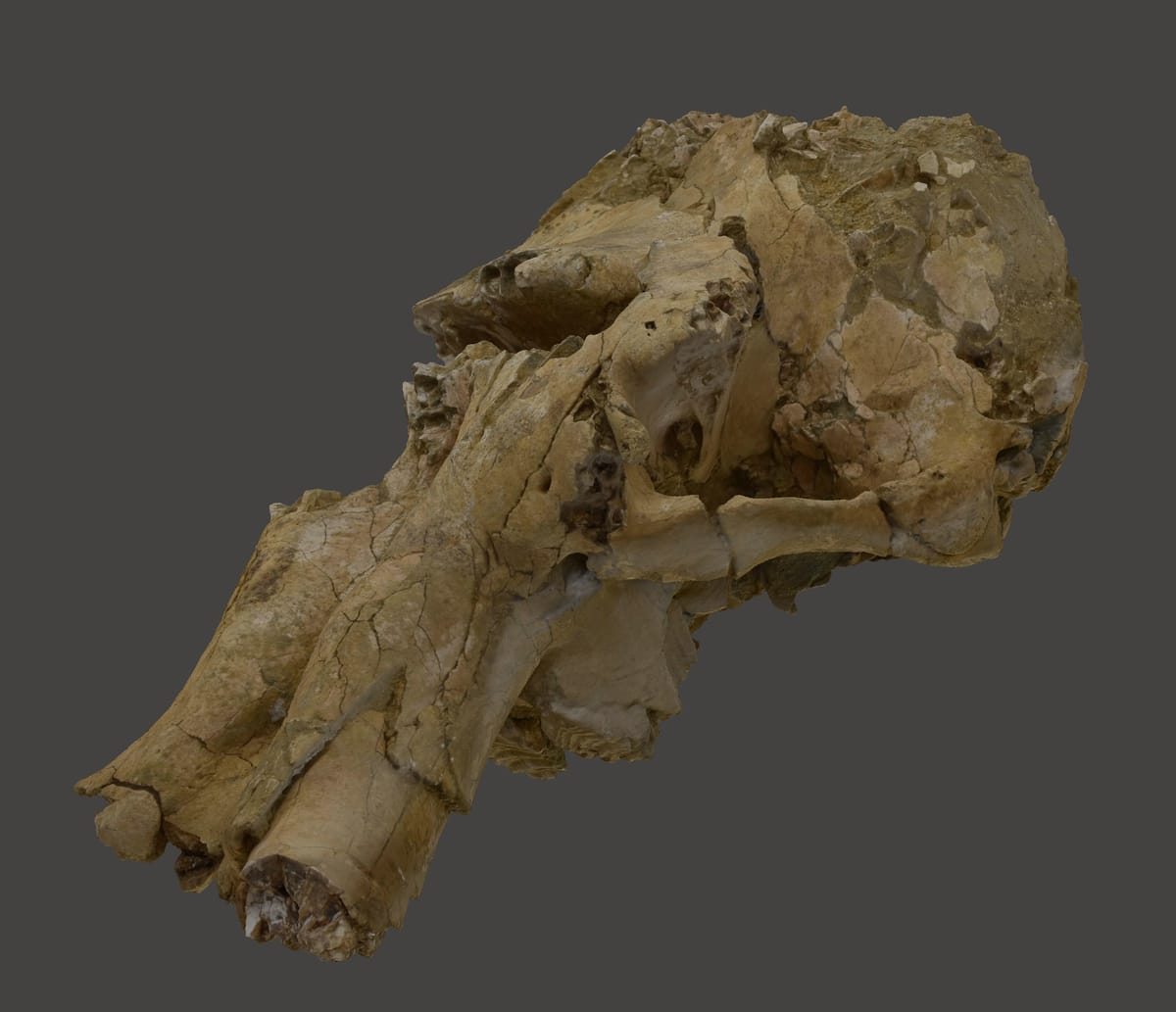
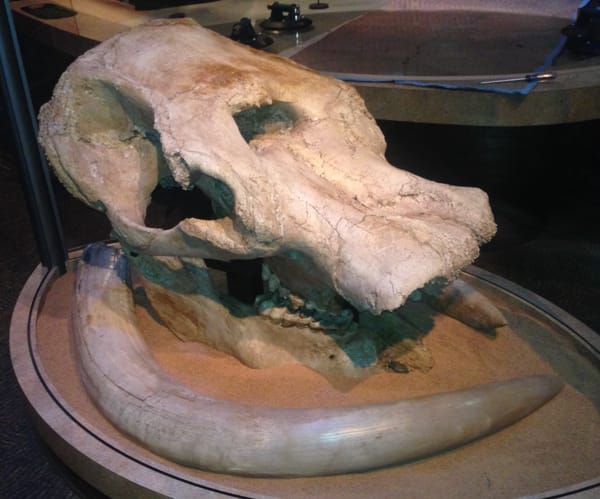
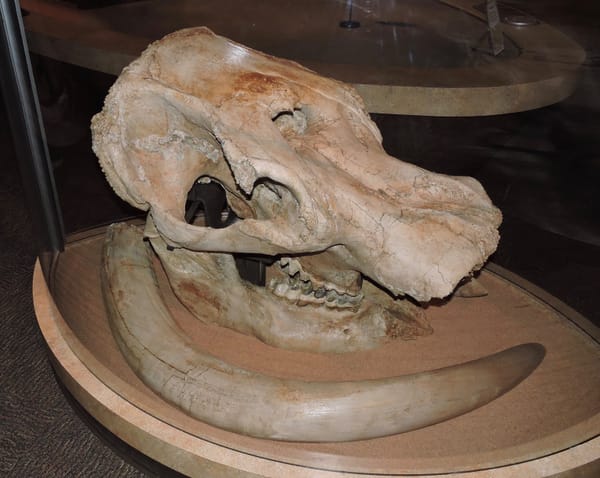
Later this year Western Science Center will be opening a new permanent exhibit (more on that in a future post). One of the highlighted specimens in this exhibit will be the skull of Harvey the Mammoth.
Like many of WSC's specimens, Harvey was discovered during a construction project, specifically the Harveston subdivision in Temecula, California in 2003. Several hundred fossils were recovered from Harveston, primarily isolated bones. Only a couple of other mammoth bones were recovered, and we can't say with any confidence that any of them are part of Harvey's skeleton (and several of them are definitely from other mammoths).
Harvey is still awaiting detailed study, but we can reach some tentative conclusions based on initial observations. The small number of enamel ridges on the teeth suggest a Columbian mammoth (Mammuthus columbi), rather than a wooly mammoth (M. primagenius). That's no surprise; Columbian mammoths are the species typically found in late Pleistocene Southern California, and wooly mammoths apparently never made it this far south.
There is only one tooth preserved on each side of Harvey's mouth, but it's not the last tooth, because there's an empty socket behind it. Based on the size I think the preserved teeth are the first molars (M1). Determining an age off a single tooth is always risky, but if these teeth really are first molars, Harvey was probably somewhere around 18-26 years old when he died. And I say "he" because, if that age is correct, the tusk diameter is probably more consistent with a male than a female mammoth (after puberty male tusks grow much faster than female tusks). In fact, Harvey seems to be pretty close in age to Xena, a young male mammoth from Diamond Valley Lake in the WSC collection.
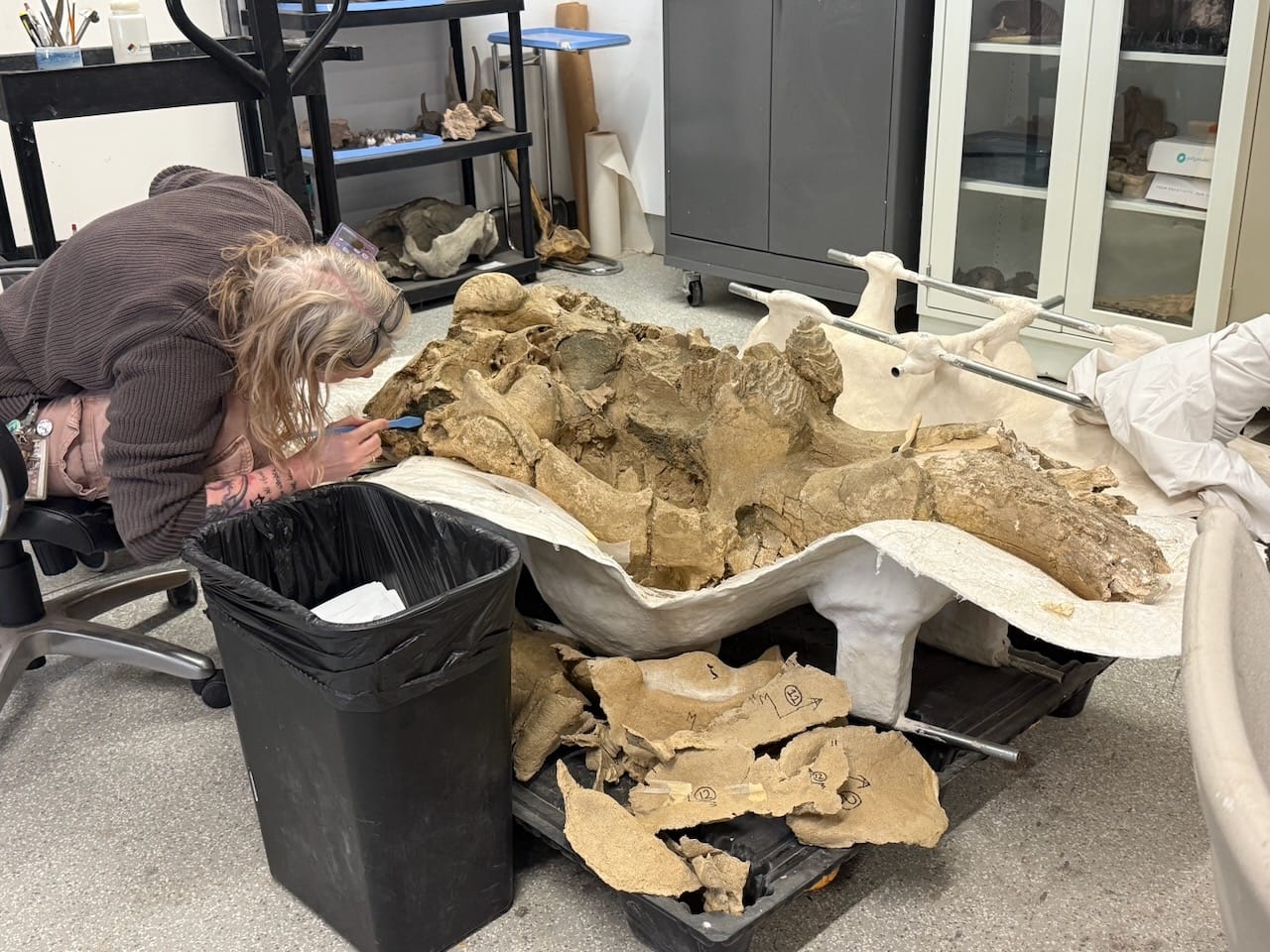
For many years Harvey has been sitting in our collection in a storage cradle, but now that he's going on permanent exhibit we're having a new mounting structure constructed. Meanwhile, WSC Lab Manager Leya Collins is going over the skull bit by bit, making sure that everything is stable enough to be safely transferred to the exhibit hall.
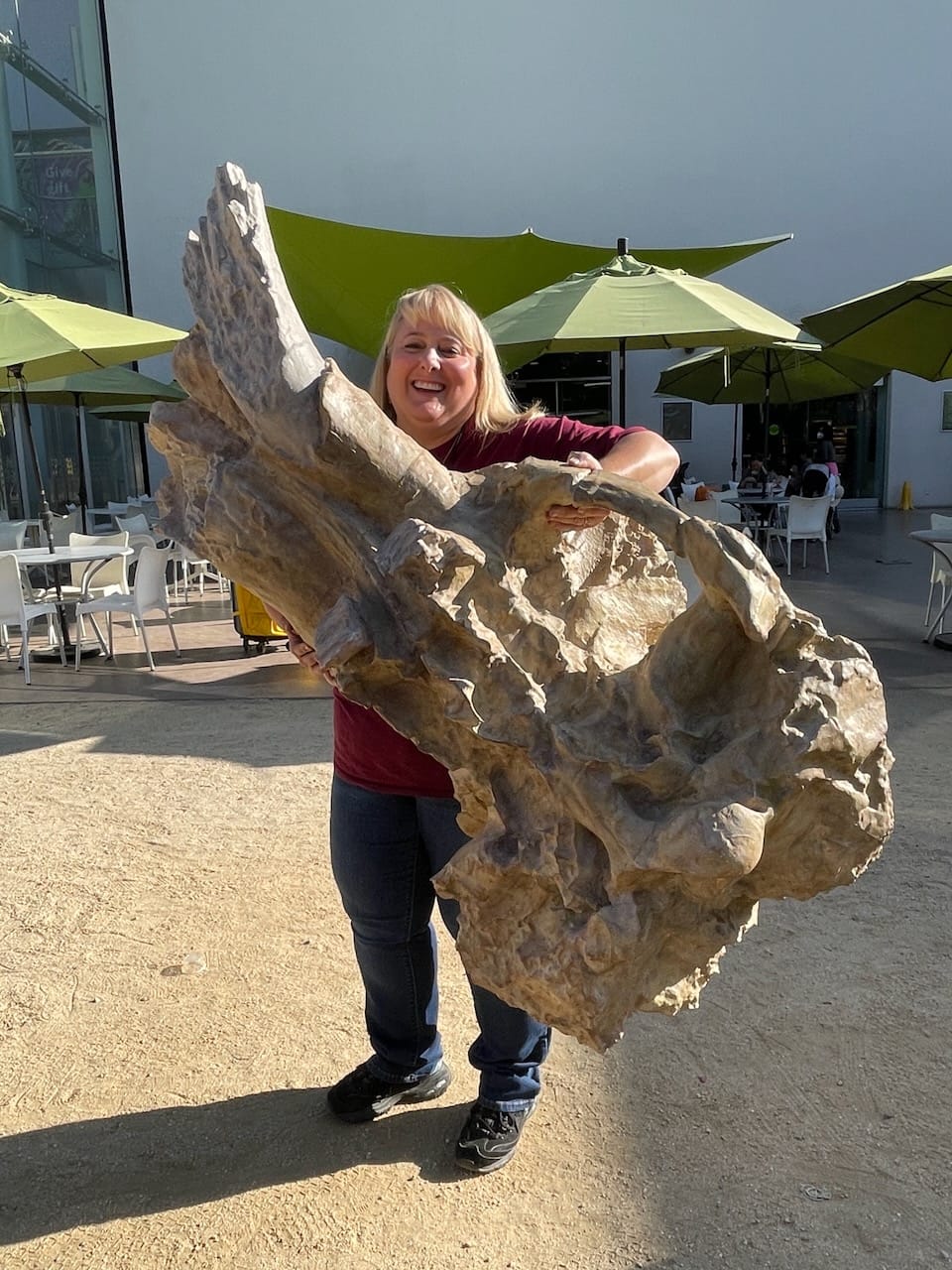
Several years ago we used photogrammetry to make a digital 3D model of Harvey; the image at the top of this post is actually a screenshot of the digital model. We then 3D-printed a lifesize replica that is used in our Mobile Museum:
The video below shows the digital model from various angles. At some point this year, we'll be making Harvey's 3D model available online as a free download.

If you like what you're reading, please consider becoming a paid subscriber or leaving a tip. All proceeds go to cover the cost of maintaining the site and supporting research and education at the Western Science Center.