Max's thunderous thighs
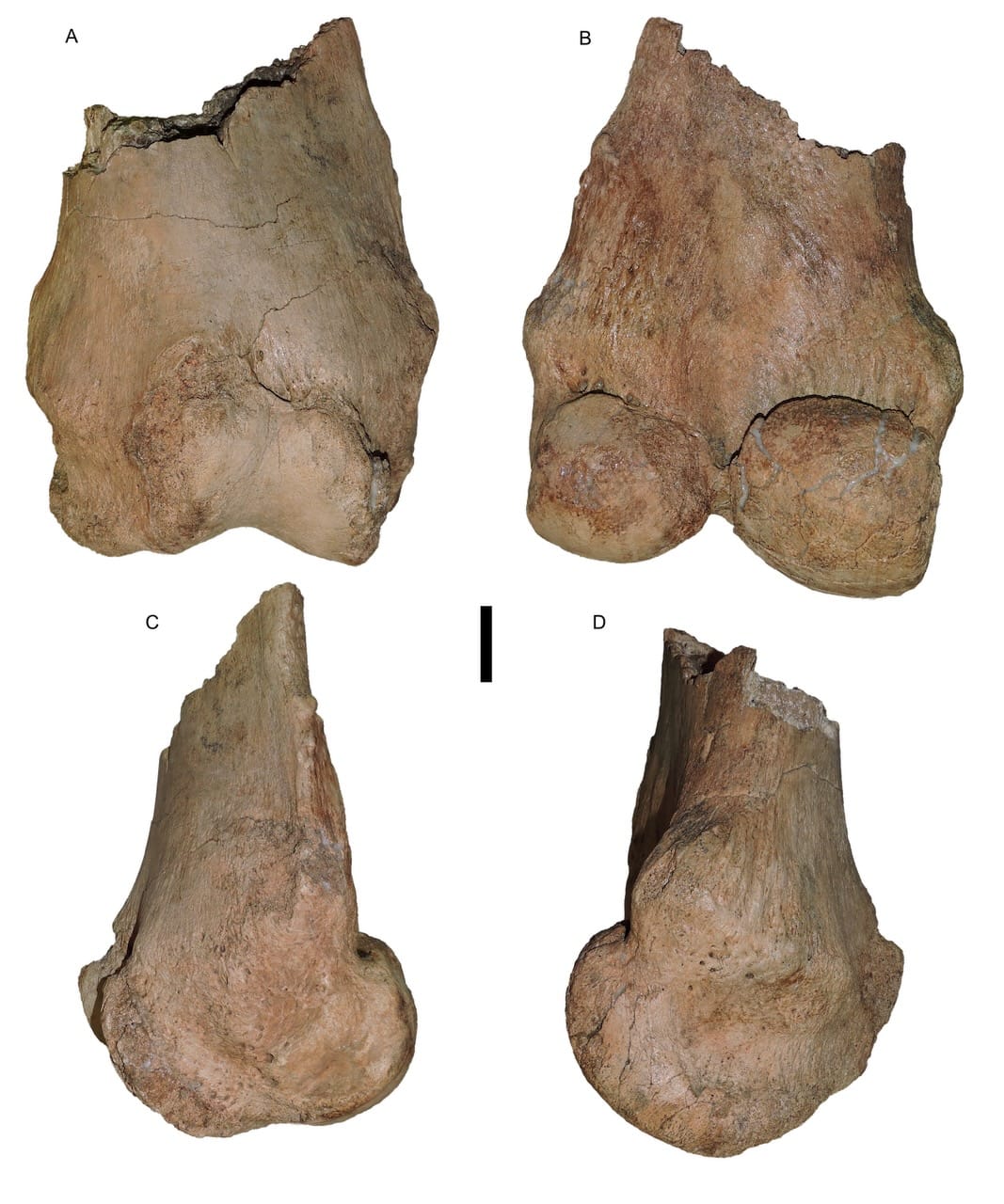
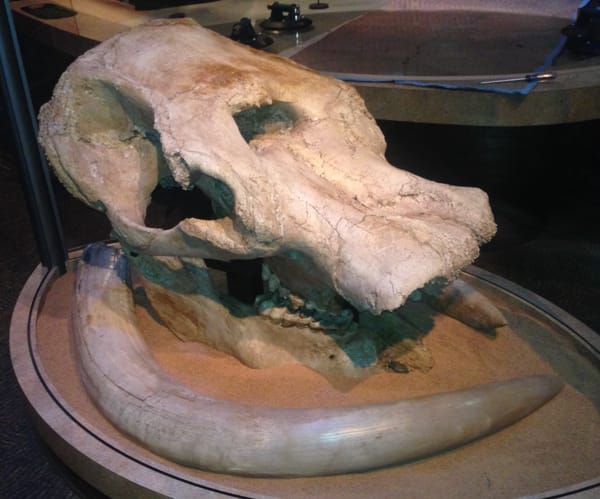
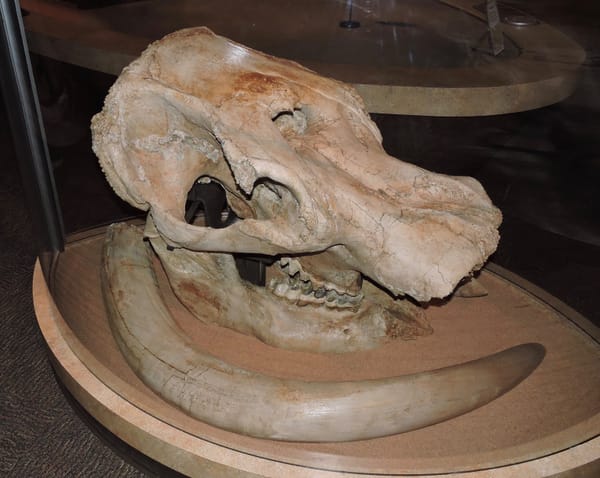
"Max", the holotype Pacific mastodon, got his name because of his size. Even before he was completely removed from the ground, it was clear that Max was one of the biggest mastodons ever found in California. And yet, we don't know exactly how big he was.
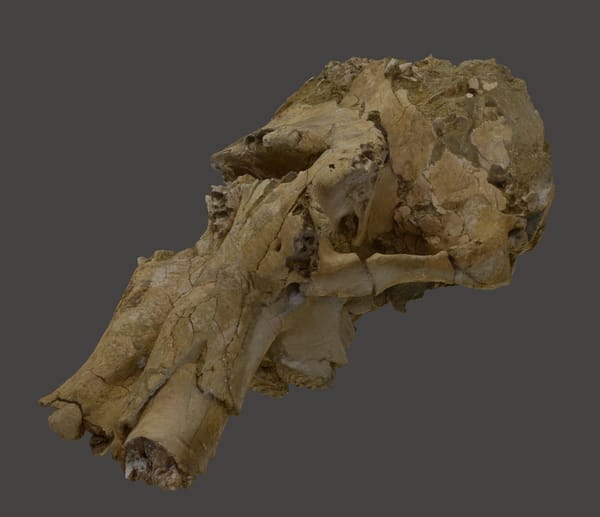
When discussing how "big" a land animal is, we usually either mean "how tall was it" or "how much did it weigh". With fossil land animals, the key to getting an answer to either question usually lies in one bone, the femur or thigh bone. And here Max presented a problem. While his skull and pelvis are beautifully preserved, Max's leg bones were almost entirely absent. All that was recovered from his legs was the lower 1/4 of the left femur, shown above.
To get a good estimate of height, we need to know the length of the femur, and to estimate weight, we need to know the minimum cross-section diameter. We can't measure either of these in Max. We do have a few other Pacific mastodon femora, which helps a bit:
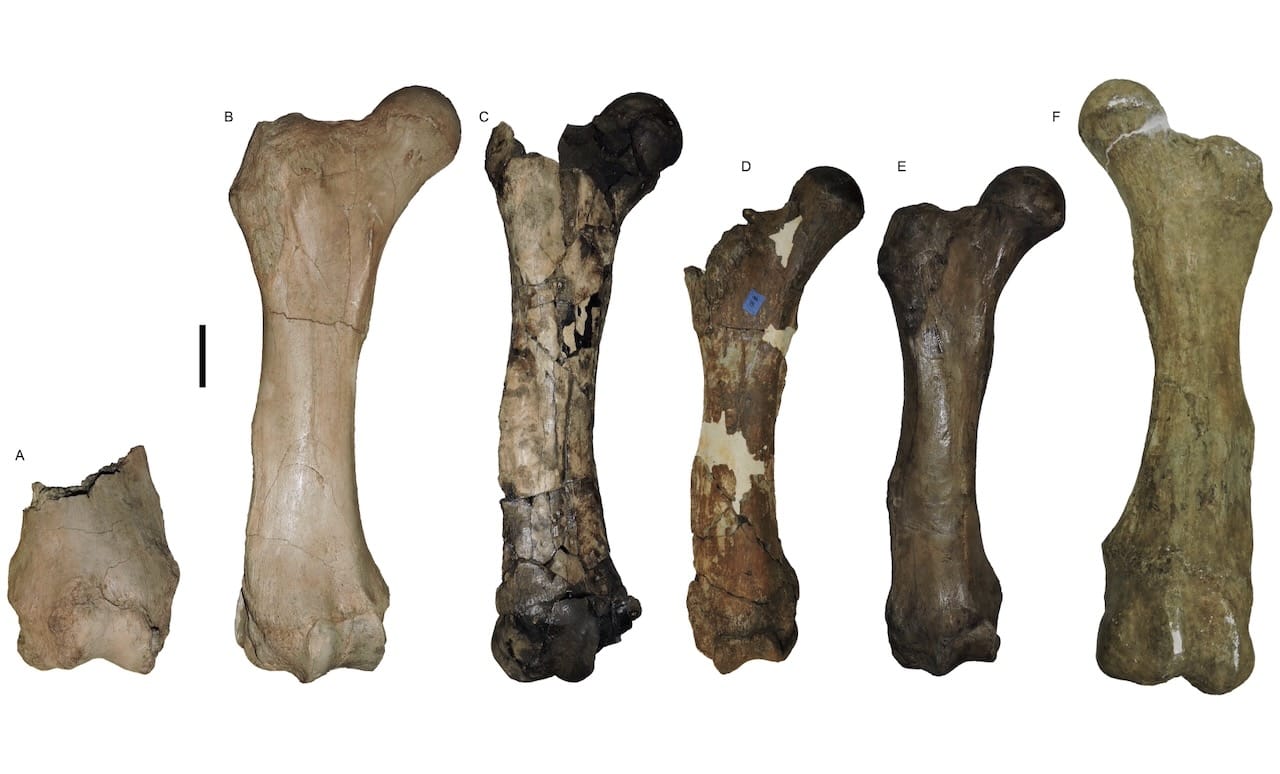
By measuring the width of the preserved part of Max's femur (essentially the width across the kneecap), we found that he was about 10% larger that the next largest Pacific mastodon, "Little Stevie" ("B" in the image above), so Max was definitely big by Pacific mastodon standards. We also tried comparing him to American mastodons for which there are many more specimens. Compared to them, Max was bigger than average, but not exceptionally large. But even that was more of a qualitative observation. In describing the Pacific mastodon, we discovered that American and Pacific mastodons have different femora shapes, so they're difficult to compare directly. We also found that the proportions of the femur change with body size, so just scaling Little Stevie's femur up by 10% may not give us an accurate reconstruction of Max's femur.
So, in the end, there's a lot of uncertainty about Max's size. He was probably somewhere between 3.0 and 3.5 m tall at the shoulder (9-11 feet), and probably considerably heavier than an elephant of the same height (over 5,500 kg), as mastodons in general were much more robust than elephants.
If you'd like additional information, these images were taken from the 2019 description of the Pacific mastodon in PeerJ. This paper is open access and available online for anyone to read.