The Discovery of Max
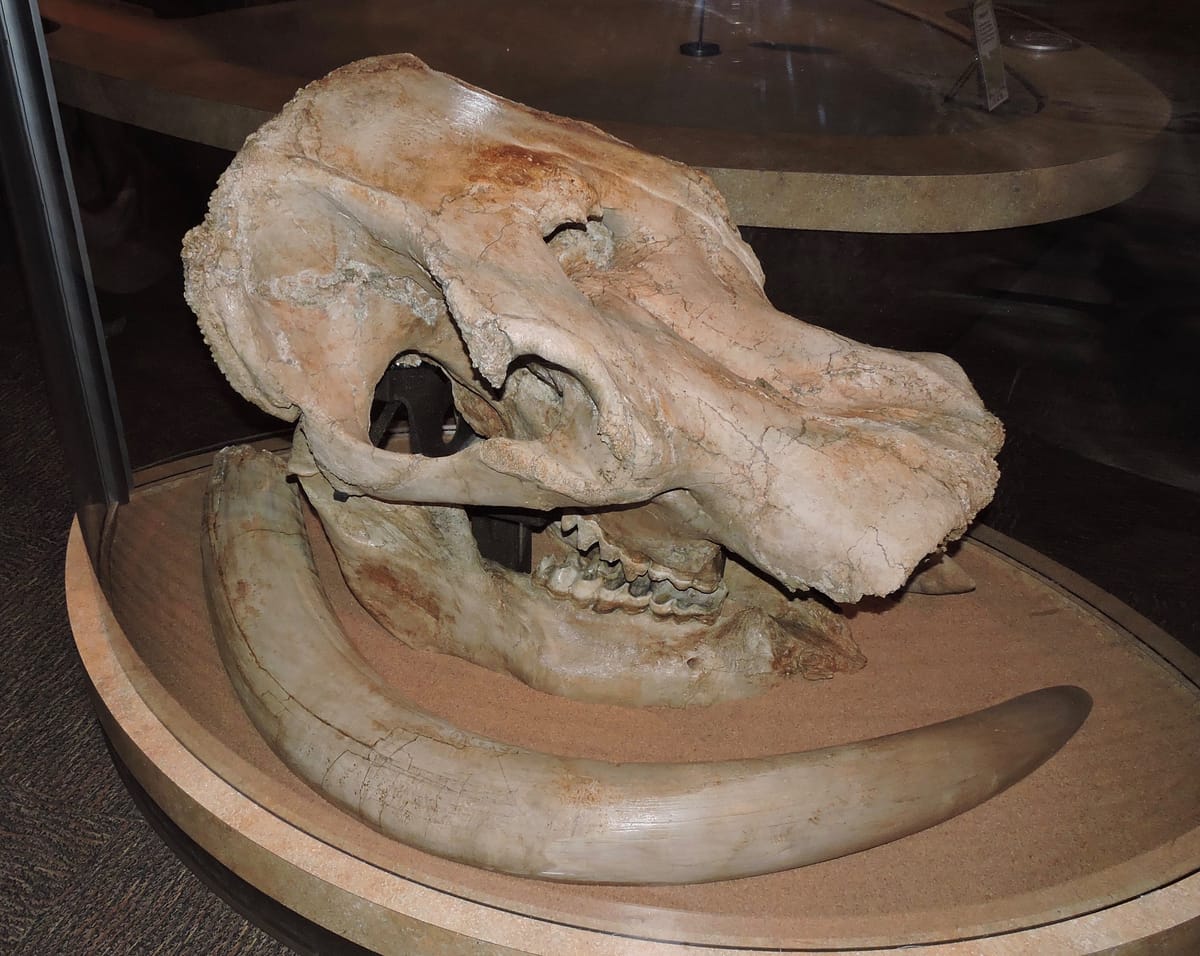
This is the 2nd in our monthly series of posts celebrating Western Science Center's 20th anniversary.
By 1995 the multiyear Diamond Valley Lake construction project was well underway. Huge amounts of sediment had to be moved to both increase the reservoir's volume and to provide the raw materials that would be used to construct the three required dams. Each morning teams of archaeologists and paleontologists would drive out to active construction sites, monitoring the sediment removal for any hint of artifacts or fossils that needed to be documented and removed. Whenever fossils were found, the site location would be mapped and described, a field number would be assigned, and the fossils would be removed as quickly as possible.
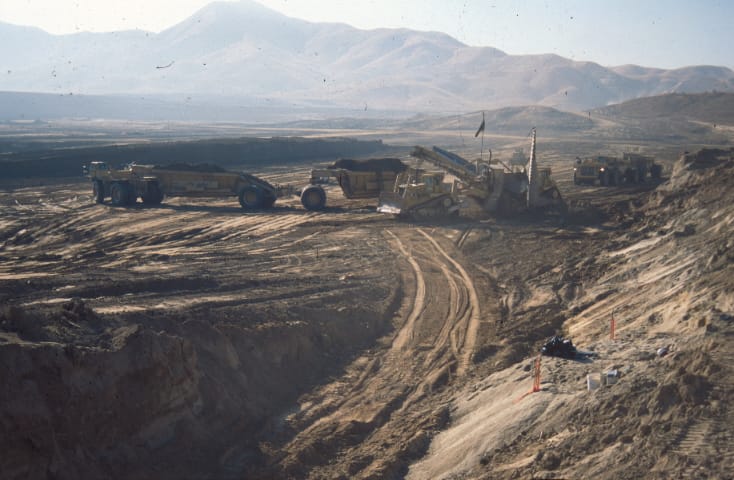
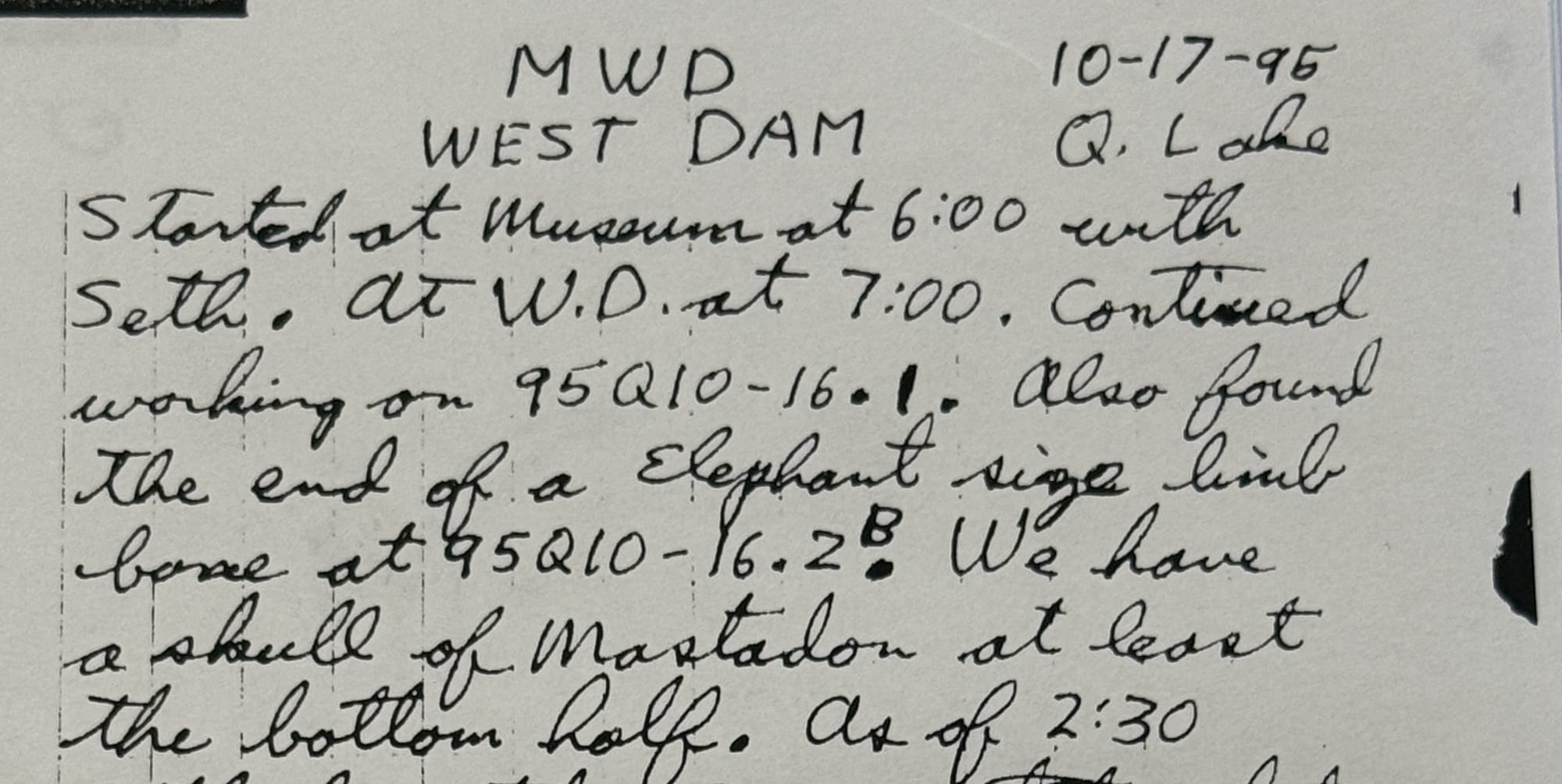
On October 16, 1995 Quinton Lake was at the West Dam construction site and made the following entry in his notebook, establishing field site 95Q10-16.1:
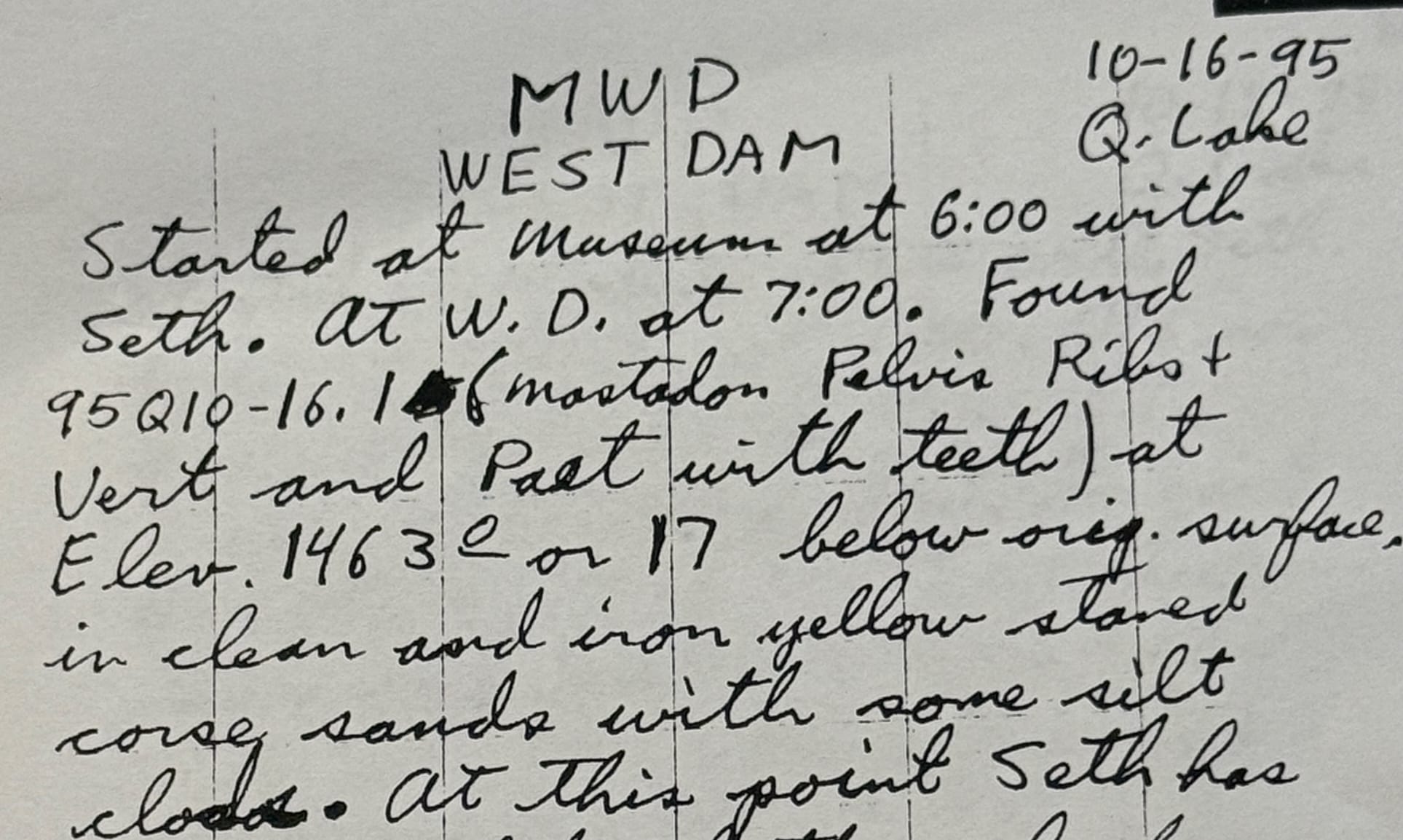
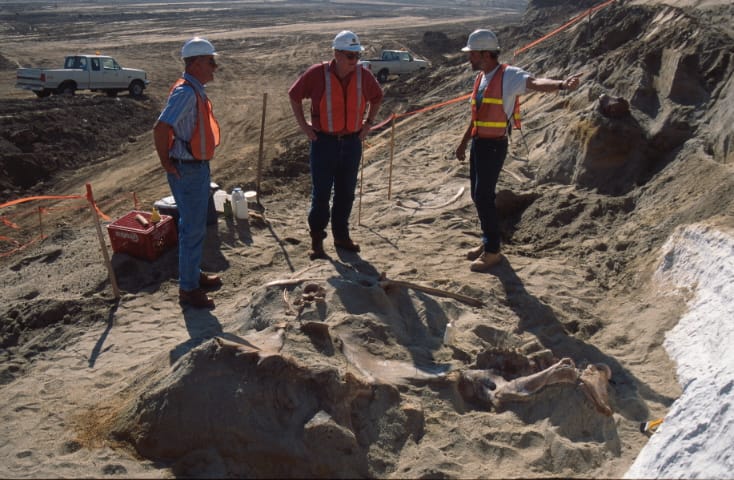
Associated mastodon remains including a pelvis and teeth immediately pointed to a major find, and they spent 11 hours on site the first day. Hemet mayor Linda Krupa recalled that one of the other paleontologists, Eric Scott, was giving a presentation to the City Council about the excavations that day when he received a phone call. After he took the call, he told her "I'm sorry, but I have to cut the presentation short. We've got something big."
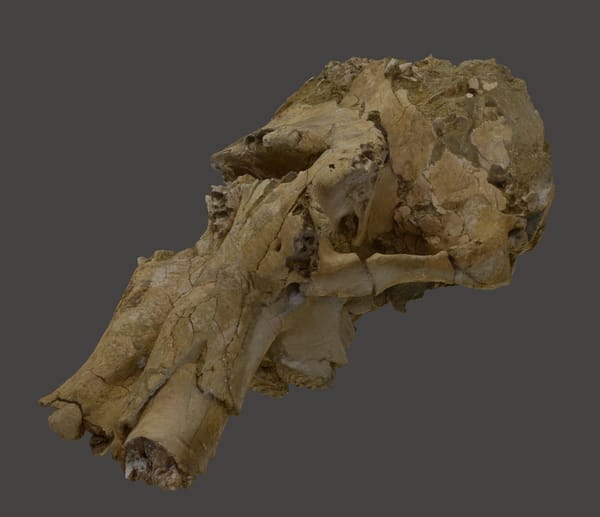
By the end of the second day it was clear they had at least part of a skull:
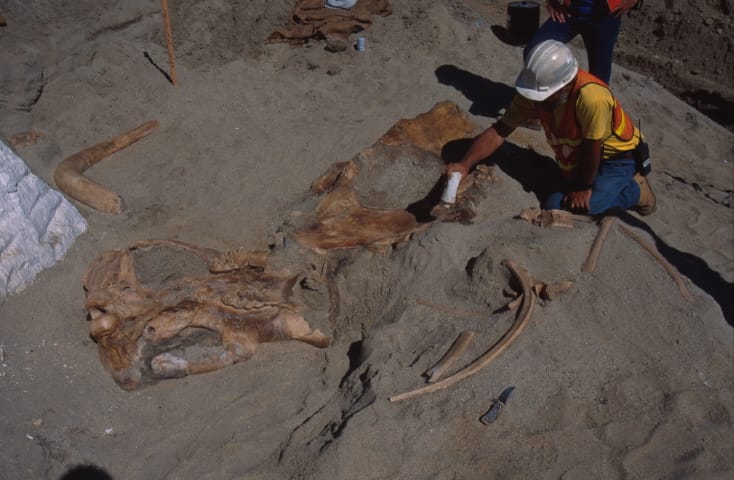
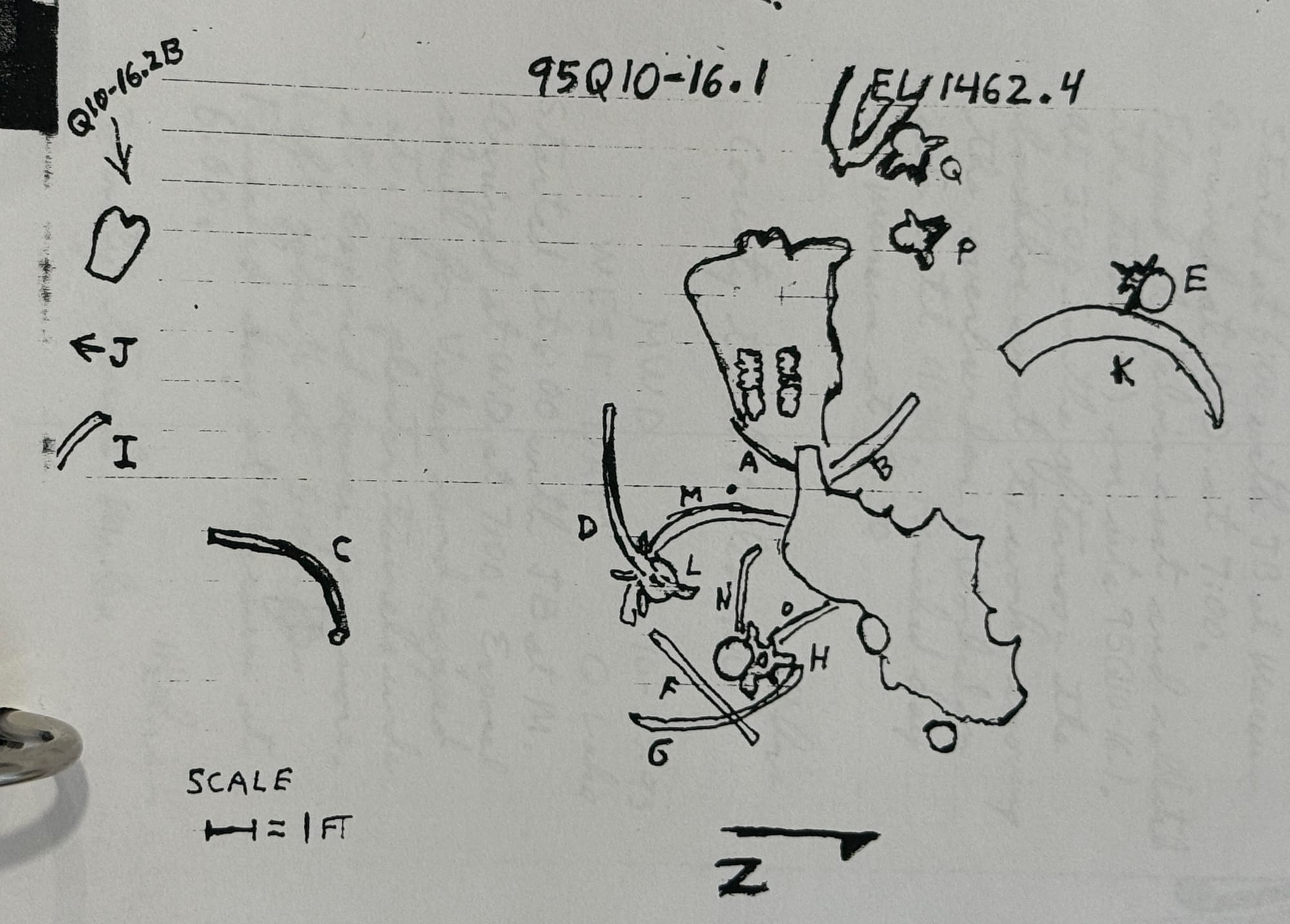
Excavation continued with additional parts of the skeleton being uncovered almost every day. Here's Quinton's field map from October 18:
With such a major find, on October 20 the press was invited to the site for interviews and a photo shoot. Mitigation excavations proceed quickly, and by November 7, after just 23 days, work at 95Q10-16.1 wrapped up, with the paleontologists moving on to other sites that had been discovered in other parts of the construction zone. In the end, 9% of a large mastodon was recovered, including the most complete mastodon skull and pelvis ever found in California. Nicknamed “Max“ because of its large size, this mastodon became one of the highlights of the Diamond Valley Lake project, and when the Western Science Center opened in 2006, Max’s remains were prominently displayed in the main exhibit gallery.
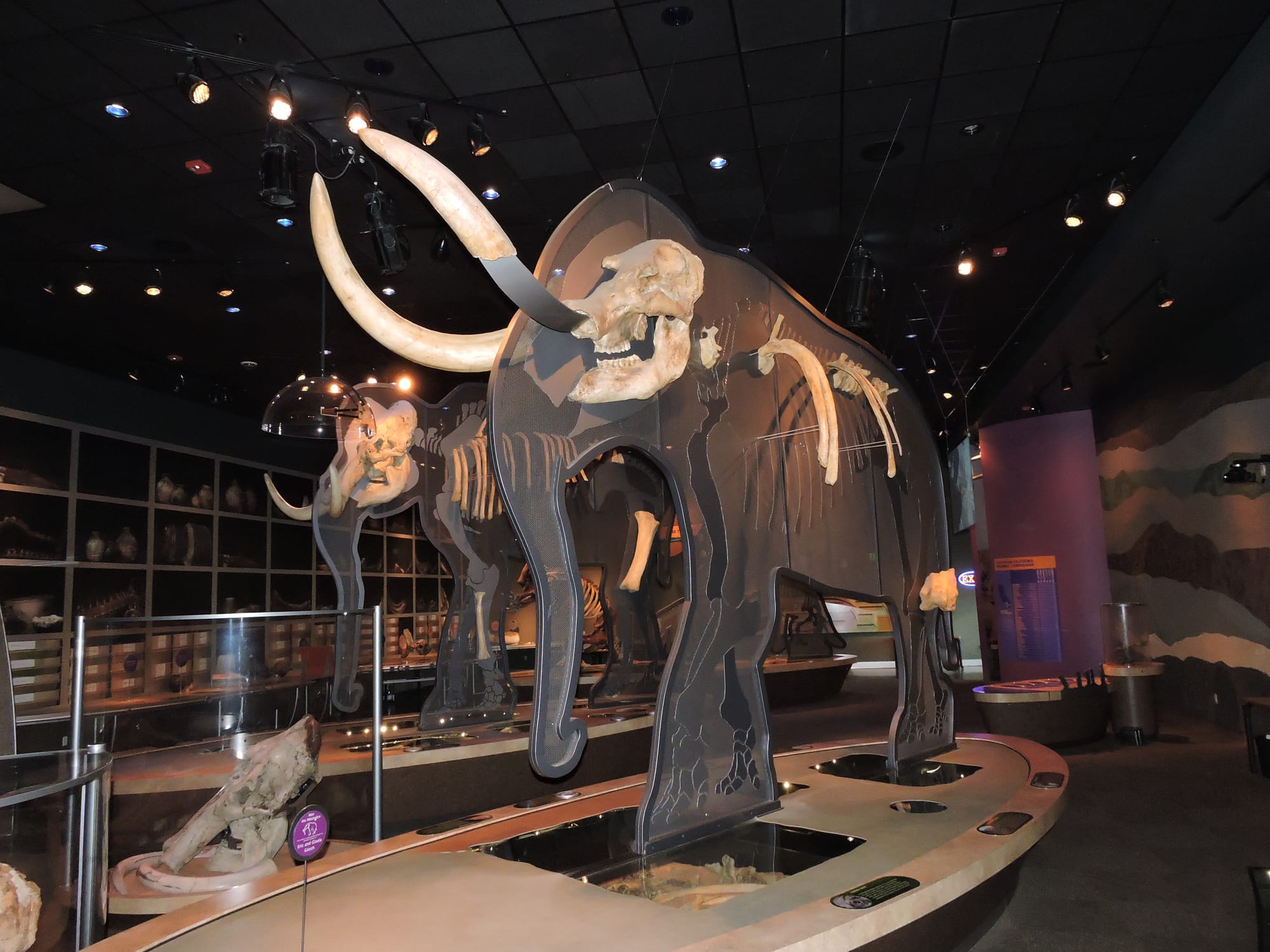
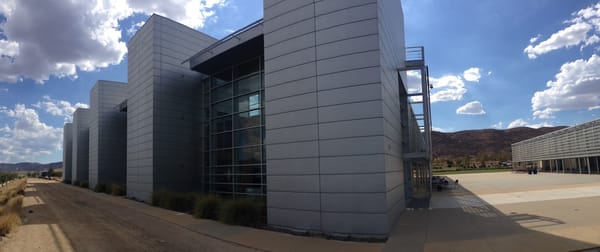
When I came to WSC in 2014, one of the first challenges I needed to address was to figure out what our identity was as a museum. WSC is a small museum surrounded by much larger, excellent natural history museums in Los Angeles and San Diego; what would be the thing that could set us apart? To me the obvious answer was our mastodons; more than half of all the mastodons ever found in California were from Diamond Valley (aka “Valley of the Mastodons”).
Max became our mascot, and his presence permeates much of our public image. Some of our in-school programs are called Max labs. Our mobile exhibit trailer is “Max’s Mobile Museum” (M3 for short), and includes a cast of Max’s skull in many of its exhibits.
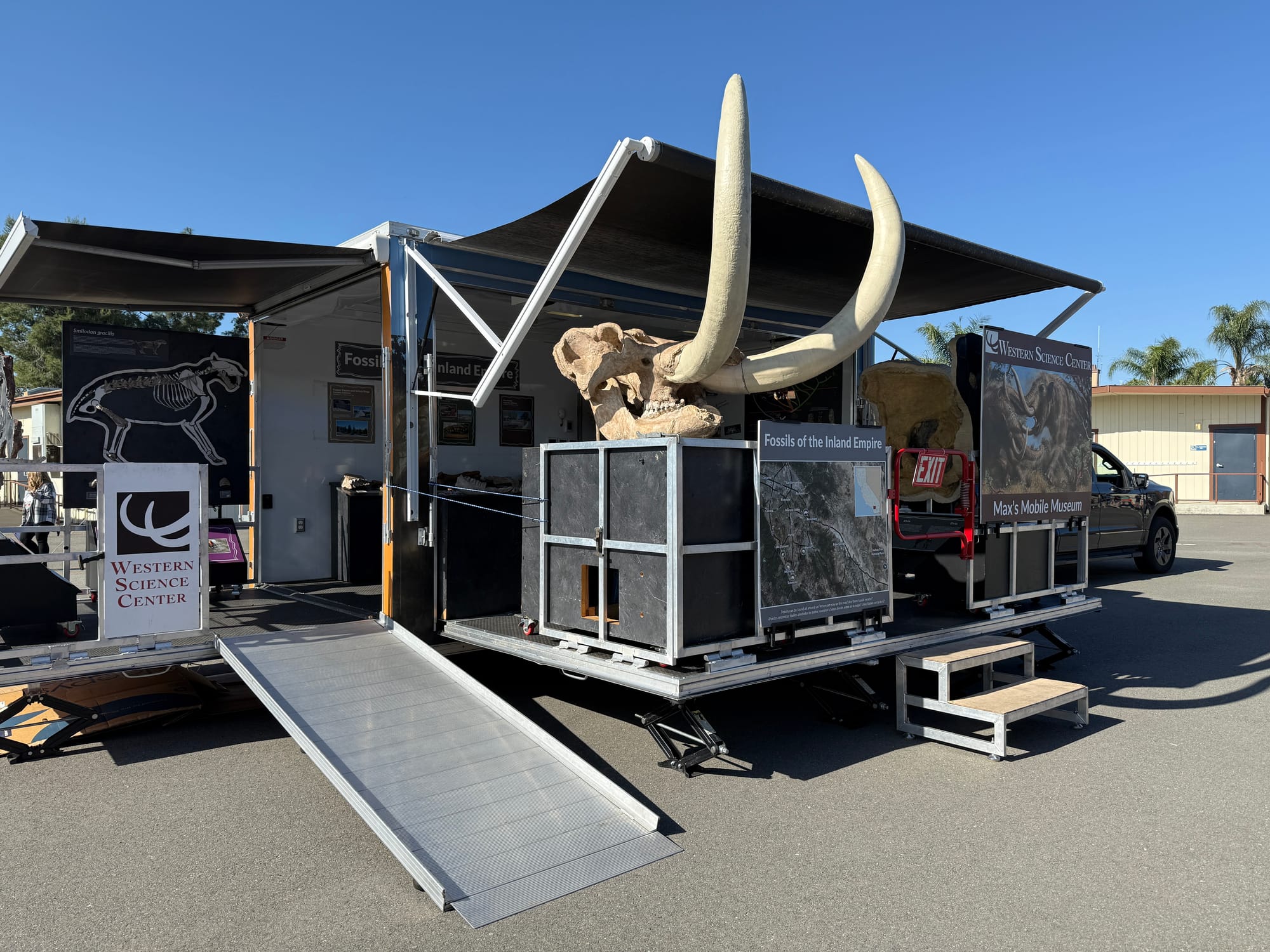
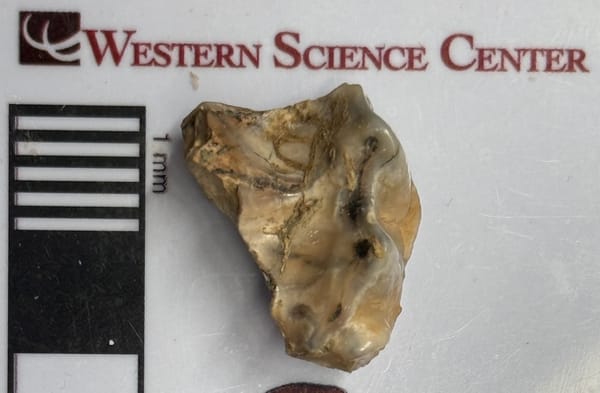
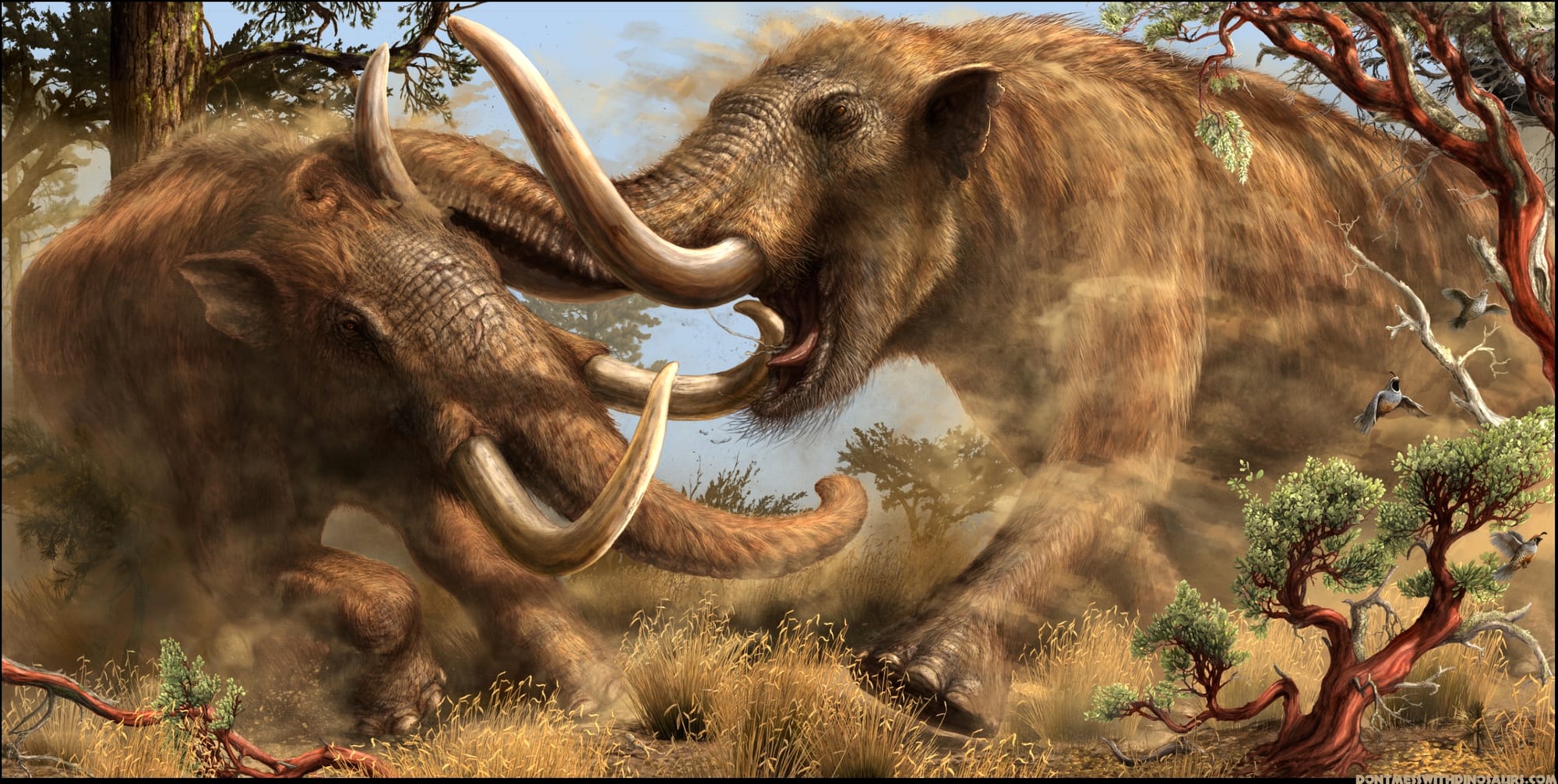
A cartoon depiction of Max is found on the museum’s photo scale bars, and for many years he had an active account on Twitter interacting with other museum mascots. Max plushies are one of our biggest sellers in the museum store, and one accompanies our educators to offsite events and our scientists to conferences. We commissioned paleoartist Brian Engh to produce a life-sized image of Max in a fight with another mastodon, which is proudly displayed next to Max’s fossils:
October 16, 1995 is clearly a date that has had a major impact on the development of the Western Science Center. In our March installment in this series, we’ll look at Max’s impact on our understanding of mastodons.

If you like what you're reading, please consider becoming a paid subscriber or leaving a tip. All proceeds go to cover the cost of maintaining the site and supporting research and education at the Western Science Center.